If you’re looking for fantastic examples of family law websites, we’ve got you covered. We looked all around the internet for the best examples of family law web design, and we’ve compiled a list of the top 40.
These best family law websites are top-notch in terms of both design and content. From simple, clean designs to more complex ones with multiple pages and features, there’s something for everyone on this list. And, of course, all of the sites listed here offer valuable resources for those dealing with family law issues.
So, without further ado, here are the 40 top family law lawyer website designs:
1. Charles Willmott
Why it works: This family law firm has a website that has a clean refreshing design with a soft blue tone for an extra layer of calmness. Up top, you’ll see a clear phone number. Proof of the success of this skilled family law attorney is evident through the badges and testimonials.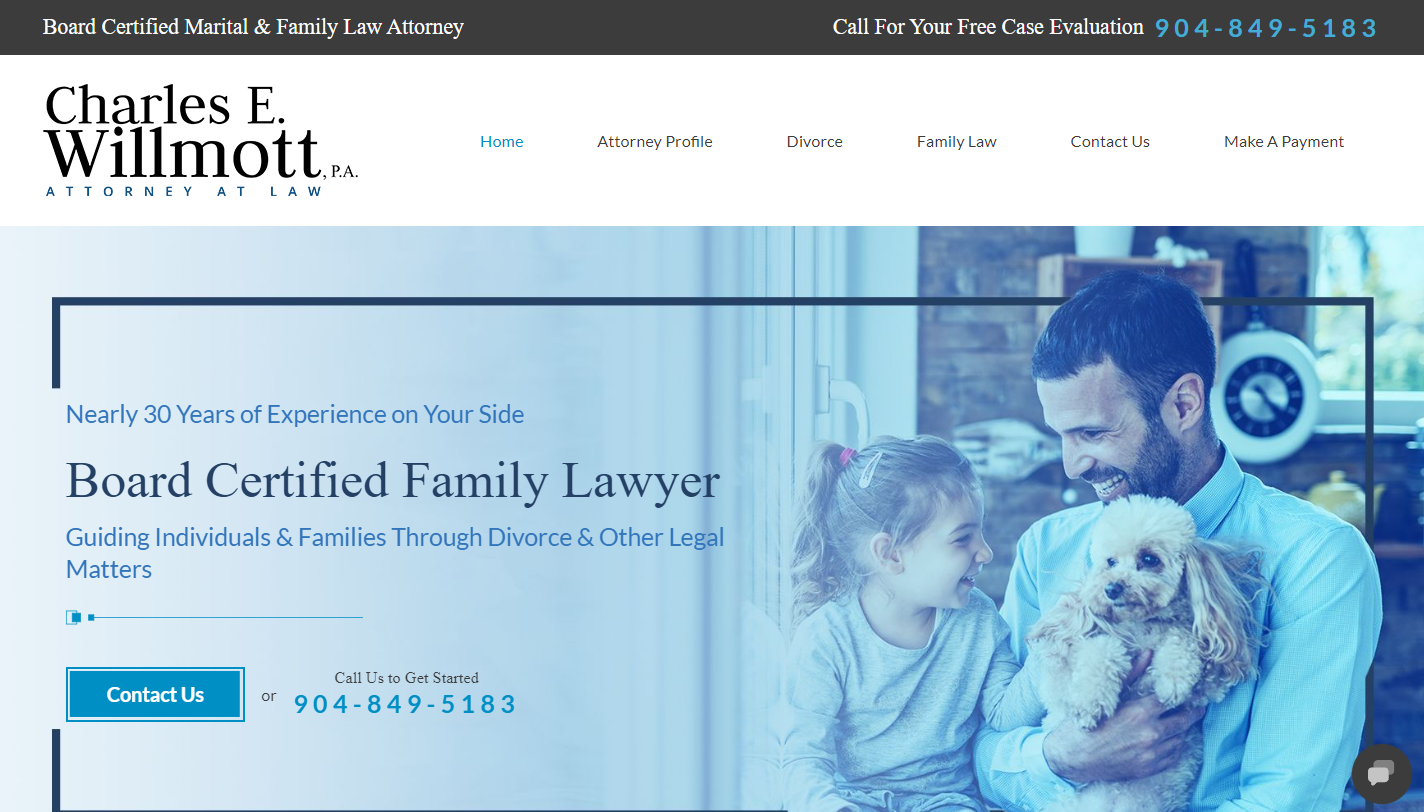
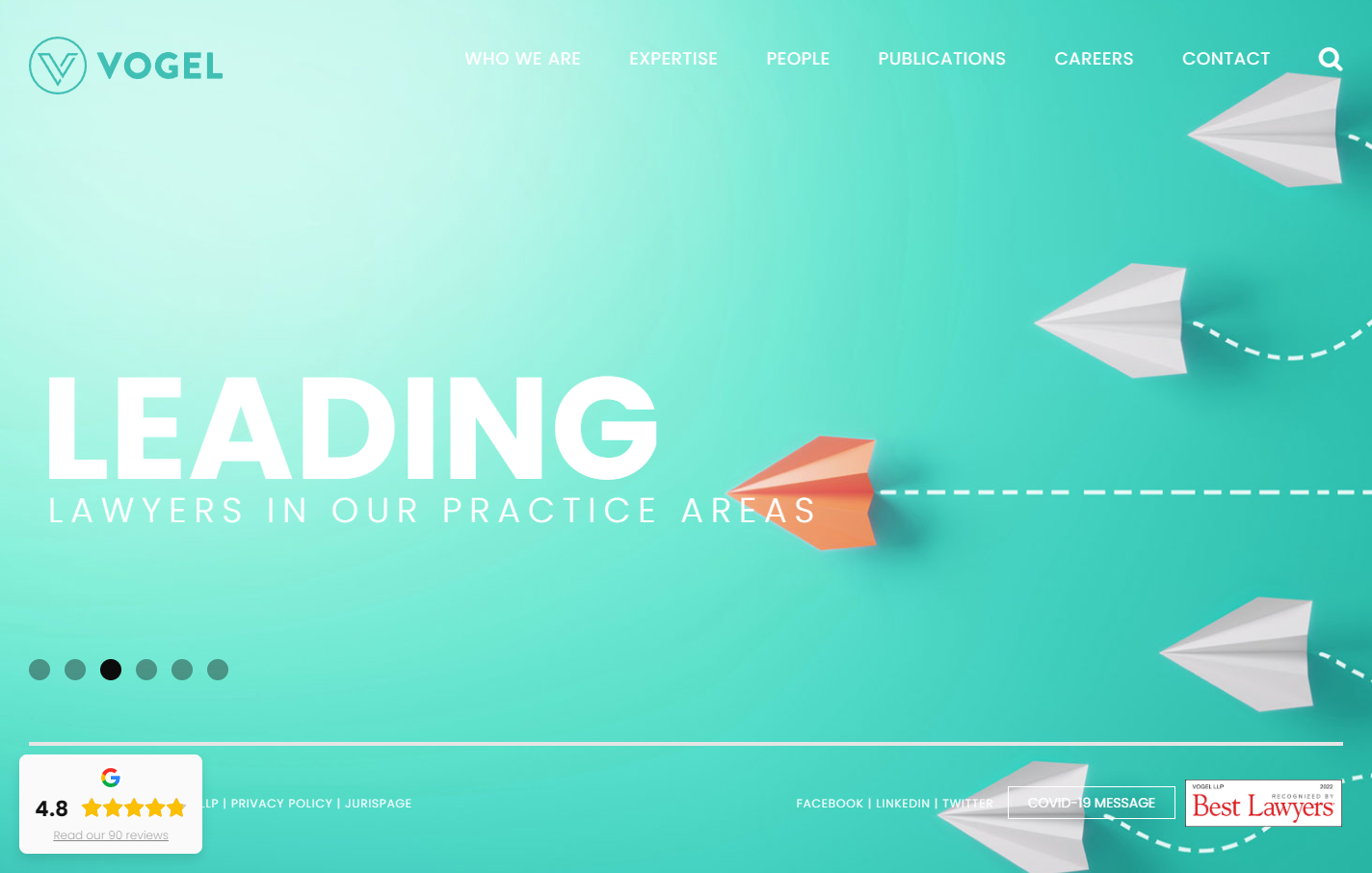
2. Vogel Verjee
Why it works: A very bold design with strong imagery and big bold texts. The no-scroll layout is a pretty strong statement of their authority in the family law industry.
family law websites
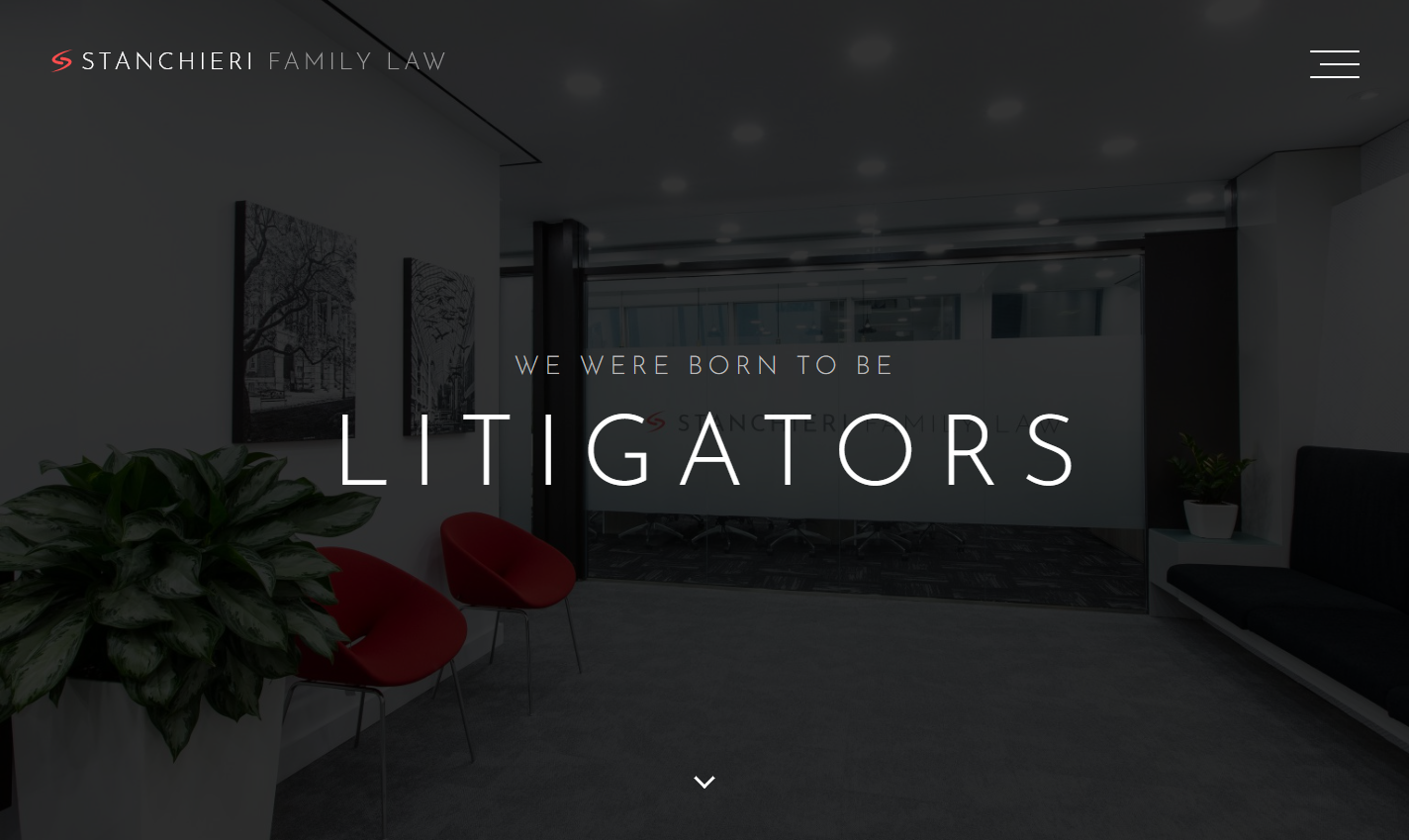
3. Stanchieri Family Law
Why it works: This family law firm’s website has a high-contrast design that encourages more interest. The site is clean and well-designed with minimal content.
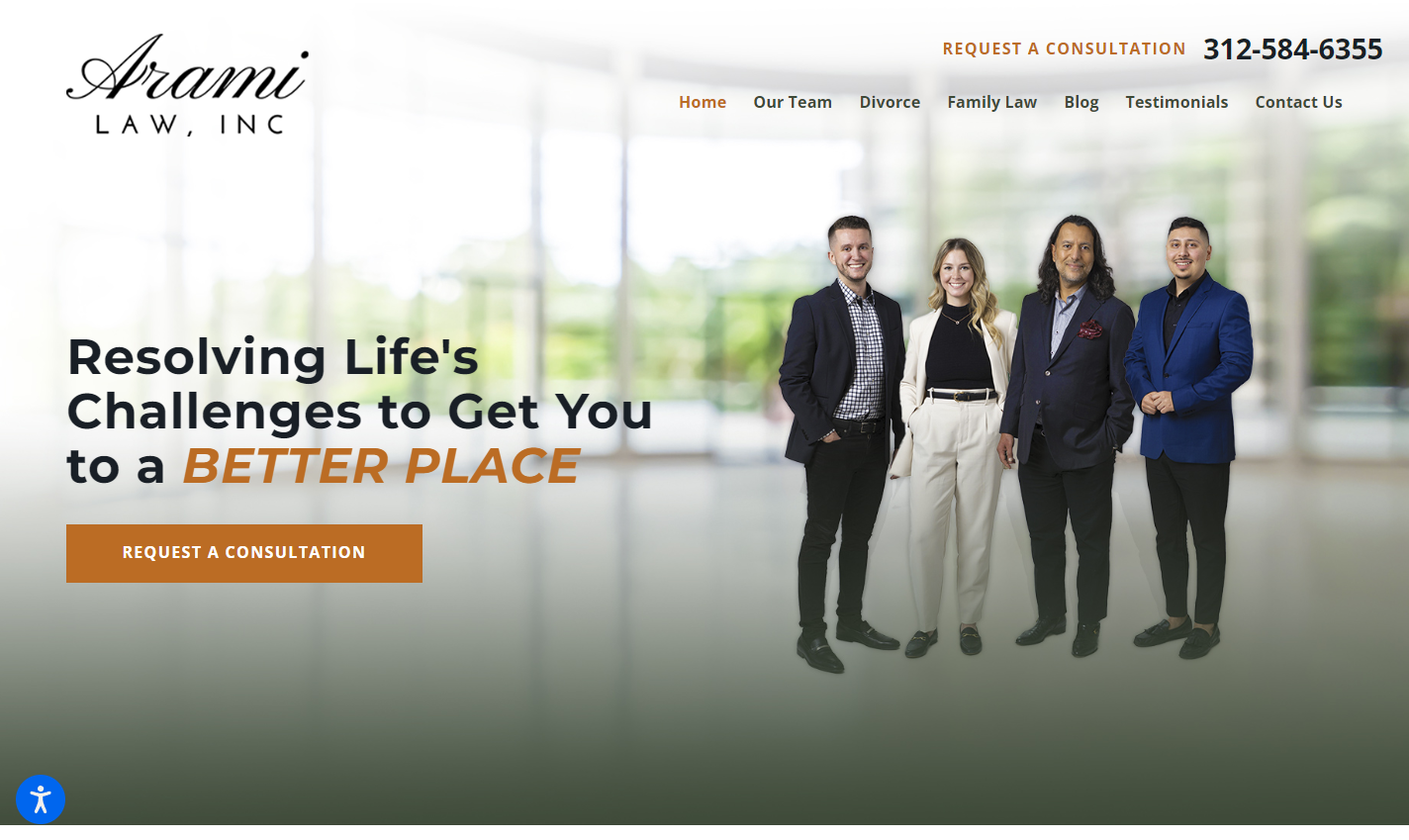
4. Arami Law
Why it works: The website of this family law firm has a very simple layout but does an excellent job of organizing its information and visuals. Clear catchy phone number up top. It’s not necessary for the target audience and potential clients to scroll too far to get to the contact form.
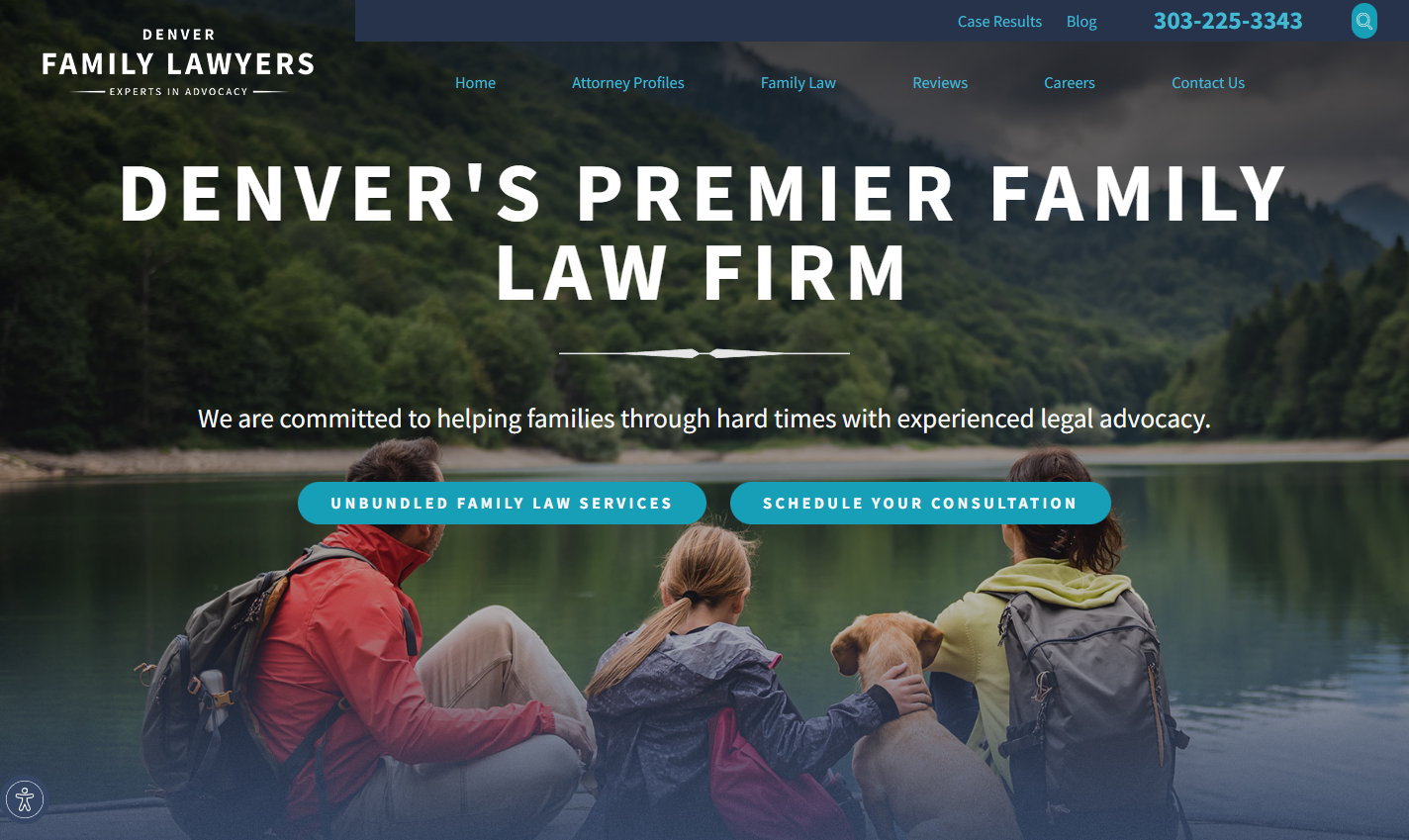
5. Denver Family Lawyers
Why it works: The excellent hero section distinguishes the family law company’s site from the competition. The website is simply fantastic due to its beautiful design with just the appropriate number of images and animations.
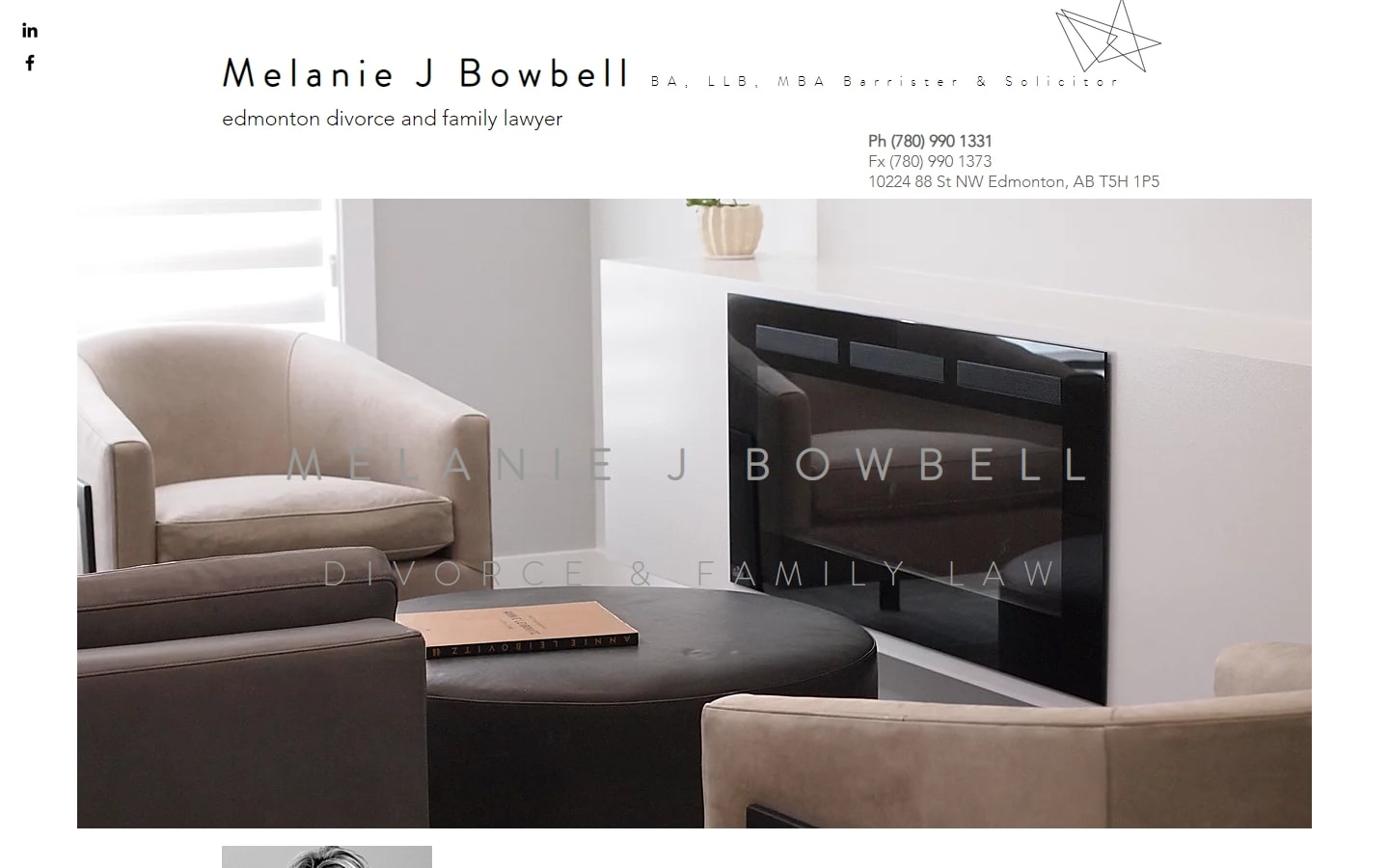
6. Melanie J Bowbell
Why it works: A good take on a modern website for a family lawyer. The contact information is easily identifiable while the contact form is comprehensive. The big image in the background is aesthetically pleasing, and it also helps break up the text content so that it’s not too overwhelming.
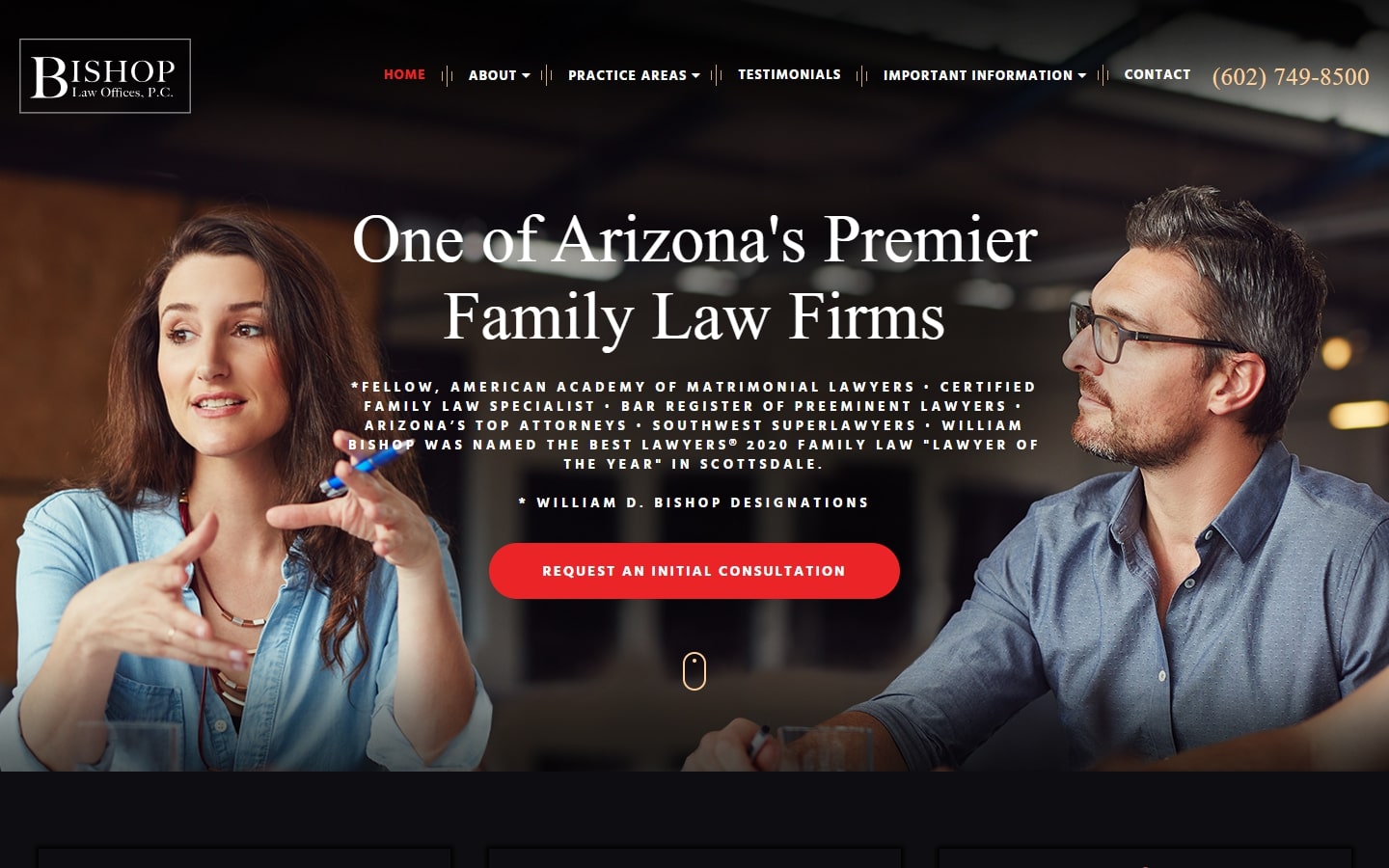
7. Bishop Law Offices
Why it works: High-quality images especially in the hero section make a strong first impression on prospective clients and website visitors. We particularly love the testimonials section which looked modern and sleek.
web design for family lawyer
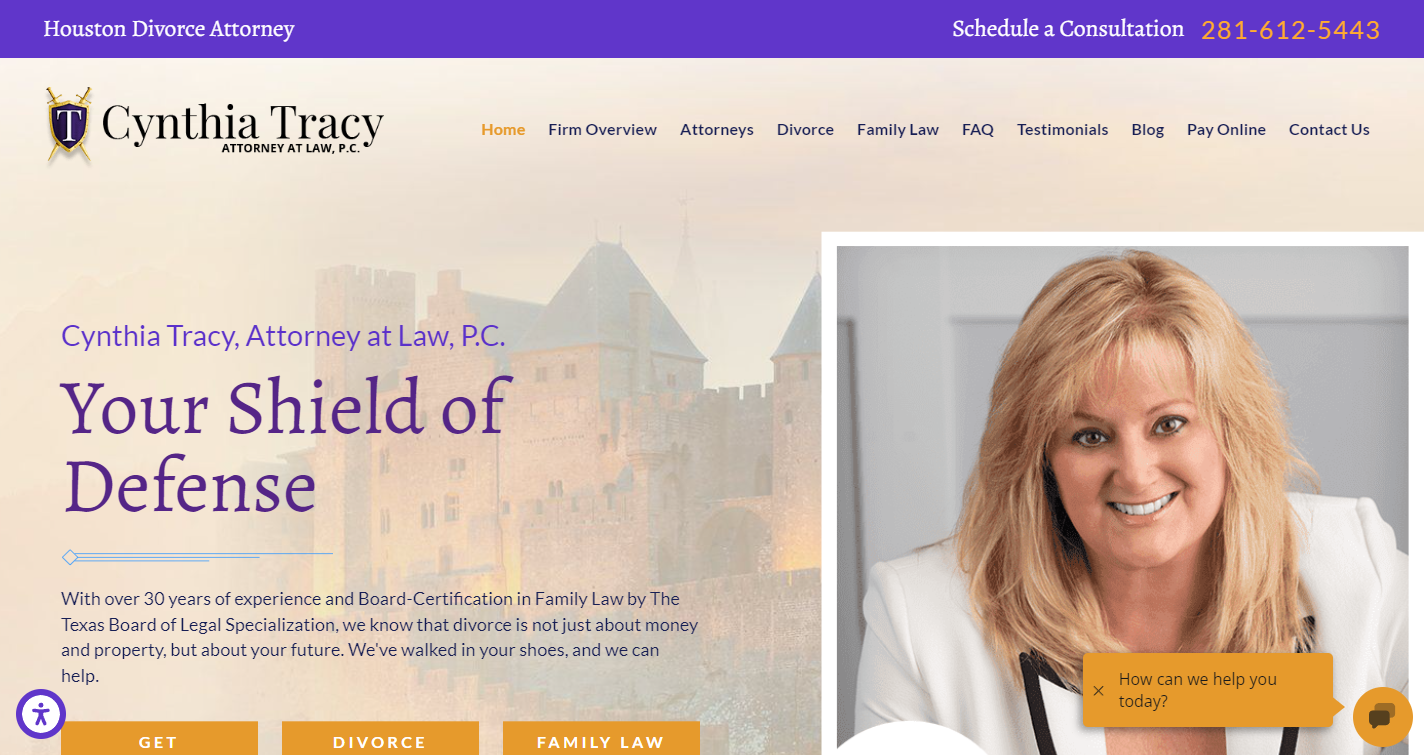
8. Cynthia Tracy
Why it works: The subtle use of pattern and color makes this a timeless design. It has an interesting look with bright graphics and clear buttons. The site’s inclusion of a distinctive “old paper” texture in several areas provides guests and prospective clients with a memorable experience.
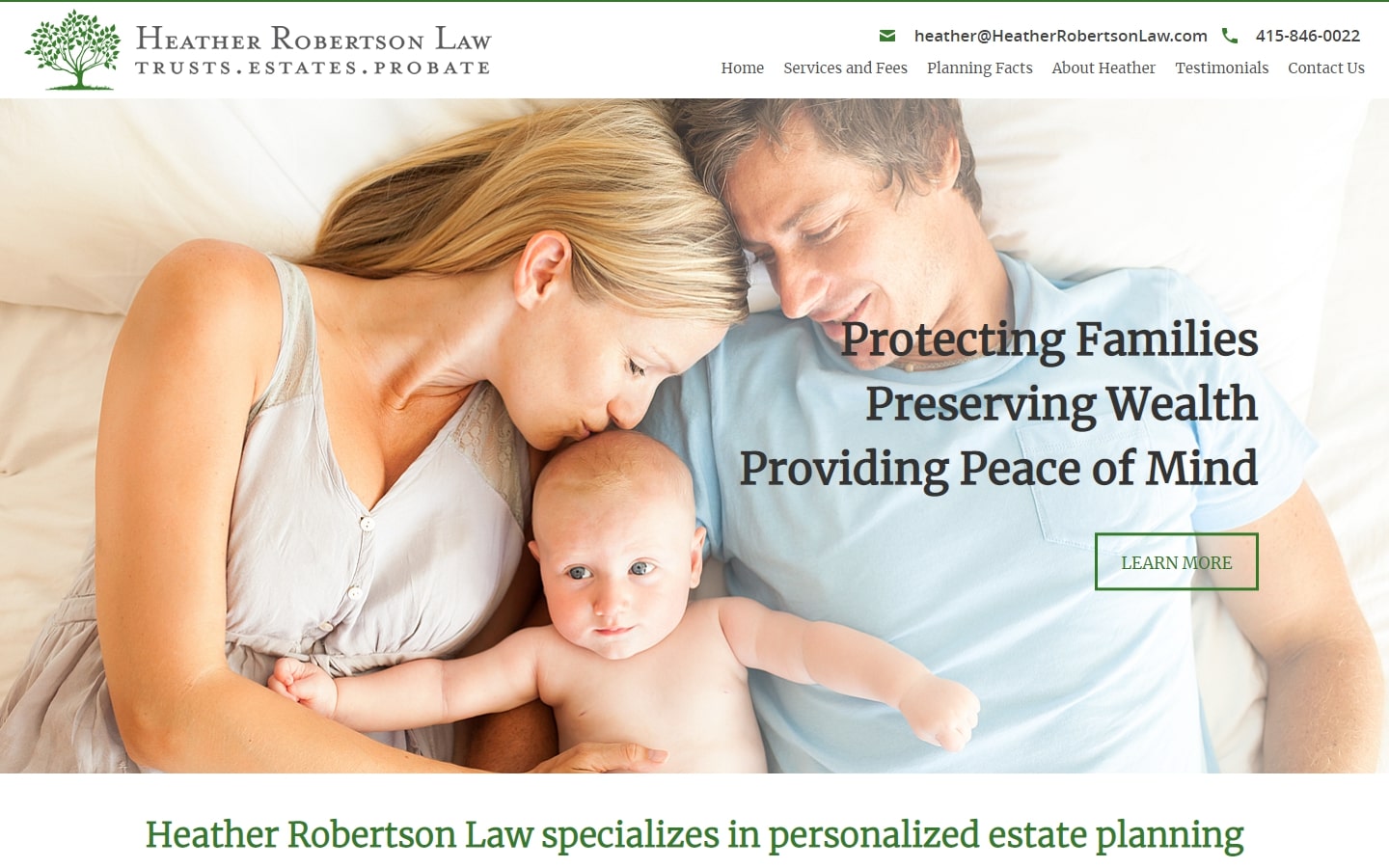
9. Heather Robertson Law
Why it works: When compared to standard or common family law website designs, this site is a breath of fresh air. The overall mood of the design is extremely invigorating, welcoming, and pleasant while still maintaining an authoritative demeanor.
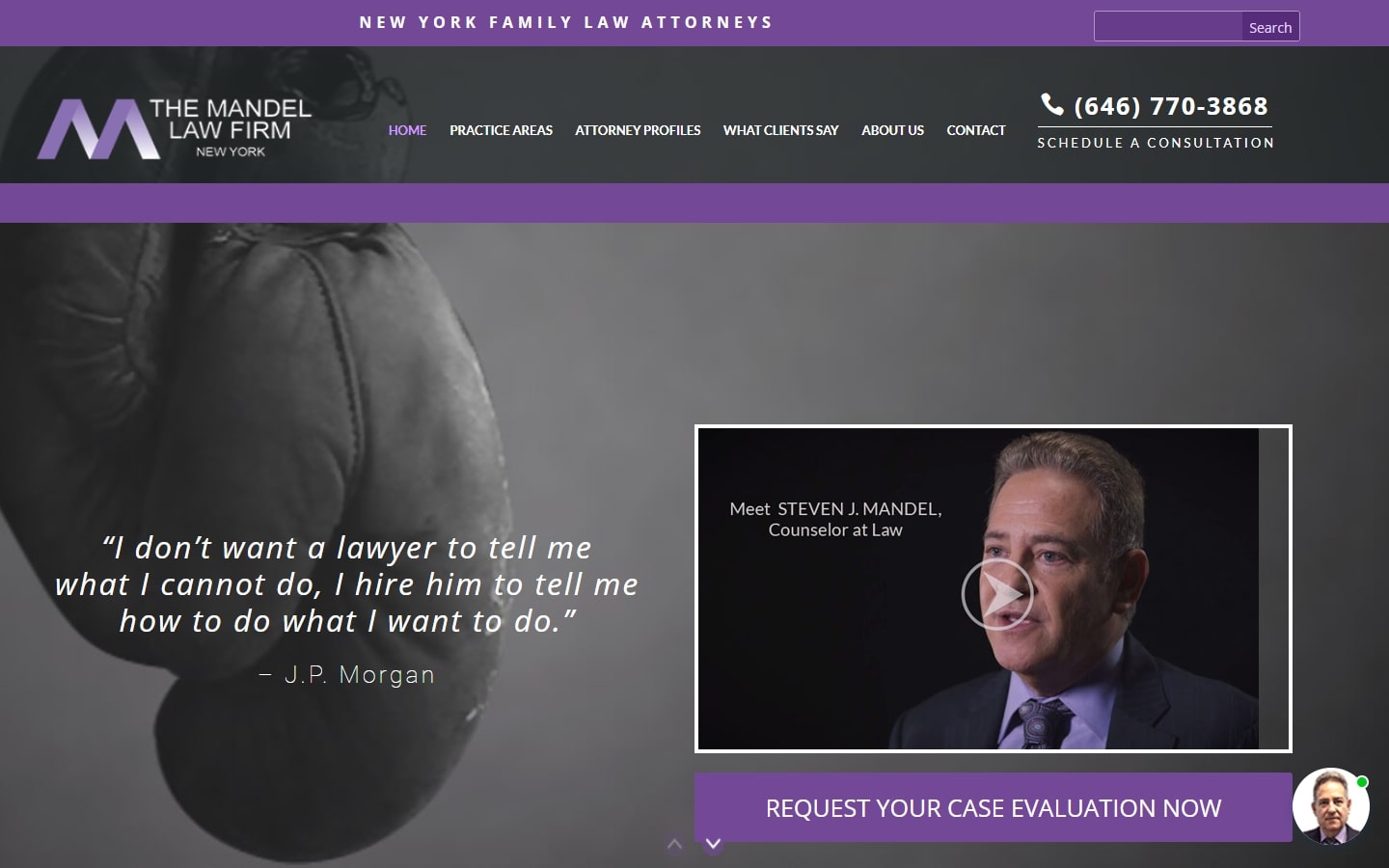
10. The Mandel Law Firm
Why it works: The rolling news update is an engaging method to keep website visitors and potential clients up to date on their family law firm site. Live chat functionality. There is a well-explained practice areas section. It’s a huge benefit having video testimonials that shows potential client how experienced family law attorneys they are!
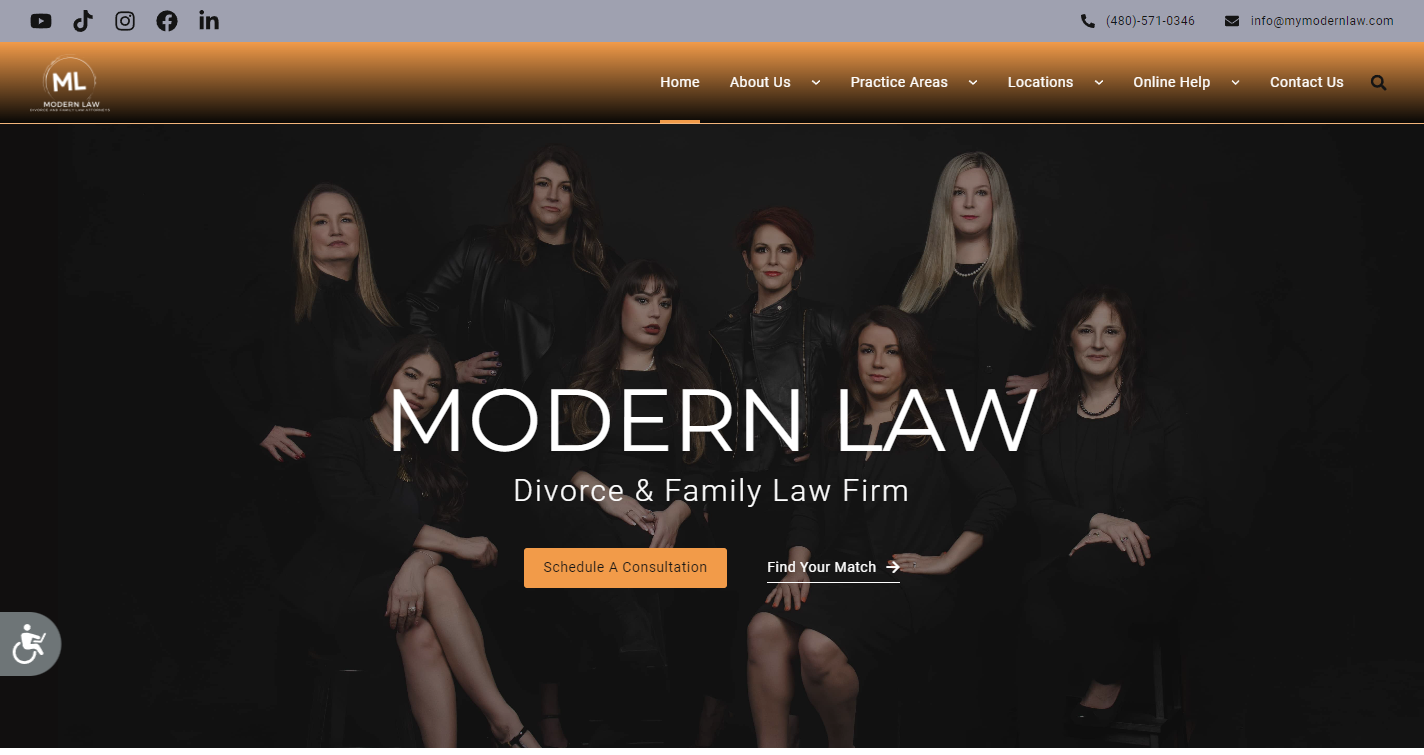
11. Modern Law
Why it works: The design above-the-fold is very strong and very pronounced. The overall design is extremely modern while still maintaining a corporate look and feel. The footer of this family law firm site also gets the most helpful information ready.
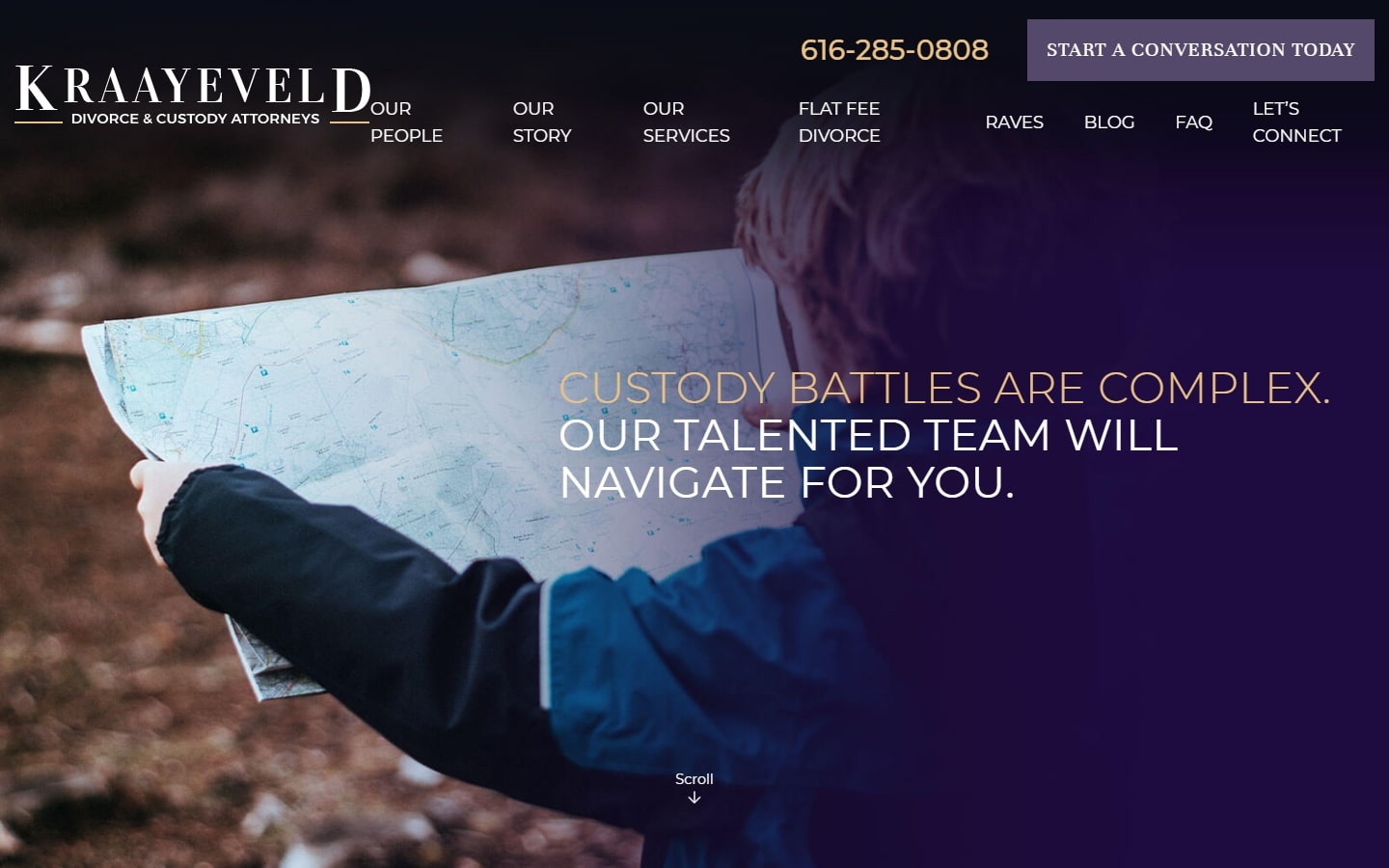
12. Kraayeveld
Why it works: Crisp images, clear texts, intuitive layout—these are just some of the things we particularly love about this website design.
family law website
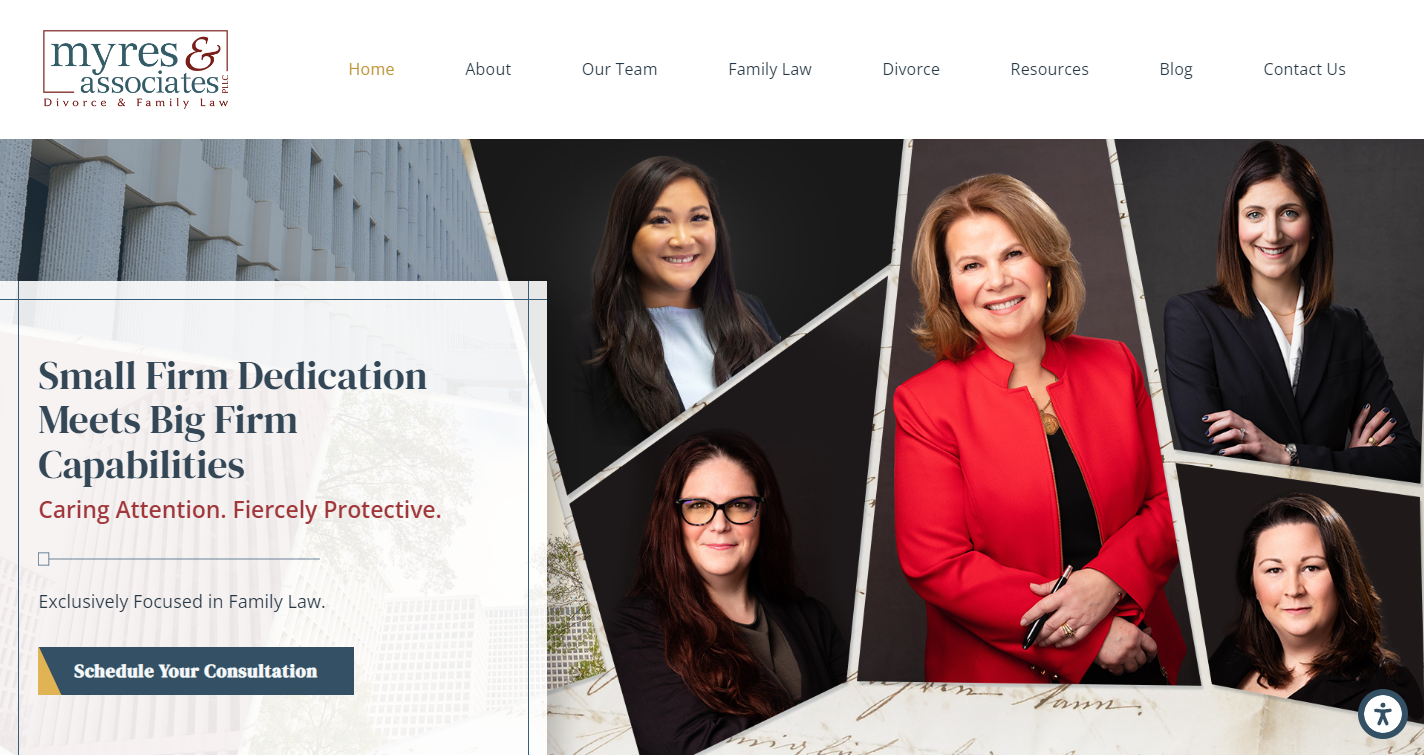
13. Myres & Associates
Why it works: Myres & Associates’ family law website is both informative and user-friendly. The simple and straightforward design makes it easy for potential clients and site visitors to find the information on legal services they need, while the inclusion of relevant blog articles helps to educate and engage potential clients.
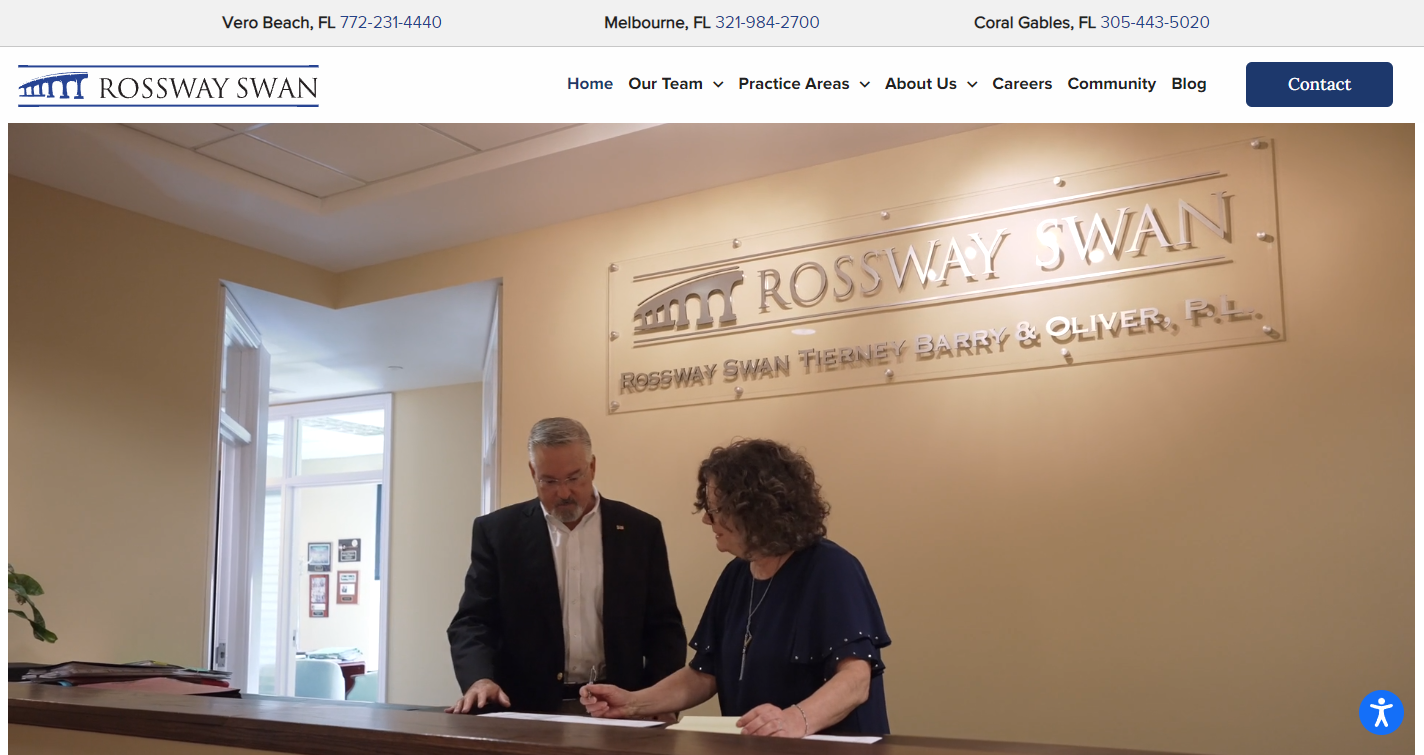
14. Rossway Swan
Why it works: Minimal but effective. The graphics are also tuned down to a minimum without losing the message. The practice areas page is very organized and comprehensive.
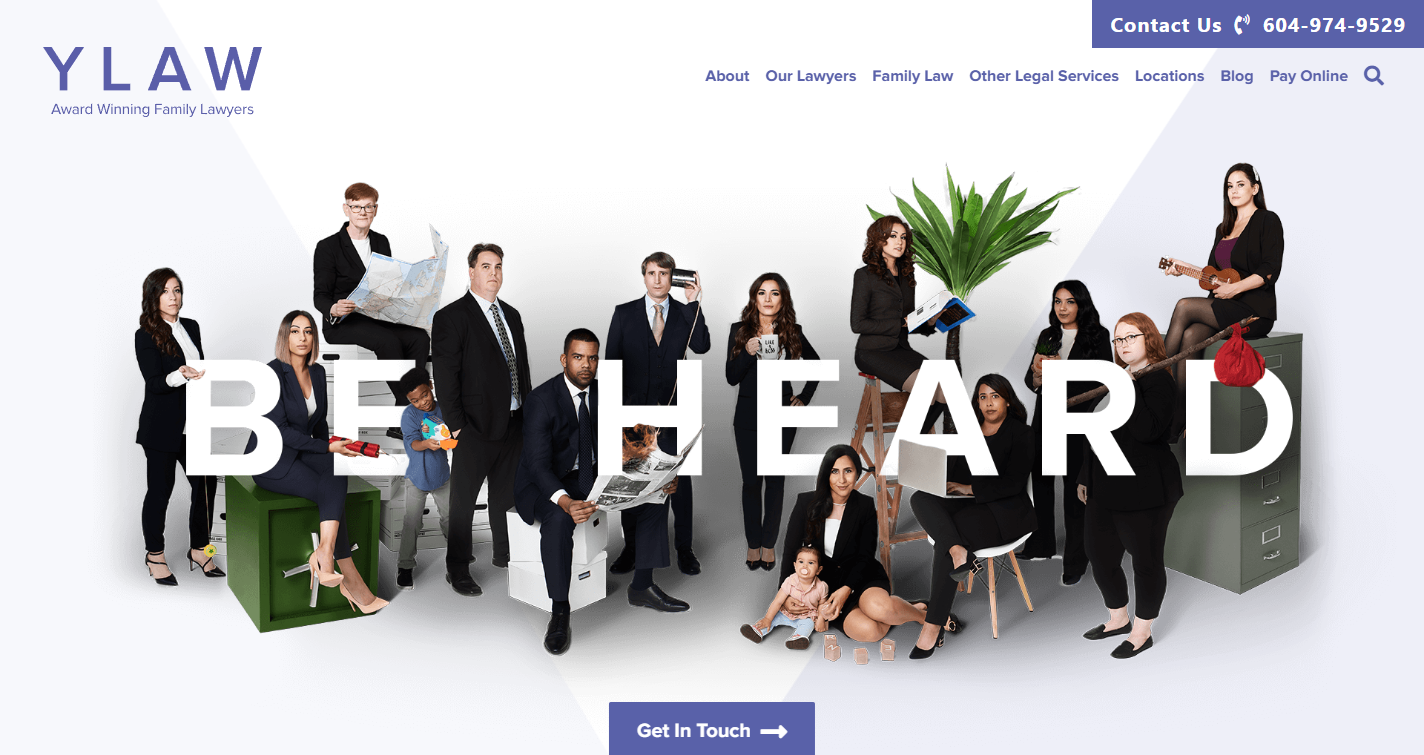
15. Ylaw Group
Why it works: This family law website design talks about out-of-the-box design with extraordinary choices of images and taglines. We love the way it’s set up and how easy it is to find what you’re looking for. The photos are also high quality, which gives the site an air of sophistication. The website is compact without losing quality.
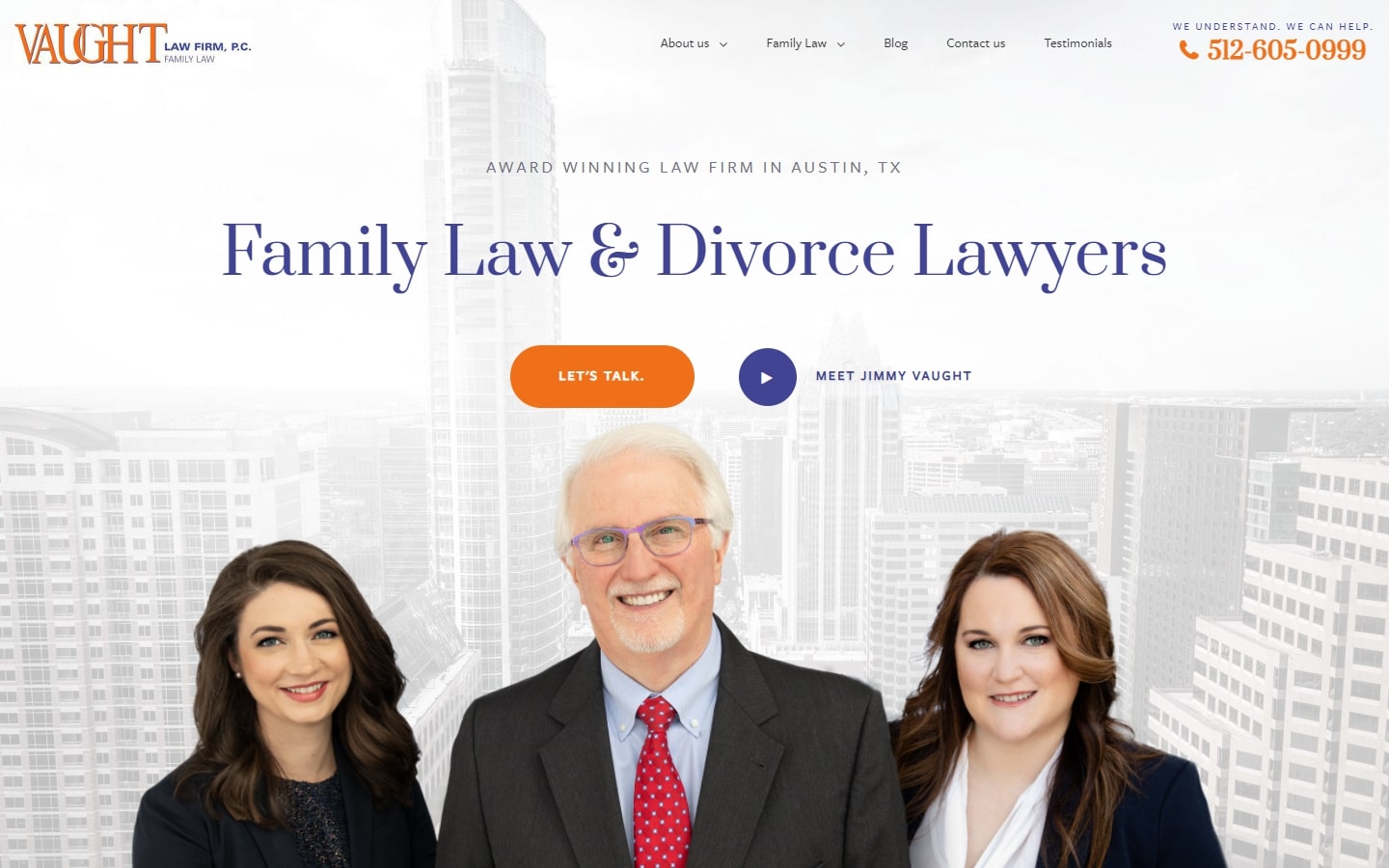
16. Vaught Law Firm
Why it works: One of the most elegant family law firm websites, with excellent emphasis on typography and clean design. High-quality professional photos were used.
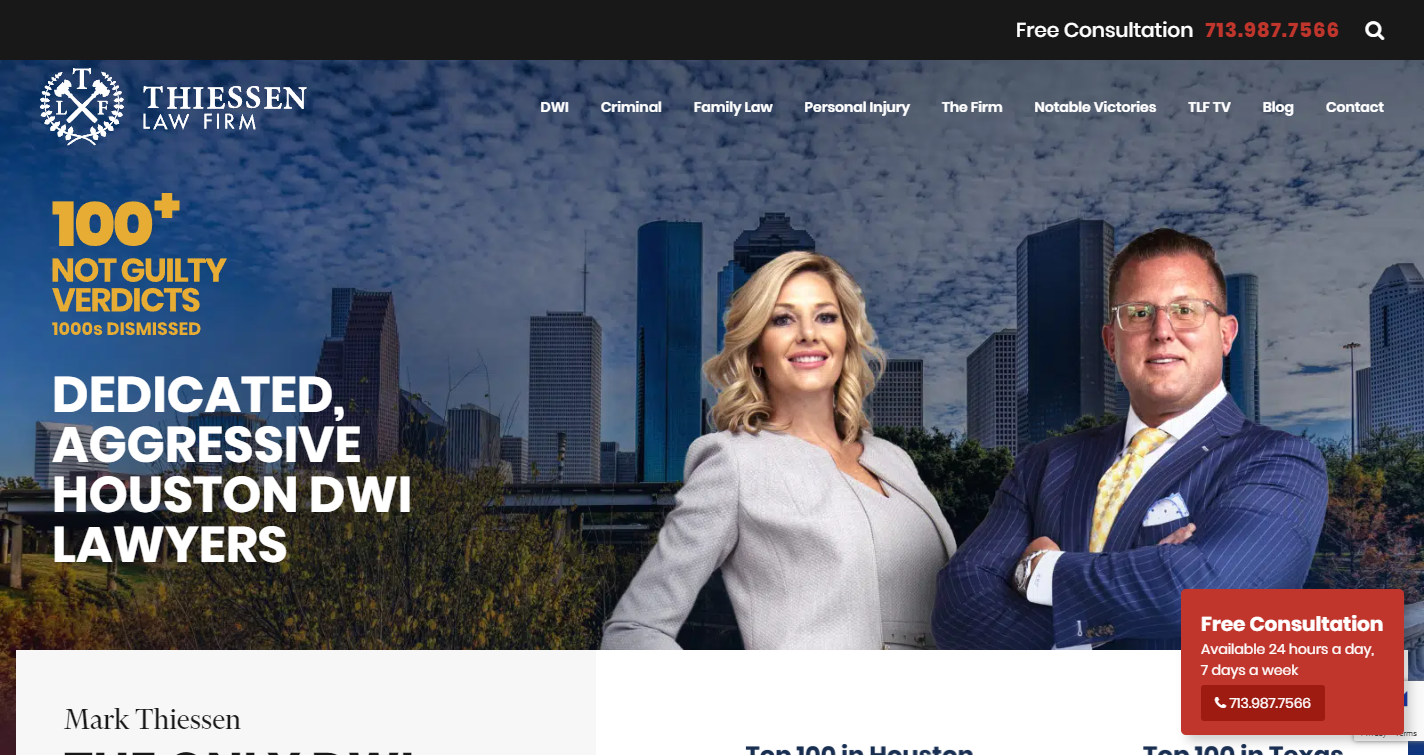
17. Thiessen Law Firm
Why it works: The firm’s authority is quickly established at first glance. The choice of font faces is also impressive for this family law website design.
best family law websites
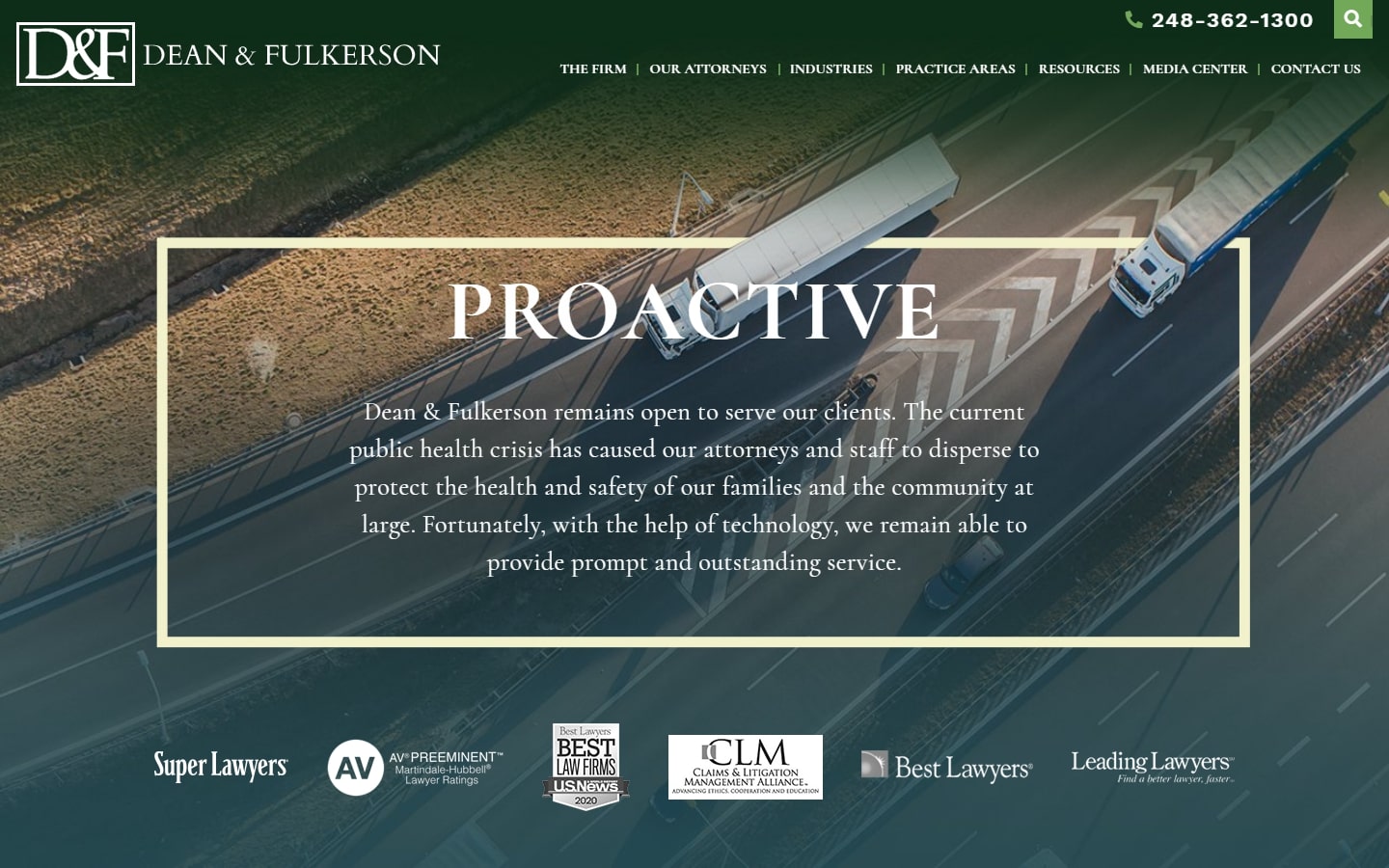
18. Dean & Fulkerson
Why it works: This family law website is simple to use. Excellent photographs are used throughout this family law site, particularly on the home page. Direct showcase of awards above the fold instills trust on the law firm.
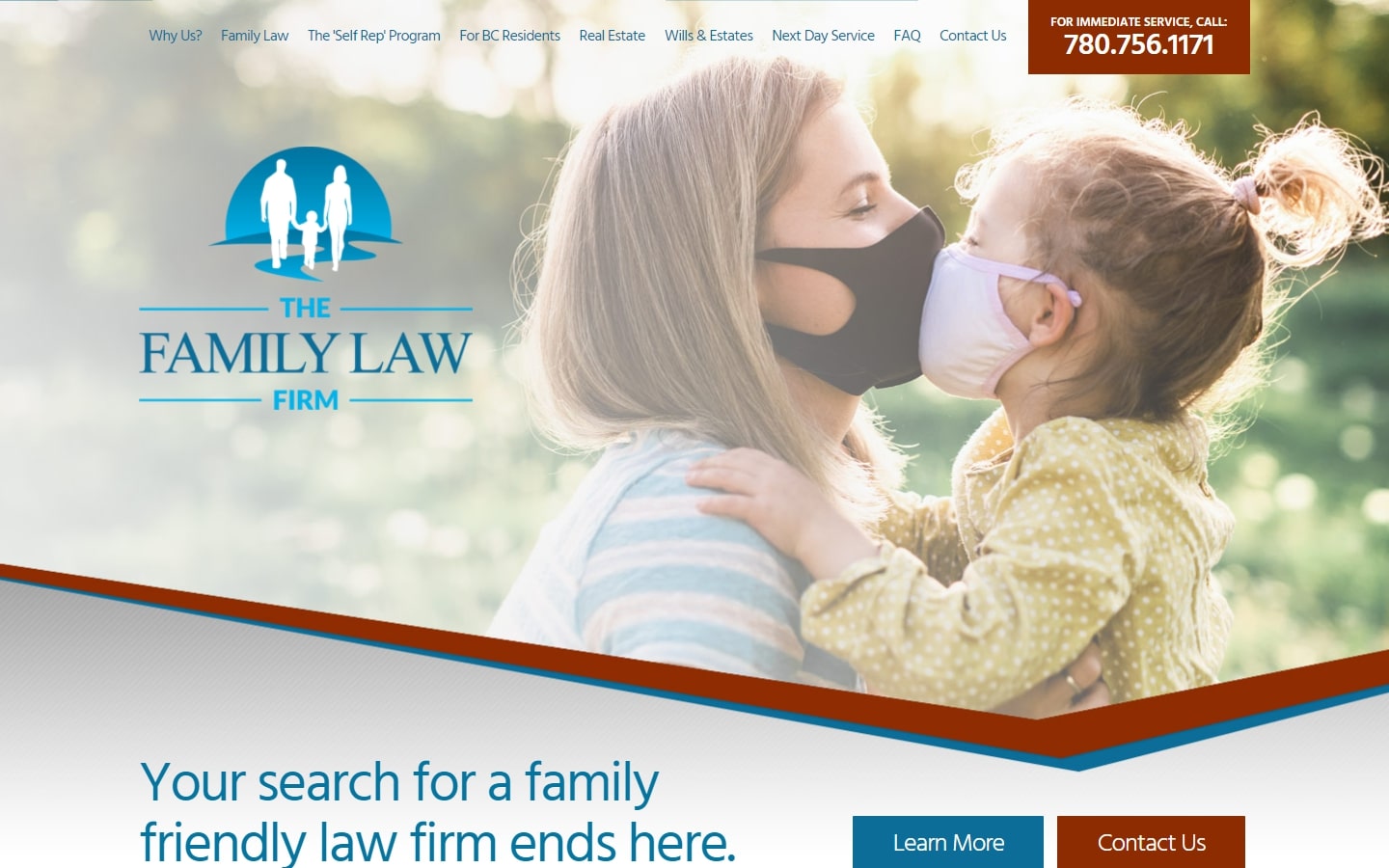
19. The Family Law Firm
Why it works: Very strong branding. The hero image is very relevant with buttons and CTAs that are well-distributed across the page.
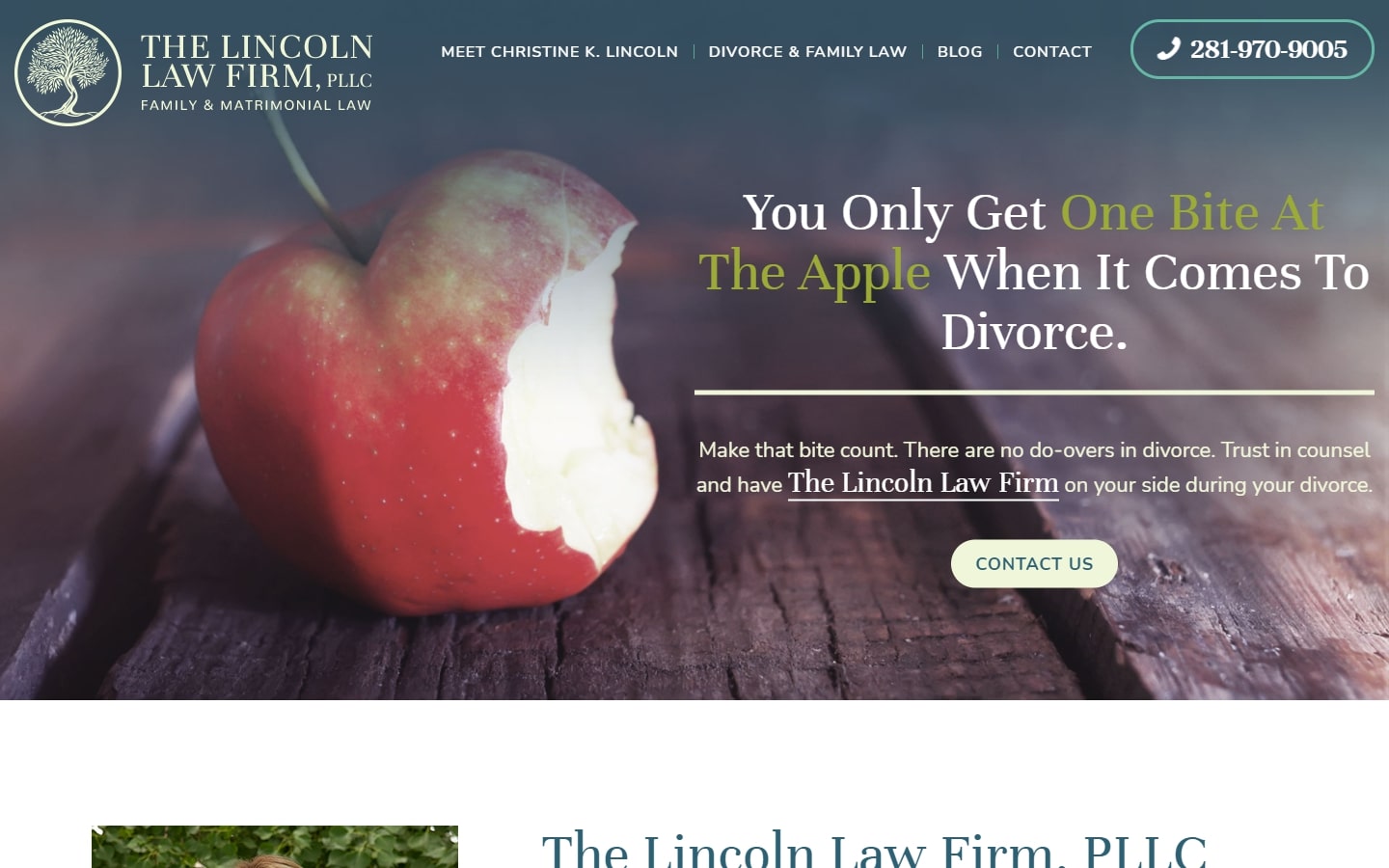
20. The Lincoln Law Firm
Why it works: This best law firm website has great taglines with just the right graphics that pique the interest of potential clients. The contact form area is well-designed and simple to use.
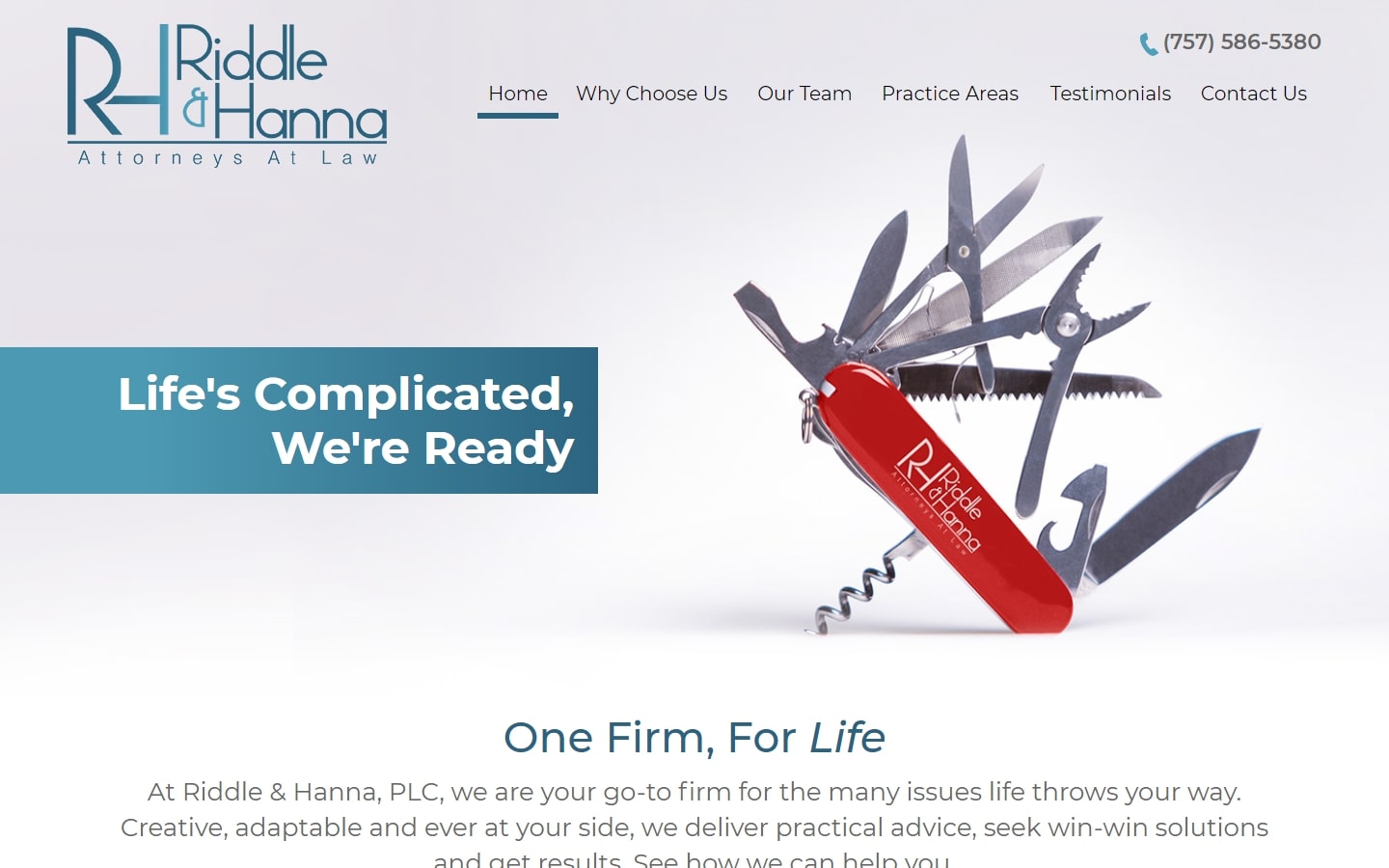
21. Riddle & Hanna
Why it works: The simplicity and effectiveness of this family law website are fantastic. This website’s design is a good landmark since it demonstrates minimalism while still being attractive.
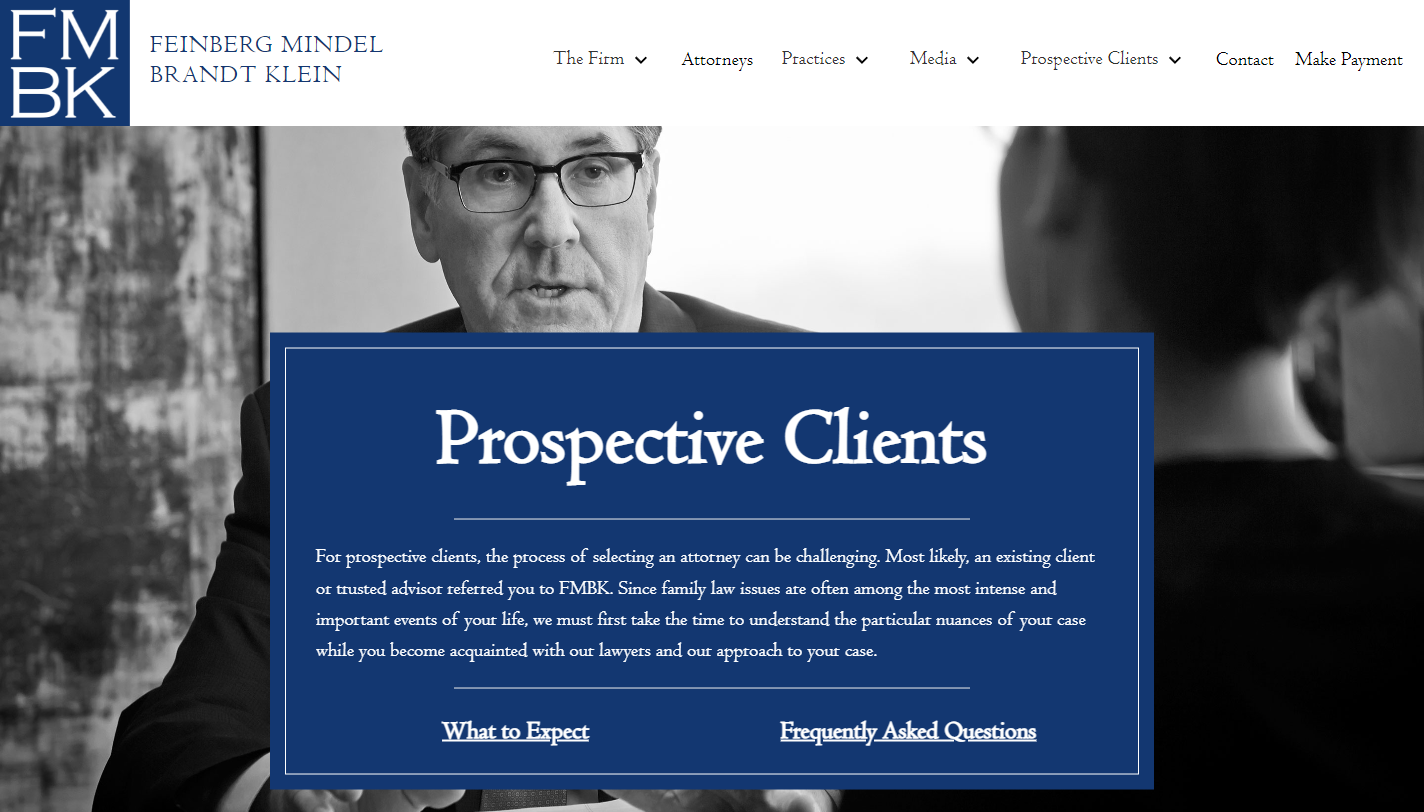
22. FMBK
Why it works: The header is appealing, and the emphasis on their law firm brand is clear. The parallax scrolling design is unique and useful. Excellent use of black-and-white images with colorful profile pictures for a nice turn of contrast.
family law attorney website design
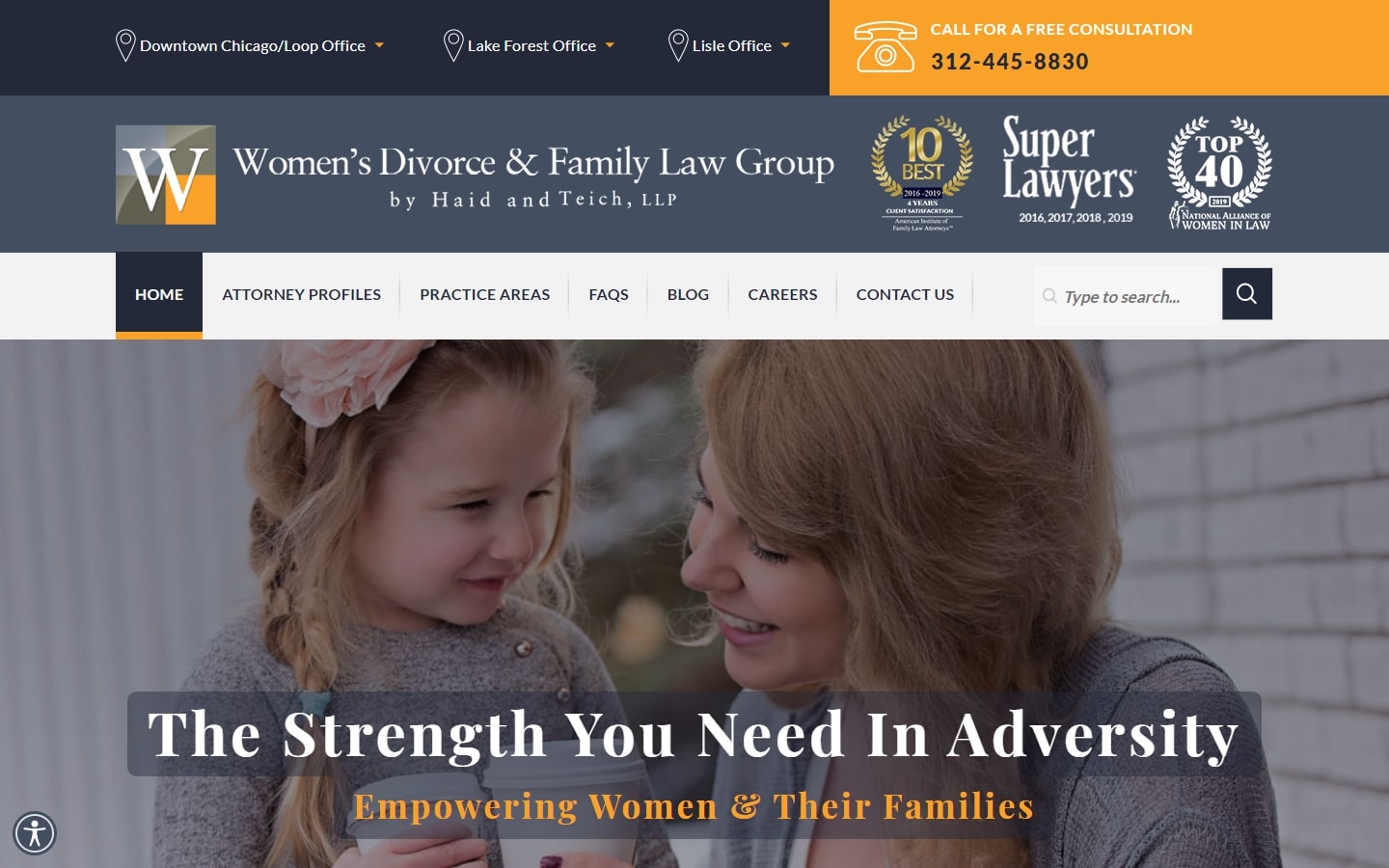
23. Women’s Divorce & Family Law Group
Why it works: One can quickly gauge the firm’s authority just by looking above the fold. Love the graphics, typography, and iconography. Moreover, the choice of a slate color against a bright yellow accent is a smart move.
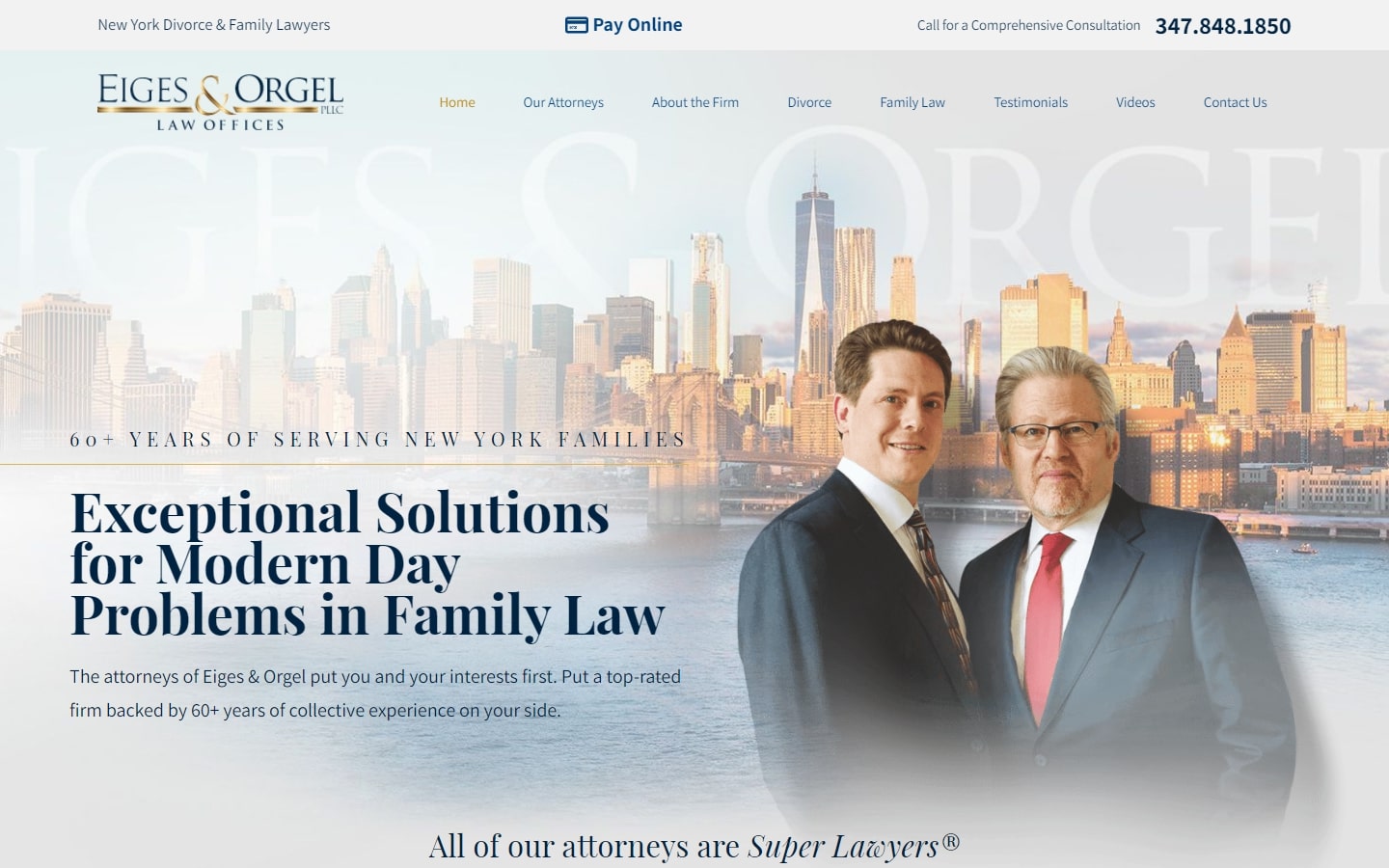
24. Eiges & Orgel Law Offices
Why it works: Exceptional graphics and typography with very cohesive family law branding and layout. The contact form below the page is a standout for its quality aesthetics.
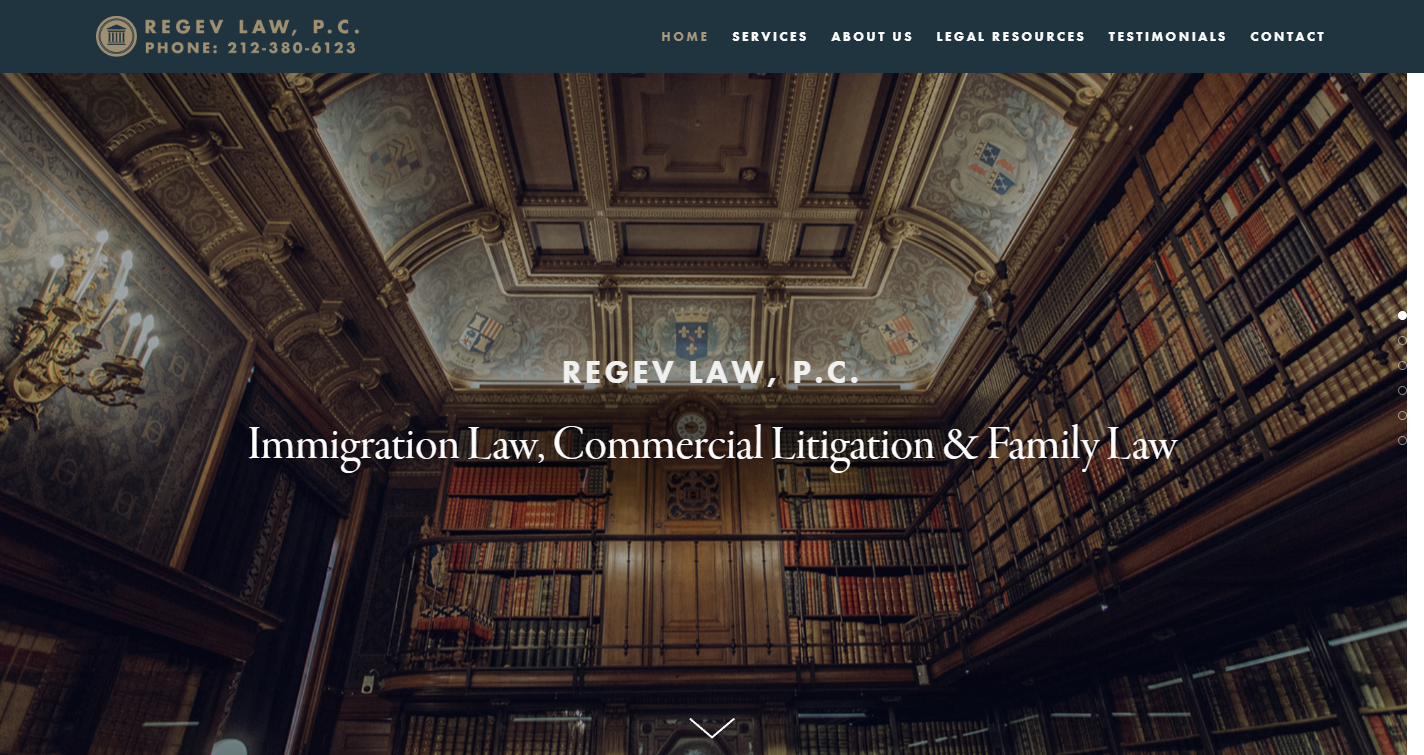
25. Regev Law
Why it works: Regev Law’s website is a great take on a classical design but with a modern feel and lasting impact on potential clients. This family law website stands out thanks to its excellent photos and elegant typefaces.
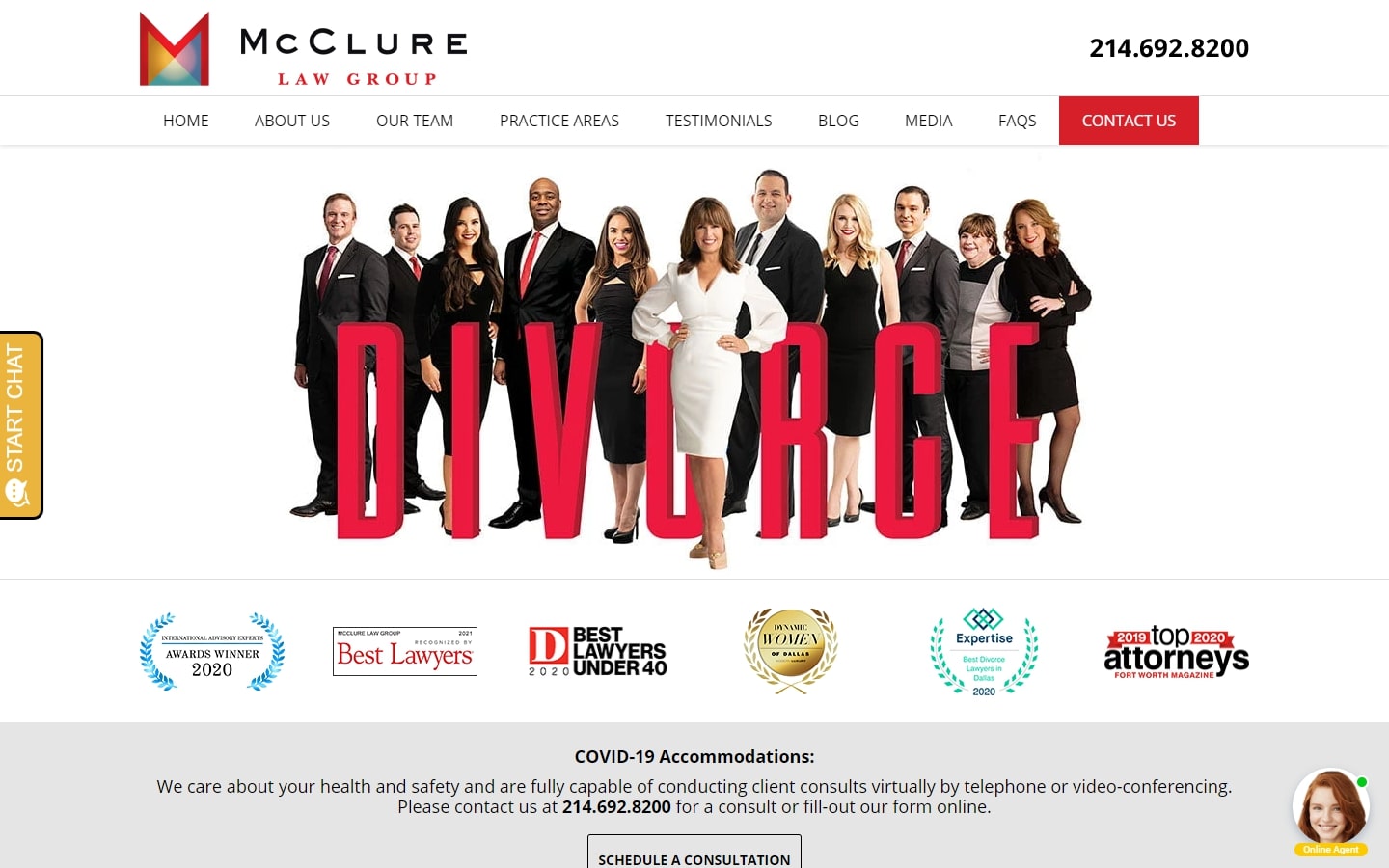
26. McClure Law Group
Why it works: A gorgeous family law web design that uses a magazine-style layout. Bright colors, red accents, and subtle animations make this website deserving of praise.
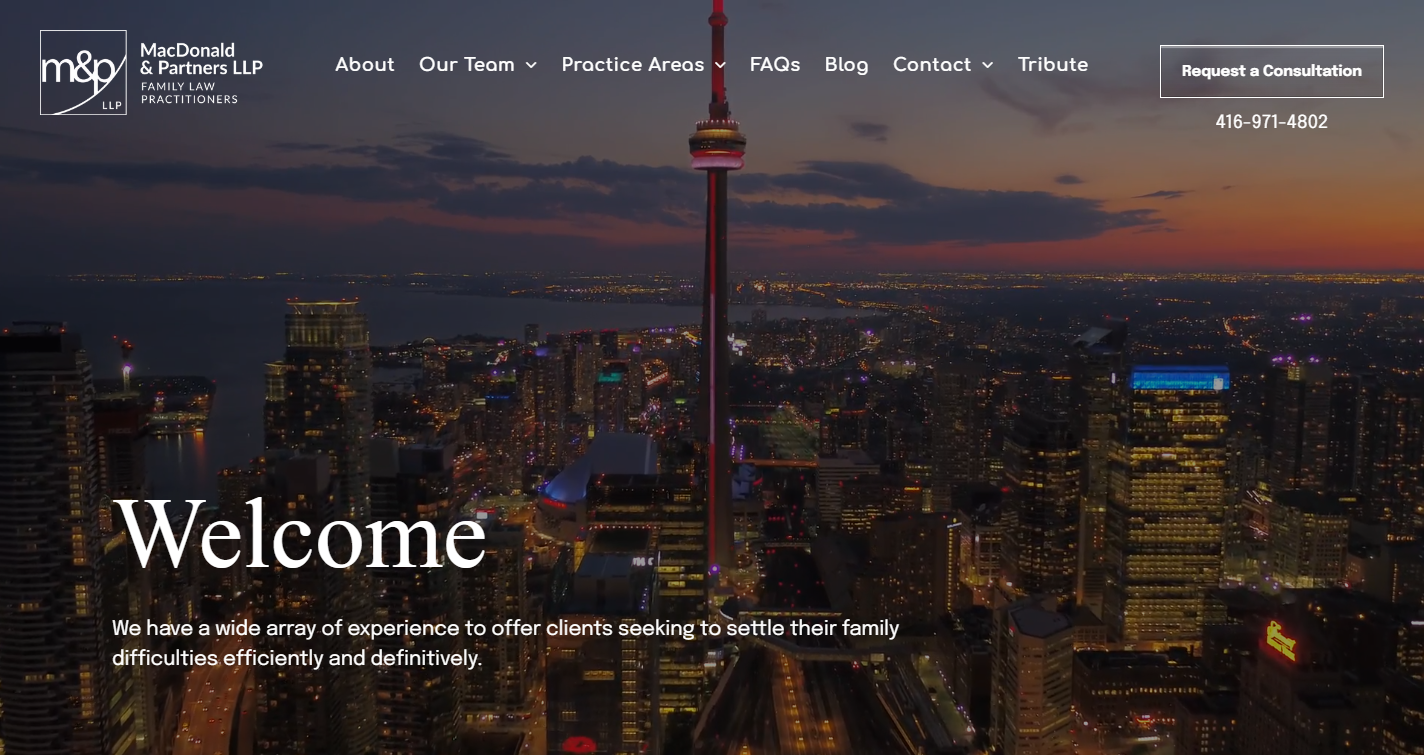
27. MacDonald & Partners LLP
Why it works: The use of a video on the landing page is an excellent way to engage potential clients. The website’s overall design is modern and sleek, with great attention to detail.
family law lawyer website design
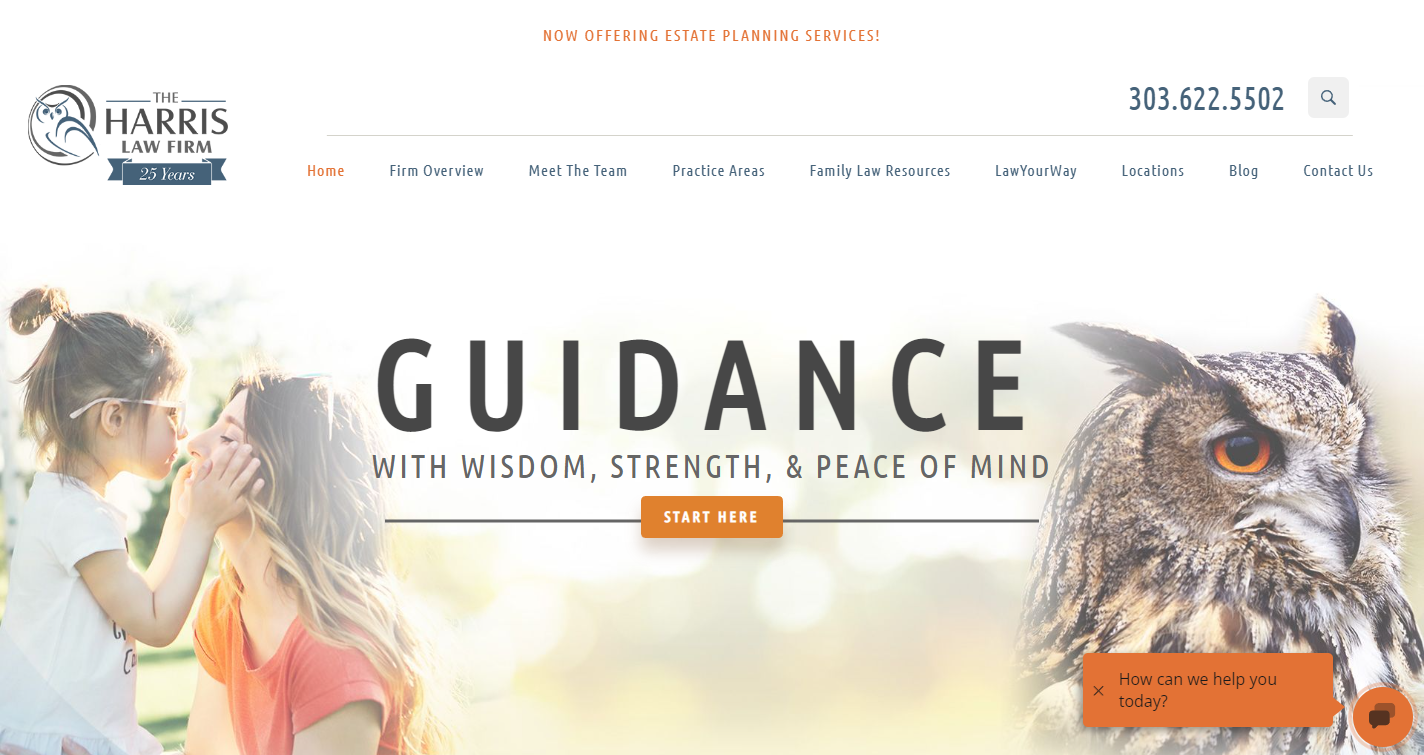
28. The Harris Law Firm
Why it works: With real bespoke visuals, fresh imagery, and a strong structure, this is a really unique approach to a modern family law website.
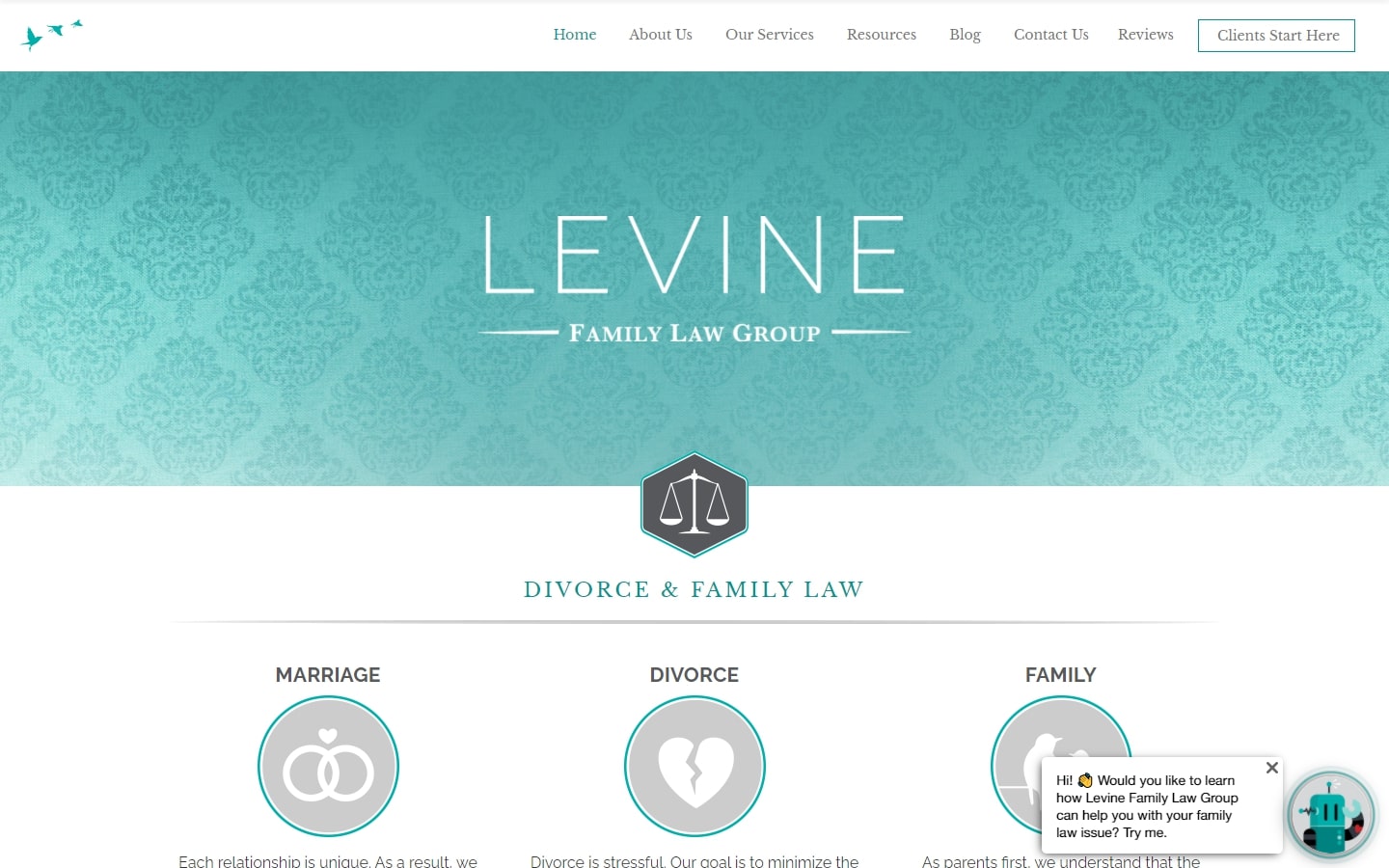
29. Levine Family Law Group
Why it works: The simplicity of this design is breathtaking! The website’s design appeared to be geared towards women rather than the other, but the vibe of the design communicates serenity and calm.
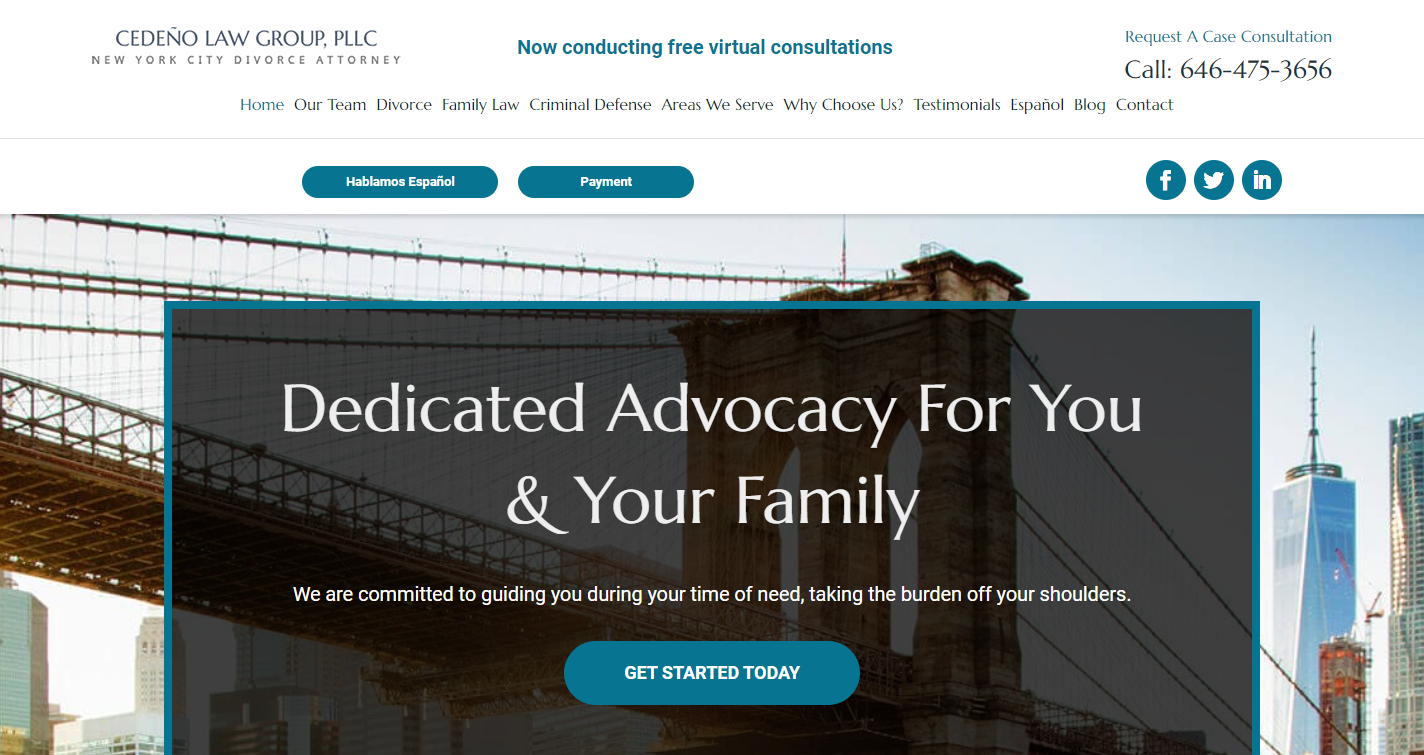
30. Cedeno Law Group
Why it works: This family law firm has a conventional look, yet it has a powerful memorable impact. With the option to translate to Spanish, buttons, and CTAs are bright and eye-catching.
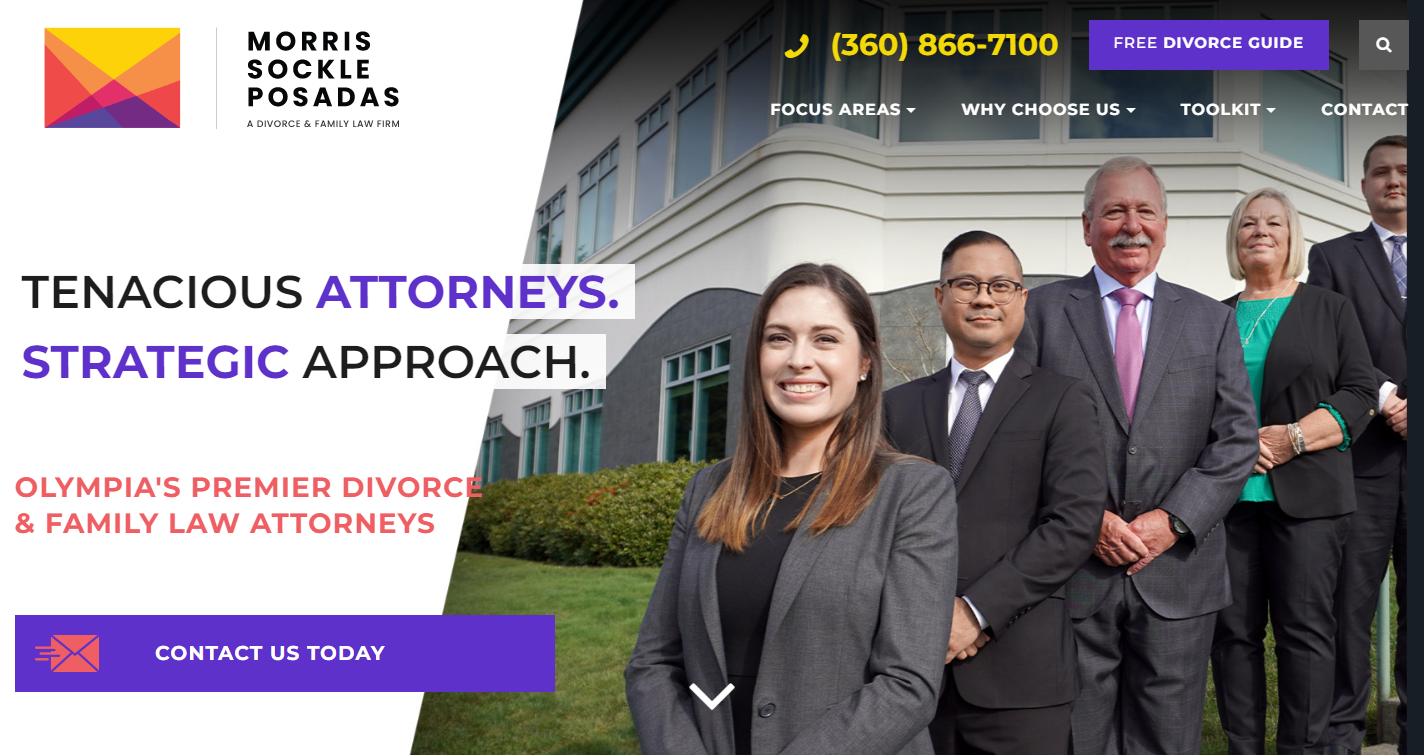
31. Morris-Sockle
Why it works: The vivid modern hues instantly bring this family law firm site to life. The contrast between buttons is clear and straightforward to find. The large bright phone number on a sticky header with a ‘free divorce advice’ attracts attention.
32. Randal Lowry
Why it works: This family law firm website design emphasizes the word “tough,” and offers a fresh new look to the typical website appearance of law firms. Graphics and colors complement really well with each other.

family law attorney websites
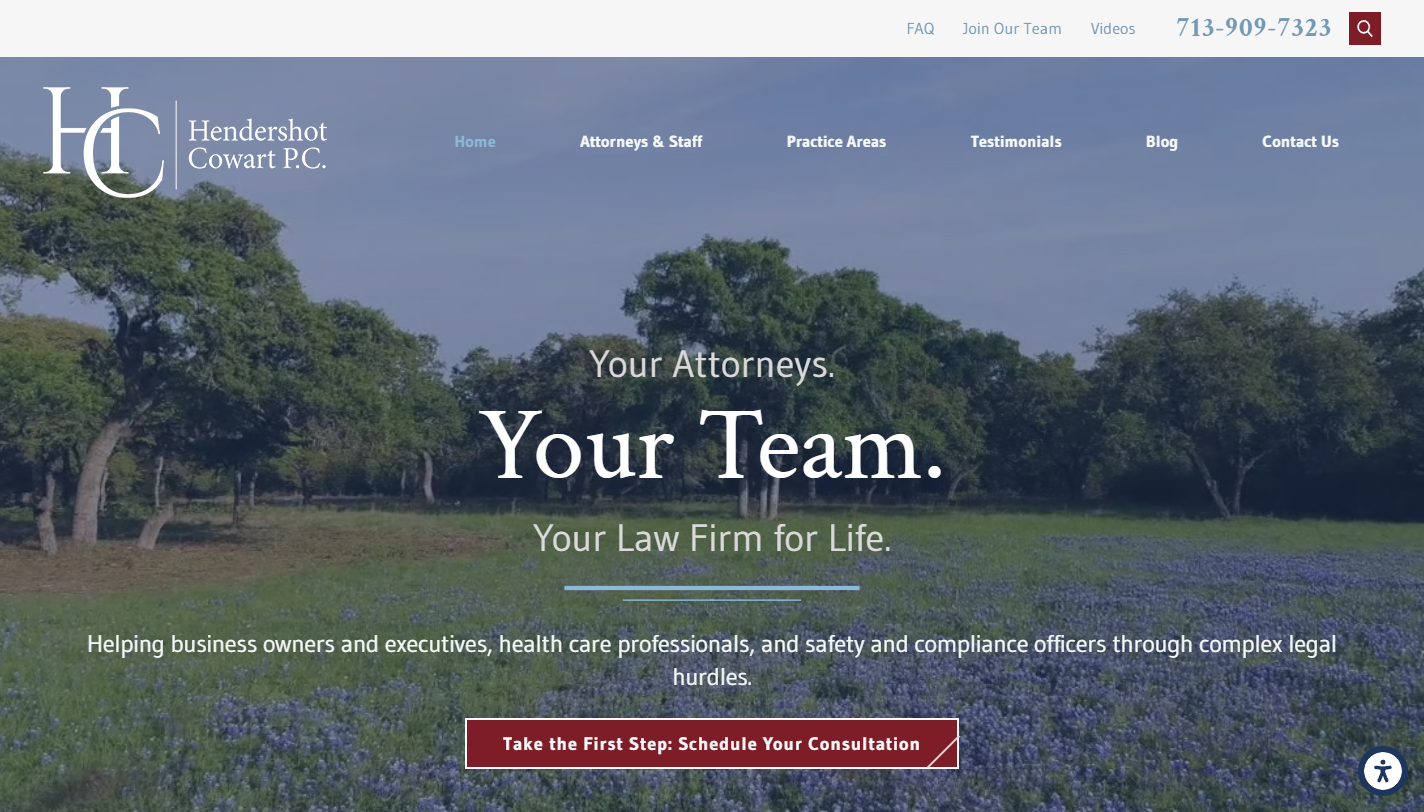
33. Hendershot Cowart P.C.
Why it works: Hendershot Cowart P.C’s law firm has a catchy video background on the hero section. Cool hover effects on buttons and subtle animations on the scroll bring the sections to life.
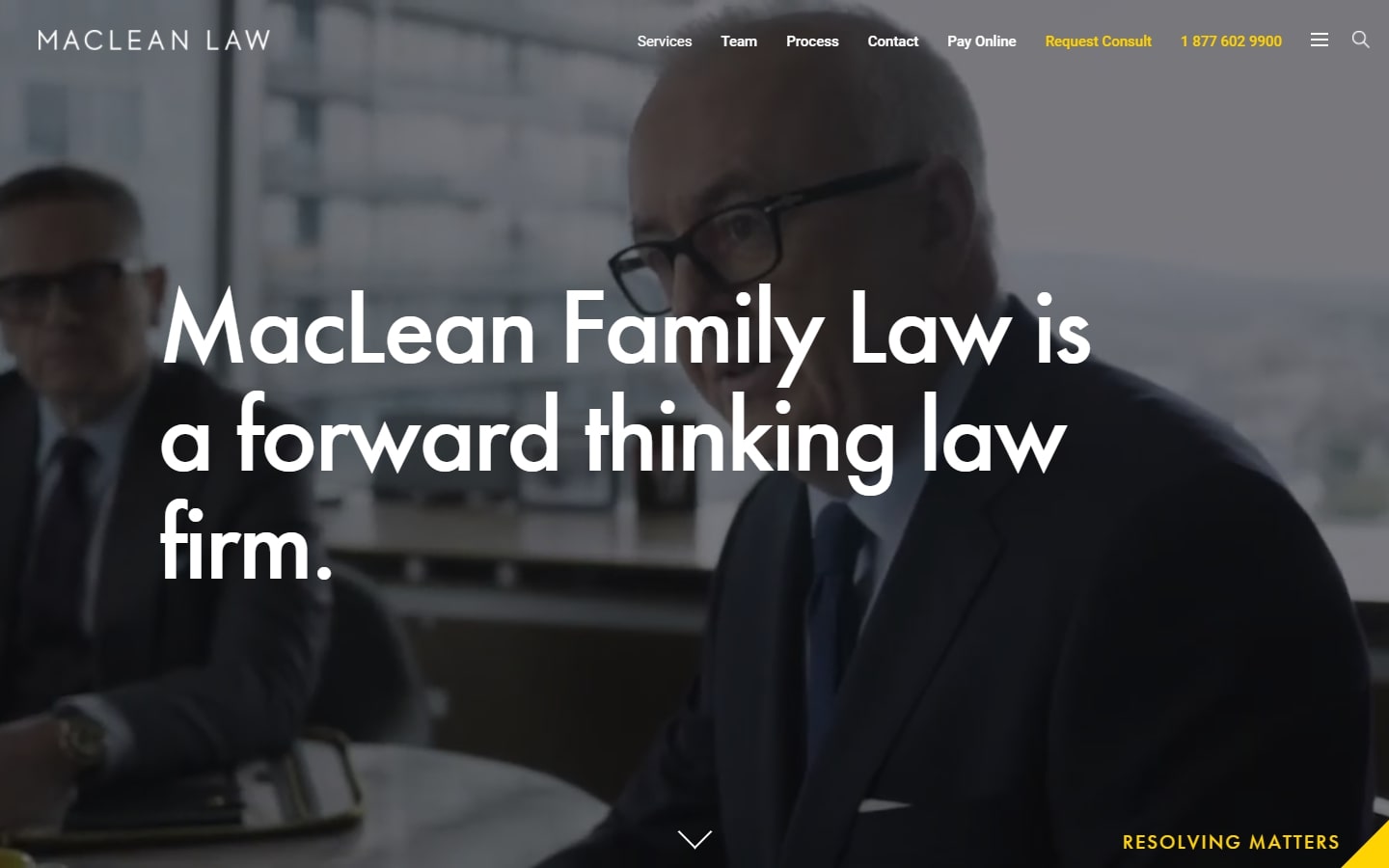
34. Maclean Law
Why it works: One of the most modern website designs on the list, Maclean’s web design is a harmonious mix of simplicity, elegance, authority, and family law branding.
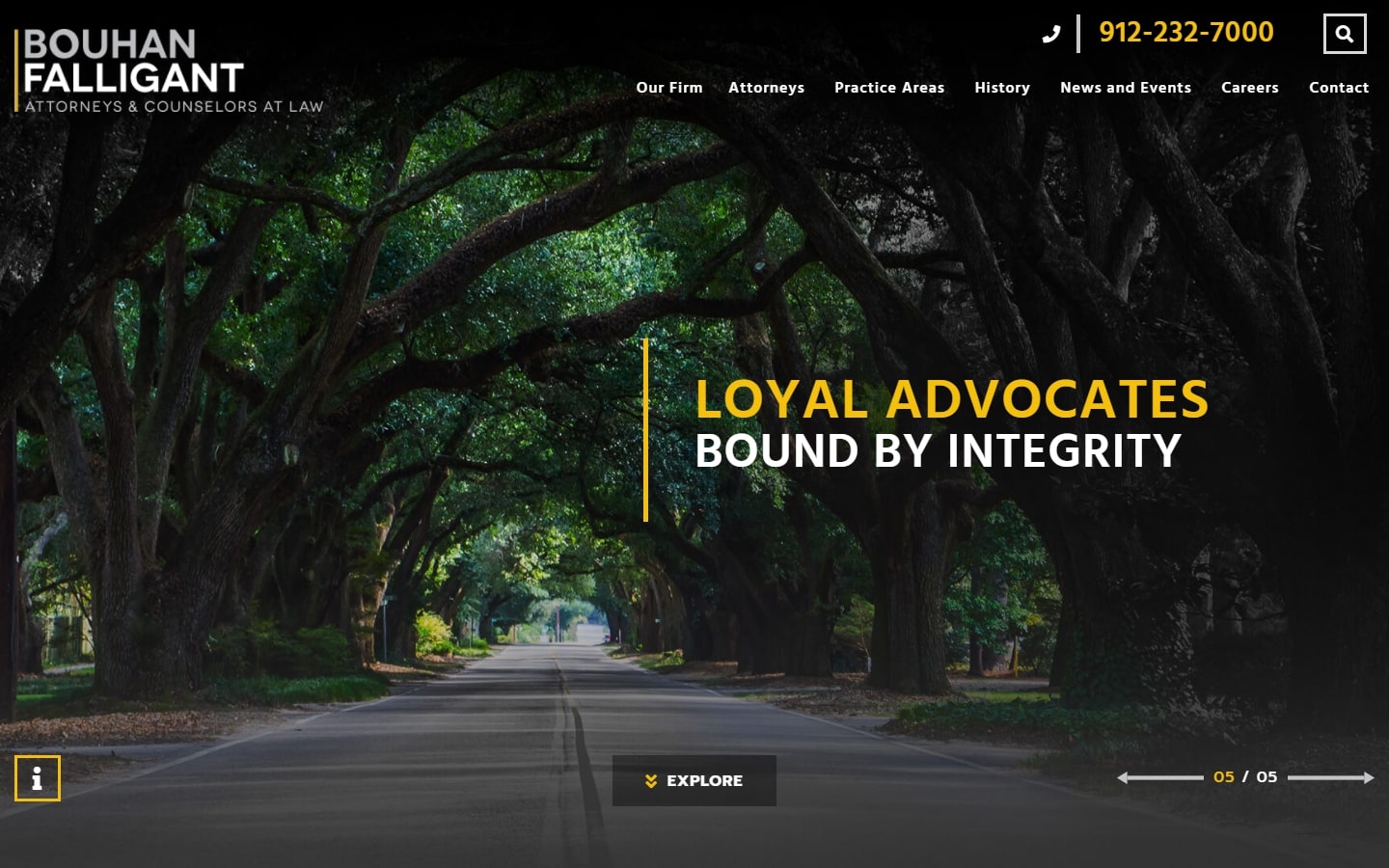
35. Bouhan Falligant
Why it works: The unconventional layout together with the cool graphics and animations makes this family law website stand out from the other law firm websites. Colors have great contrast making the texts easy to read.
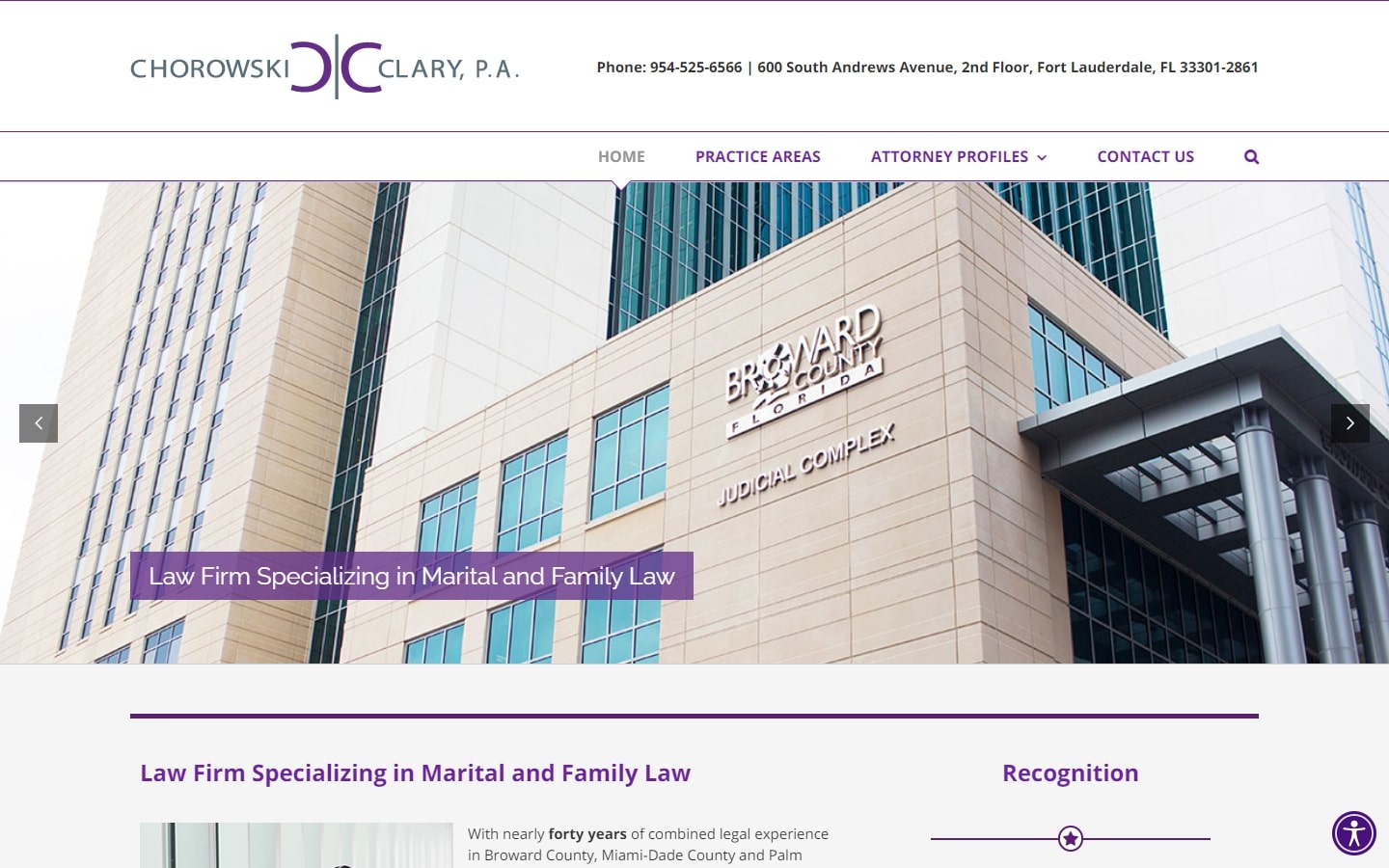
36. Chorowski Clary
Why it works: Tidy, minimal, and bright—three words that best describe this very elegant family law website. If you’re looking for a simple website for your firm, this is a very good way to start. The practice areas of this site are organized and can easily be viewed.
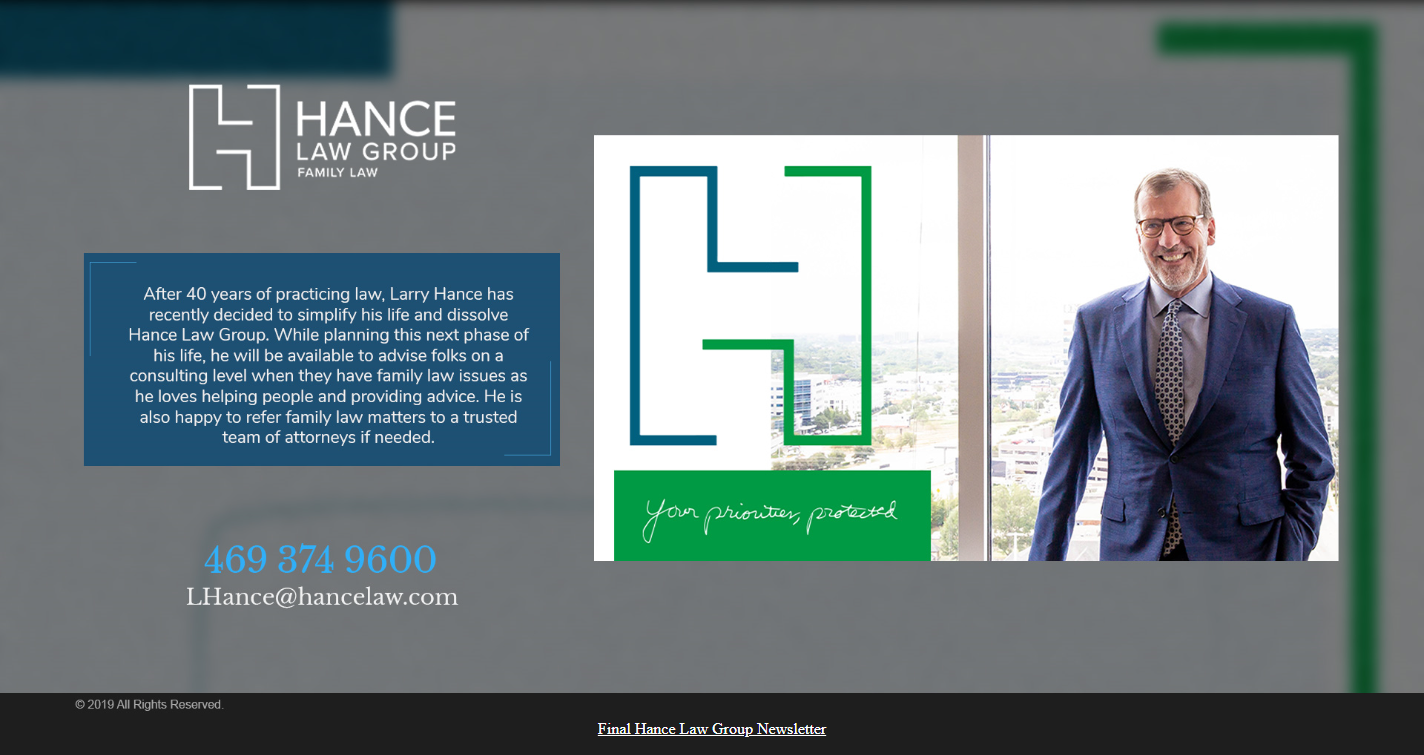
37. Hance Law Group
Why it works: This family lawyer website is clean and modern. It looks and feels high-end, with beautiful imagery, great use of space, and an overall feeling of sophistication.
best family law lawyer websites
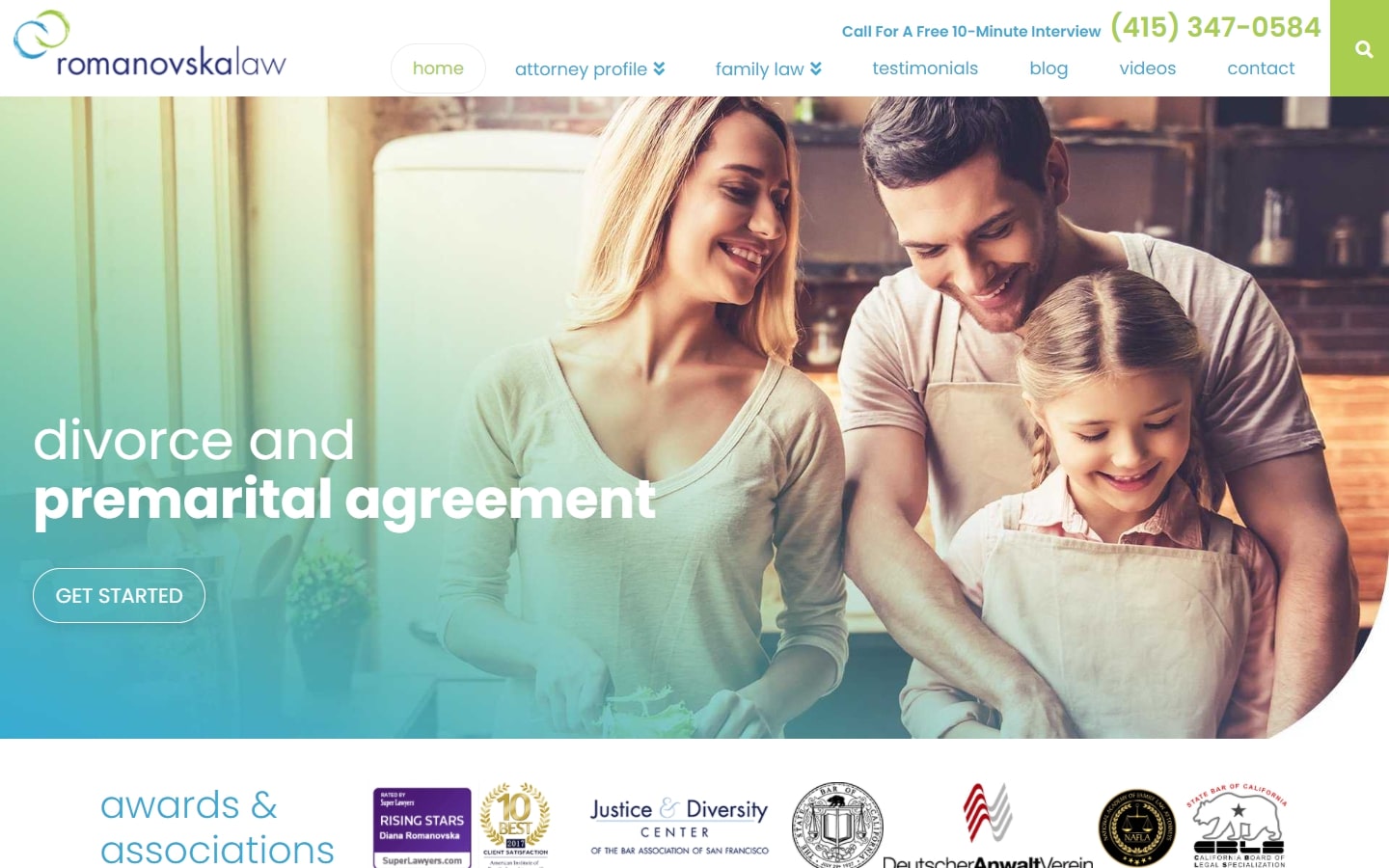
38. Romanovska Law
Why it works: The colors of the family law website felt calm and airy without being dull. This family law website showed off its accolades and affiliations to the best advantage.
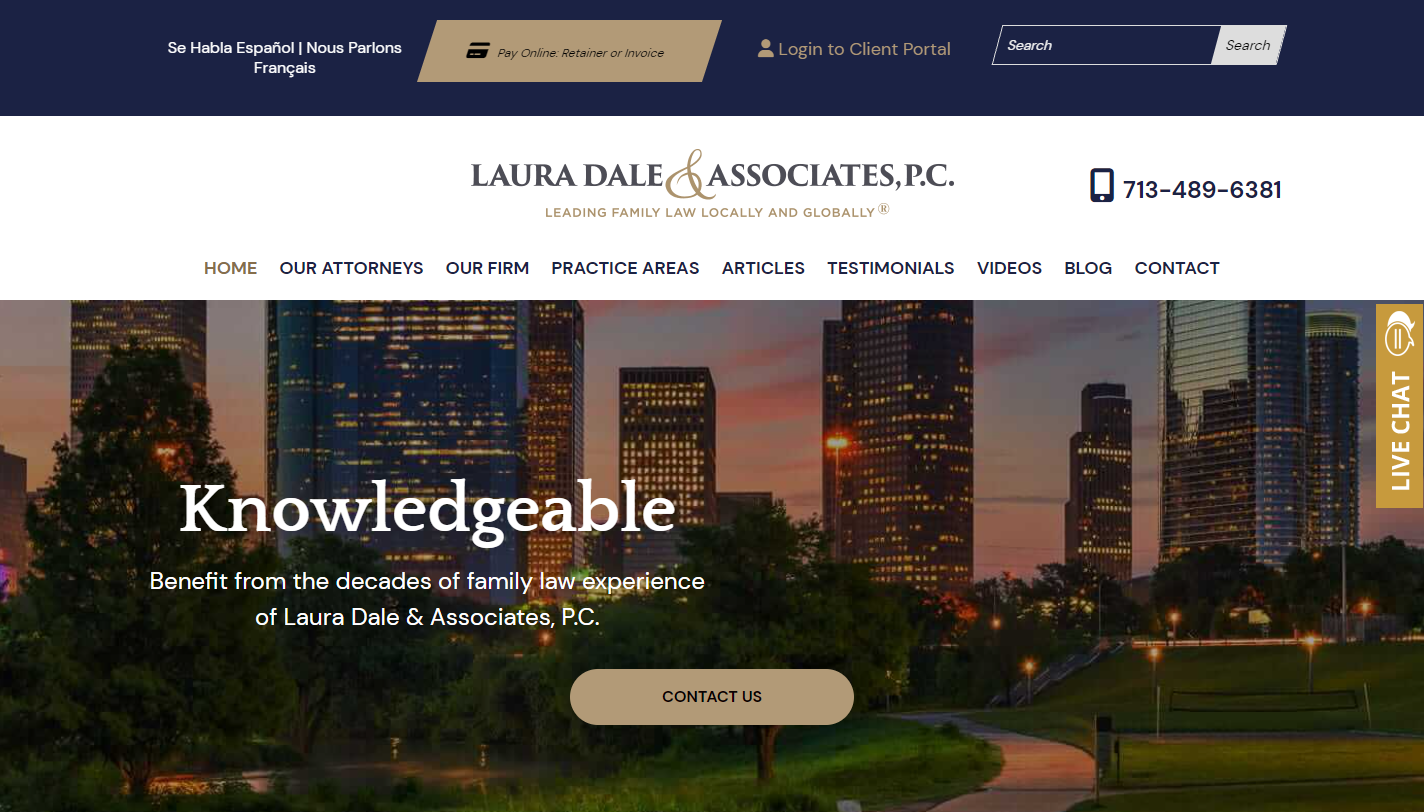
39. Laura Dale & Associates
Why it works: The gold colors add authority and presence to the family law brand. Overall, the website gave the impression of being professional.
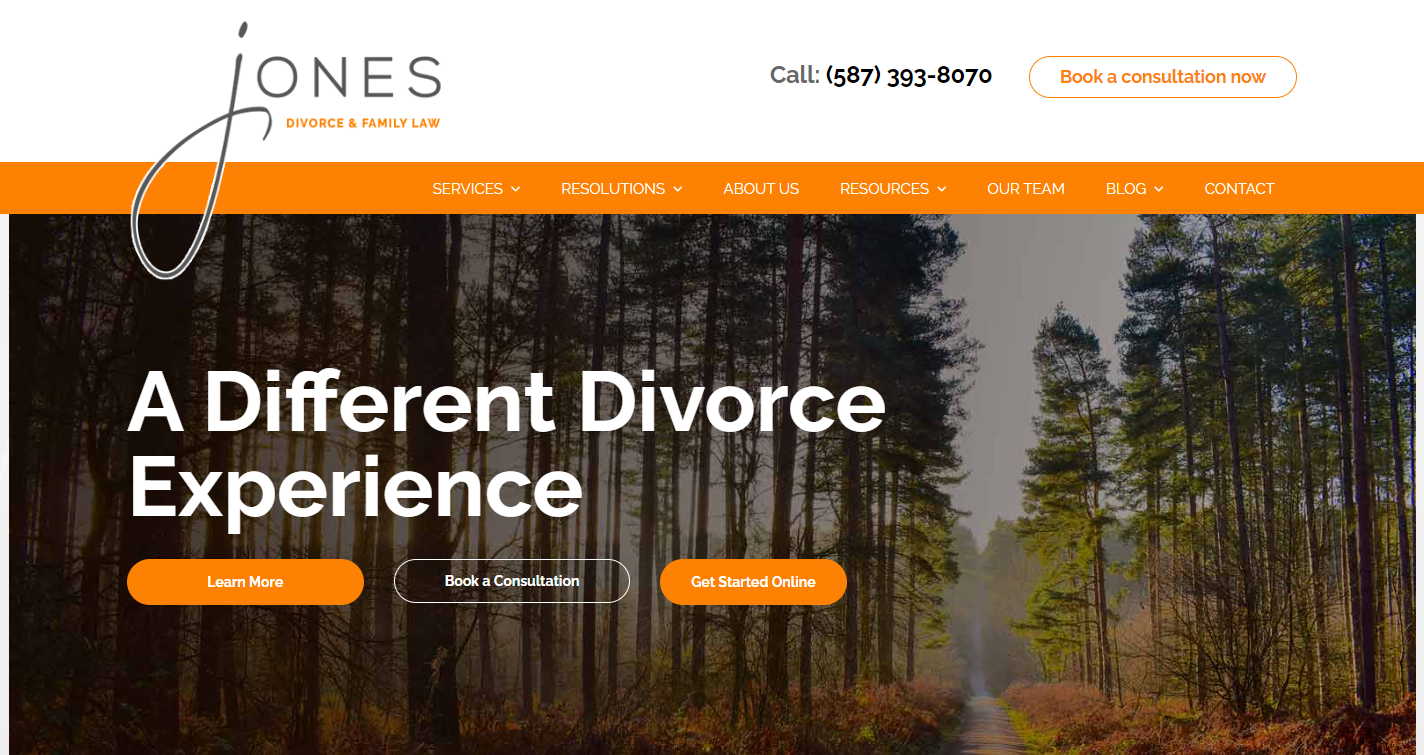
40. Jones Divorce & Family Law
Why it works: Bright and clean design without feeling overwhelming. It fosters a sense of trust and optimism. Simple yet effective layout.
Conclusion
Your family law group website is one of the most important marketing tools you have. It’s your introduction to customers and provides them with the information they need to decide whether or not they want to hire you. So, it should be clear, easy to navigate, high quality, mobile responsive, visually appealing, and well designed for search engine optimization.
If you’re looking for help with your family law website design project, you’re in the right place. We will design a custom mockup of your new website before you sign or pay for anything. There is nothing to sign and no payment information will be taken. If you like our design for your family law websites we can move forward working together. If not, there are no hard feelings and no other obligations. Click the button below to learn more.