Hedge fund websites can be great resources for institutional investors, prospective investors, hedge fund clients, hedge fund managers, and private equity firms. It is a great place to learn about the investment management industry and stock market; find investment opportunities and alternative investments, and stay up to date on the latest hedge fund news in the financial and energy industries. By exploring the 40 Best Hedge Fund Websites you can learn about the different hedge fund data available, as well as their investment strategies and performances.
A hedge fund website design will not only make you look more professional, but it will also help to increase your web traffic and conversions. By having a well-designed hedge fund website, you can establish yourself as an authority in the industry. People will be able to learn about your hedge fund and what services it has to offer, and you will be able to connect with new investors and clients.
1. Long Ridge
Why it works: While this design is simple and contains just standard images and the latest data, what makes it stand out is the creative use of geometric shapes that turns the rather ordinary layout into a grand work of art.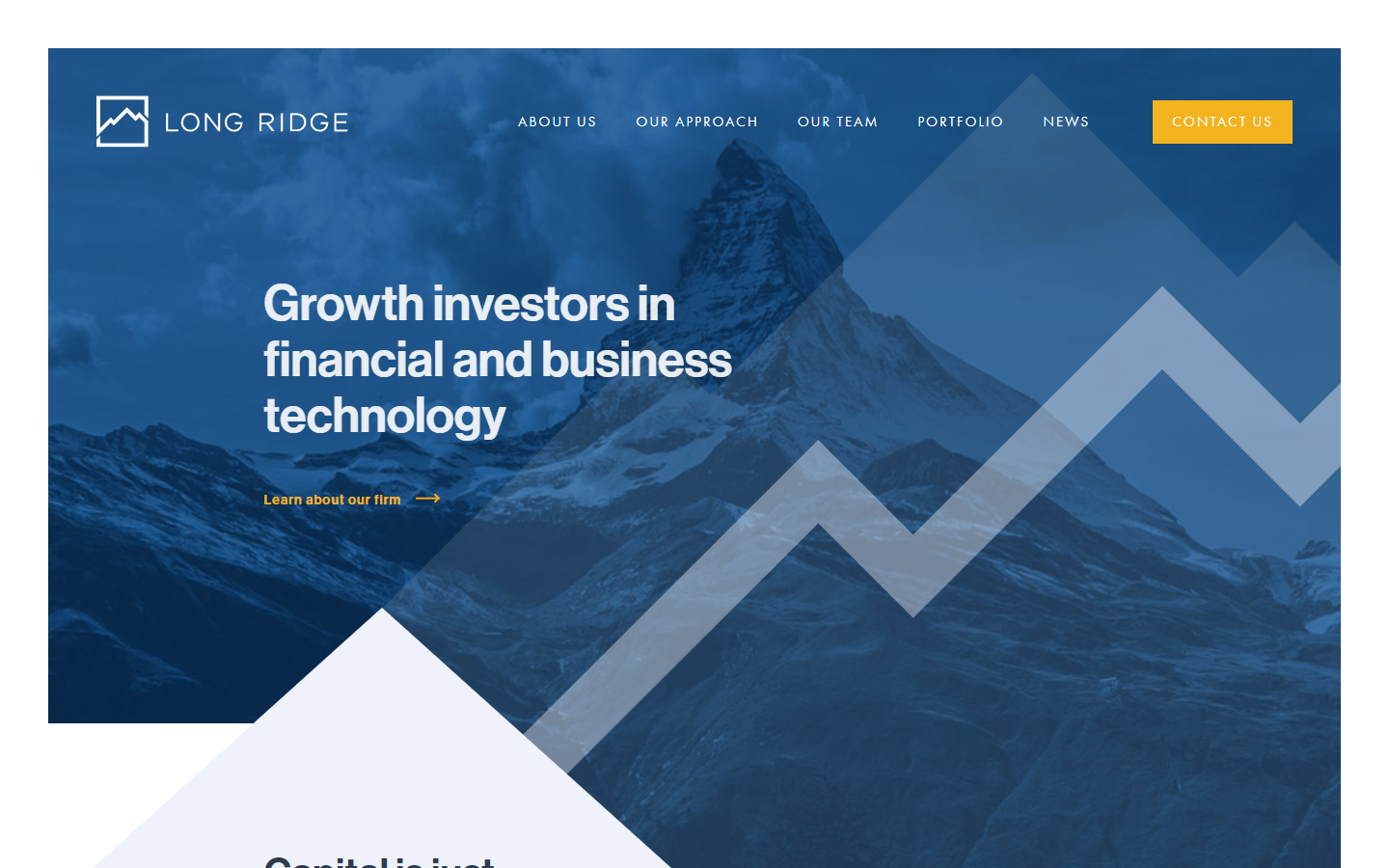
long-ridge.com
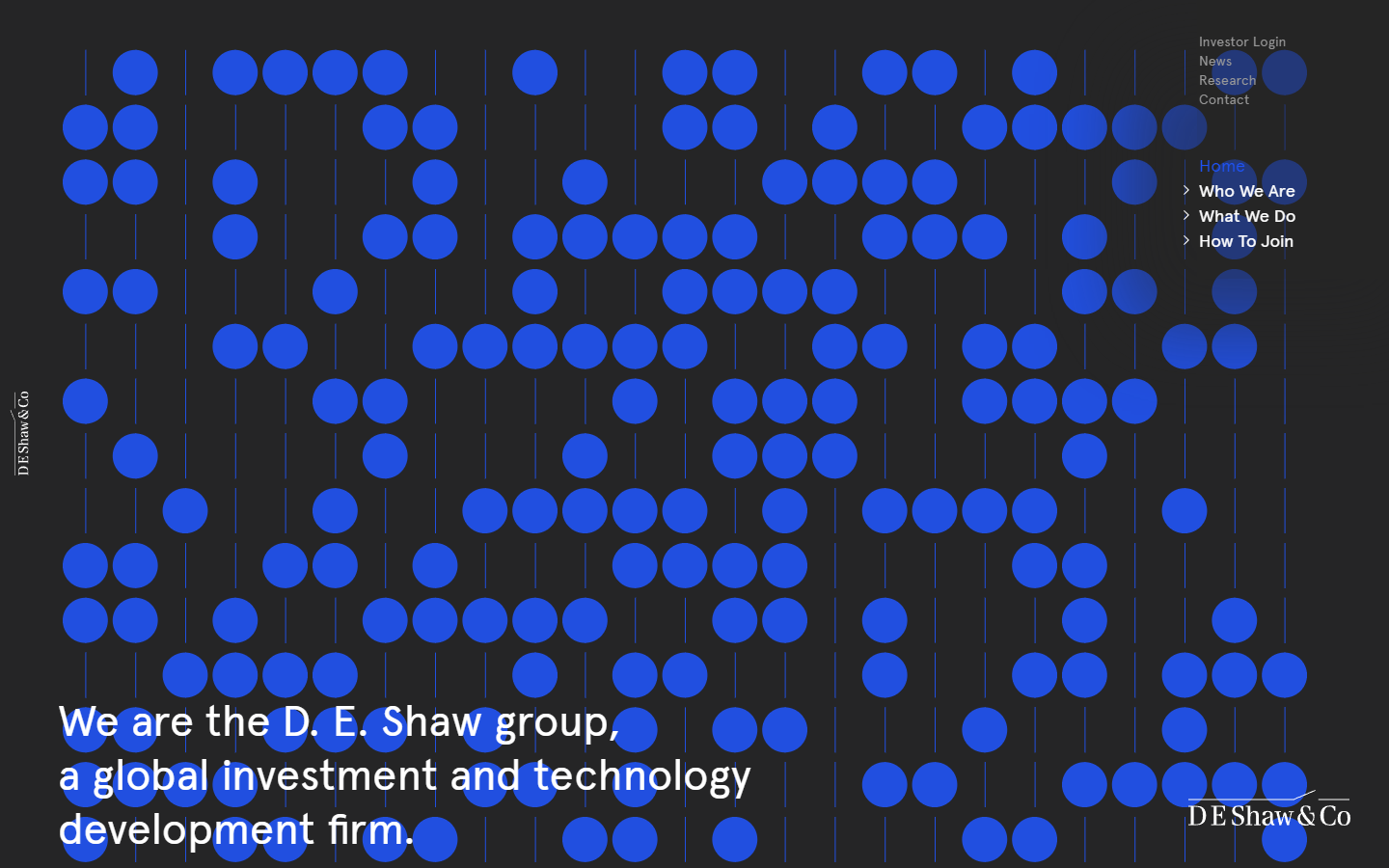
2. The D.E. Shaw Group
Why it works: This site is graphic-heavy at first glance but is very lightweight and snappy. Navigation is also kept to a minimum for added intuitiveness.
3. York Capital
Why it works: The site is an artful journey through the less-is-more principle. With its minimalist design and sophisticated color palette, this website provides a tranquil experience that feels both authoritative as well as organized.

yorkcapital.com
4. Marshall Wace
Why it works: Aside from the beautiful looks, we love that the overall feel of this site has an emotional impact on the visitor navigating it. This is very rare and is thus worthy of our attention. The business website login area for the investors is also easy to access and use.
mwam.com
Hedge Fund Web Design
5. GoldenTree Asset Management
Why it works: Mysterious, authoritative, and poignant, this hedge fund website design is a must-see for those who are looking for design inspirations. One particular feature of this site’s design is its attempt to break free from the norms and create a one-in-a-million user experience.
goldentree.com
6. BNY Mellon
Why it works: From its stunning visuals, subtle yet effective animations, and top-of-the-line created content. The way that the graphics are designed and implemented into each level makes for a truly impeccable.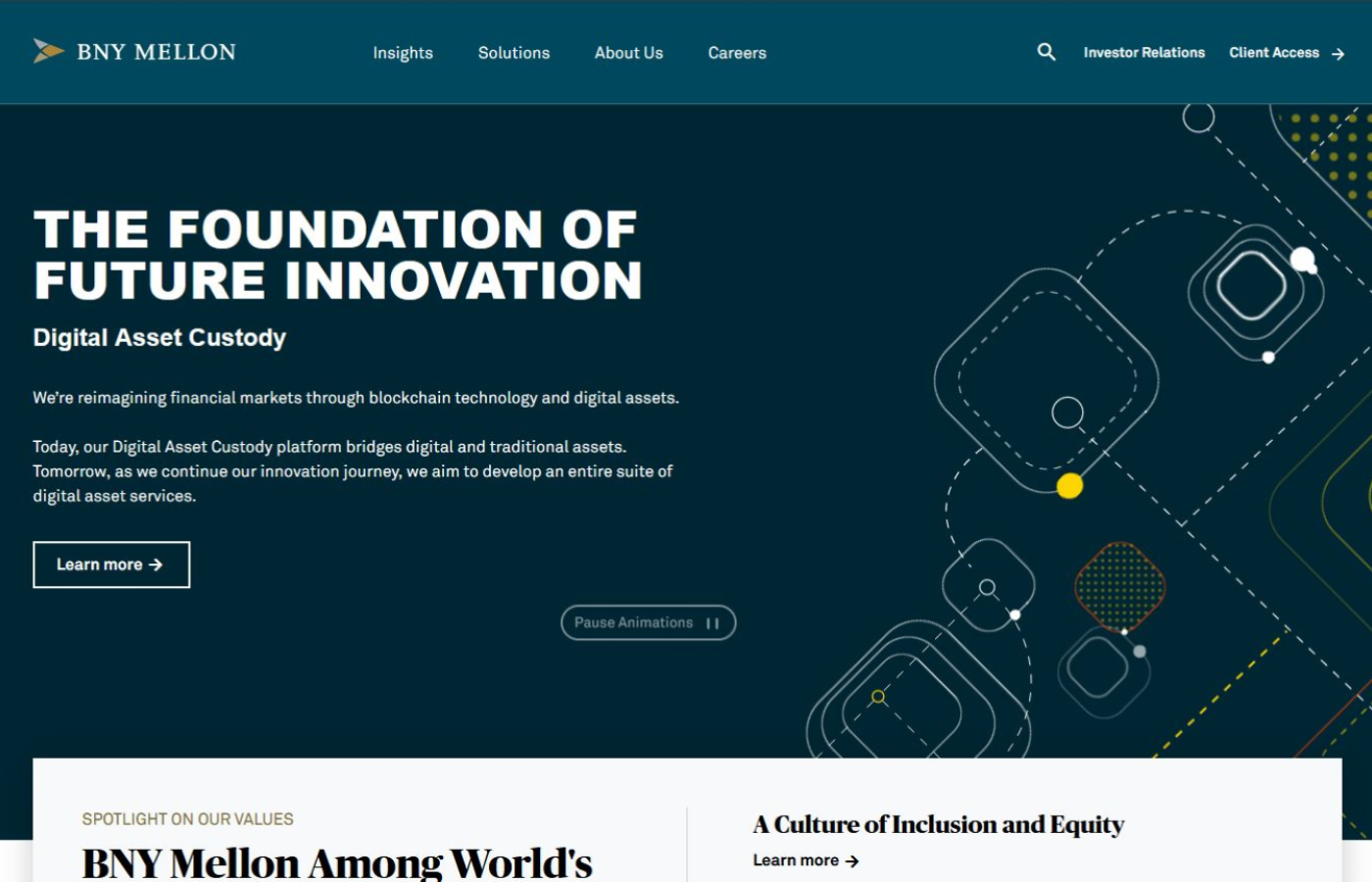
bnymellon.com
7. Sculptor
Why it works: We love the speed and beauty of this website, particularly how it harmonizes geometric shapes and subtle graphics. One must not miss also the subtle animations that push life to clients’ experiences.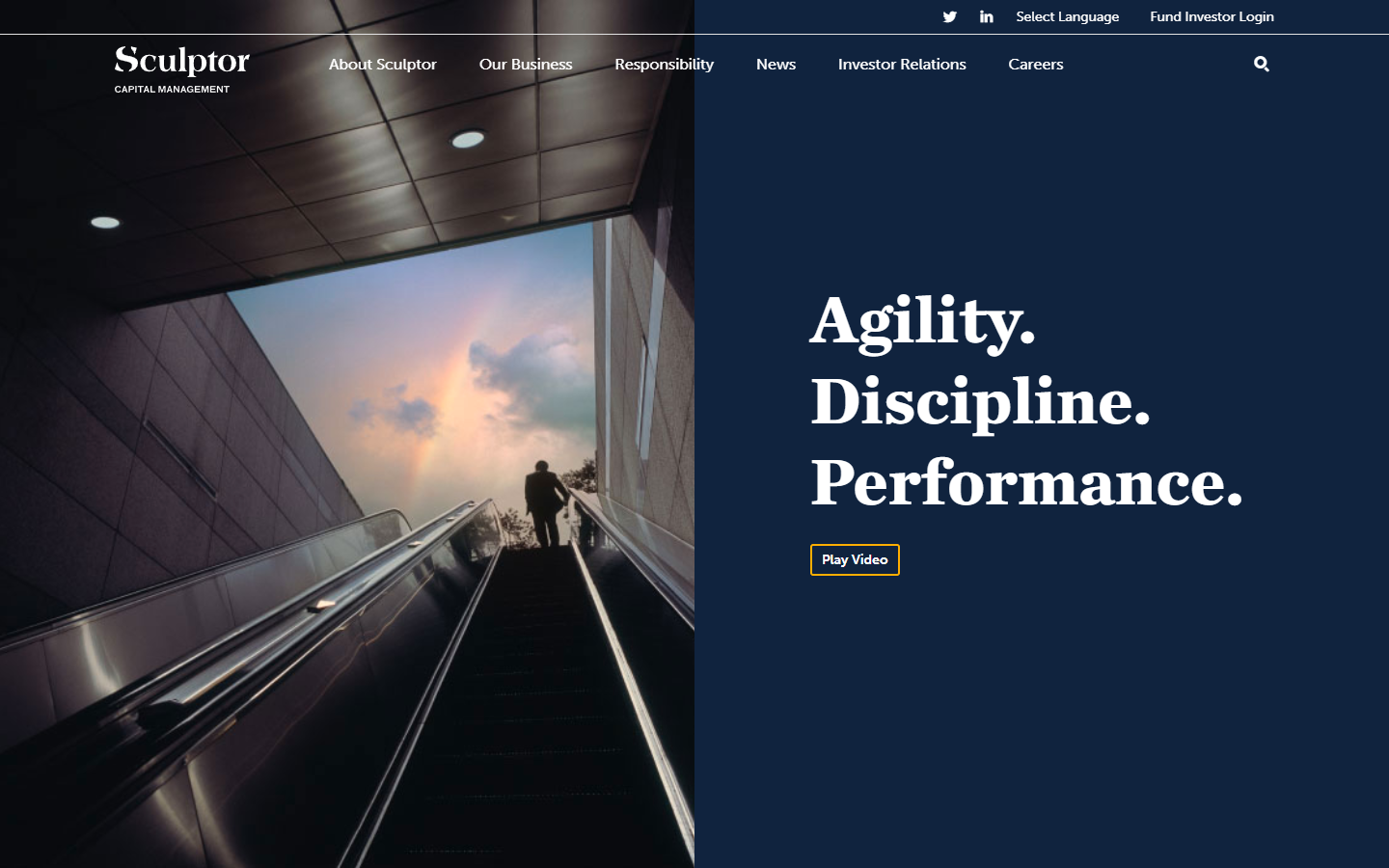
sculptor.com
8. HonTe Advisors
Why it works: We love how easy it is for a visitor to navigate through their pages. The design is also minimal but efficient. The background video on the homepage dramatically adds life to the site design and great example website from many of the hedge funds website.
honteinv.com
Best Hedge Fund Websites
9. Canyon Partners
Why it works: There aren’t that many graphics to contest in this web design, but for some reason visiting this website created vitality and substance. Navigation access is also kept to a minimum which we like.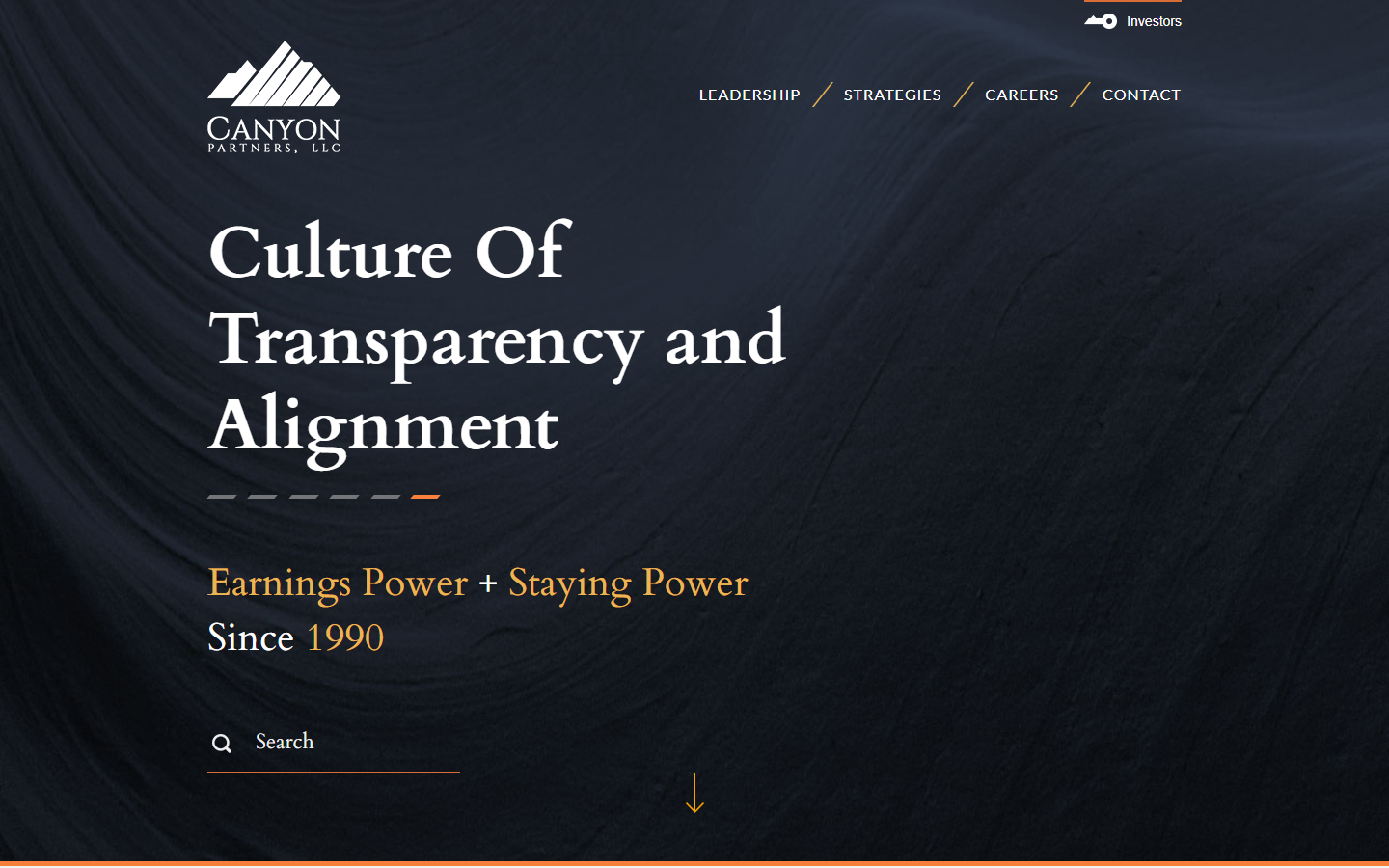
canyonpartners.com
10. Millenium Management Group
Why it works: Normally, sites without photographs are uninteresting and cheap, but this website on our list stands out with its layout’s out-of-the-box innovation. Overall, it’s neat, distinct, intriguing and great example website from many of the hedge funds website.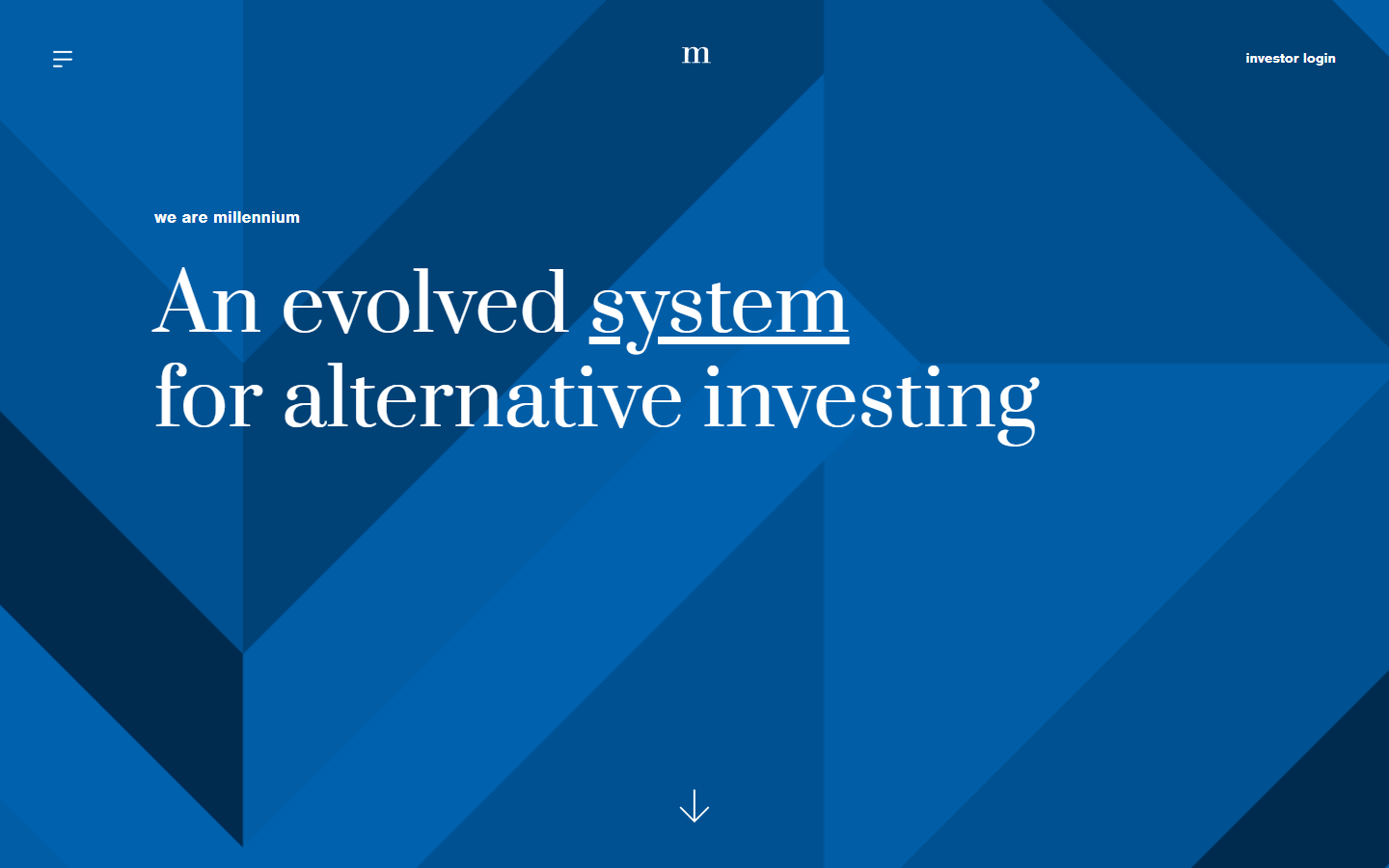
mlp.com
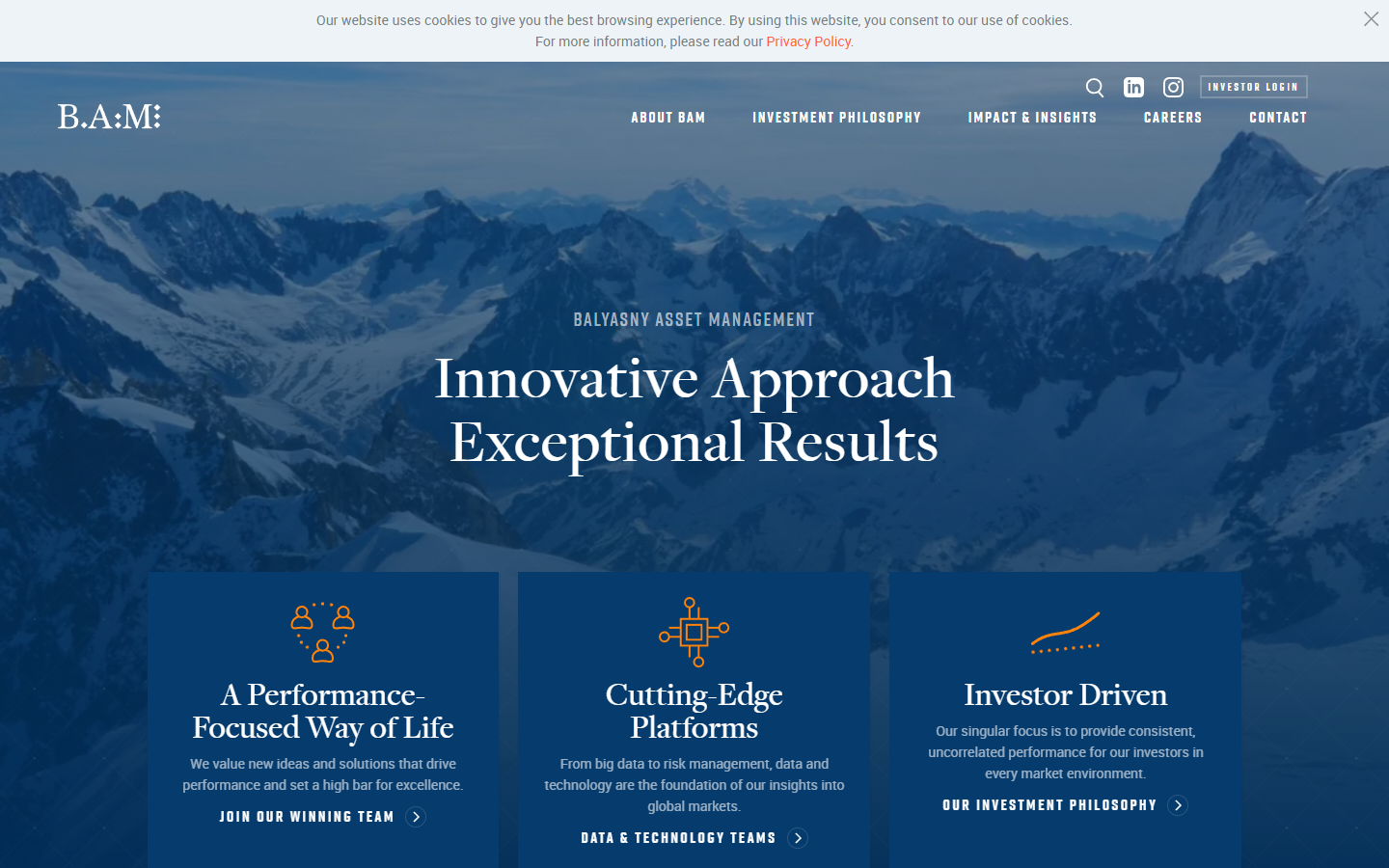
11. B.A.M.
Why it works: B.A.M. is the perfect recipe for balance, harmony, symmetry, and usability. Everything felt cohesive and honest here. Overall it’s a pleasing experience without being overwhelming.
12. AQR Capital Management
Why it works: AQR Capital Management, is streamlined, and way too friendly to the eyes. Aside from the visuals, we love the amount of time they spent to perfect every single page of this website. The layout and development in each section are just spectacular.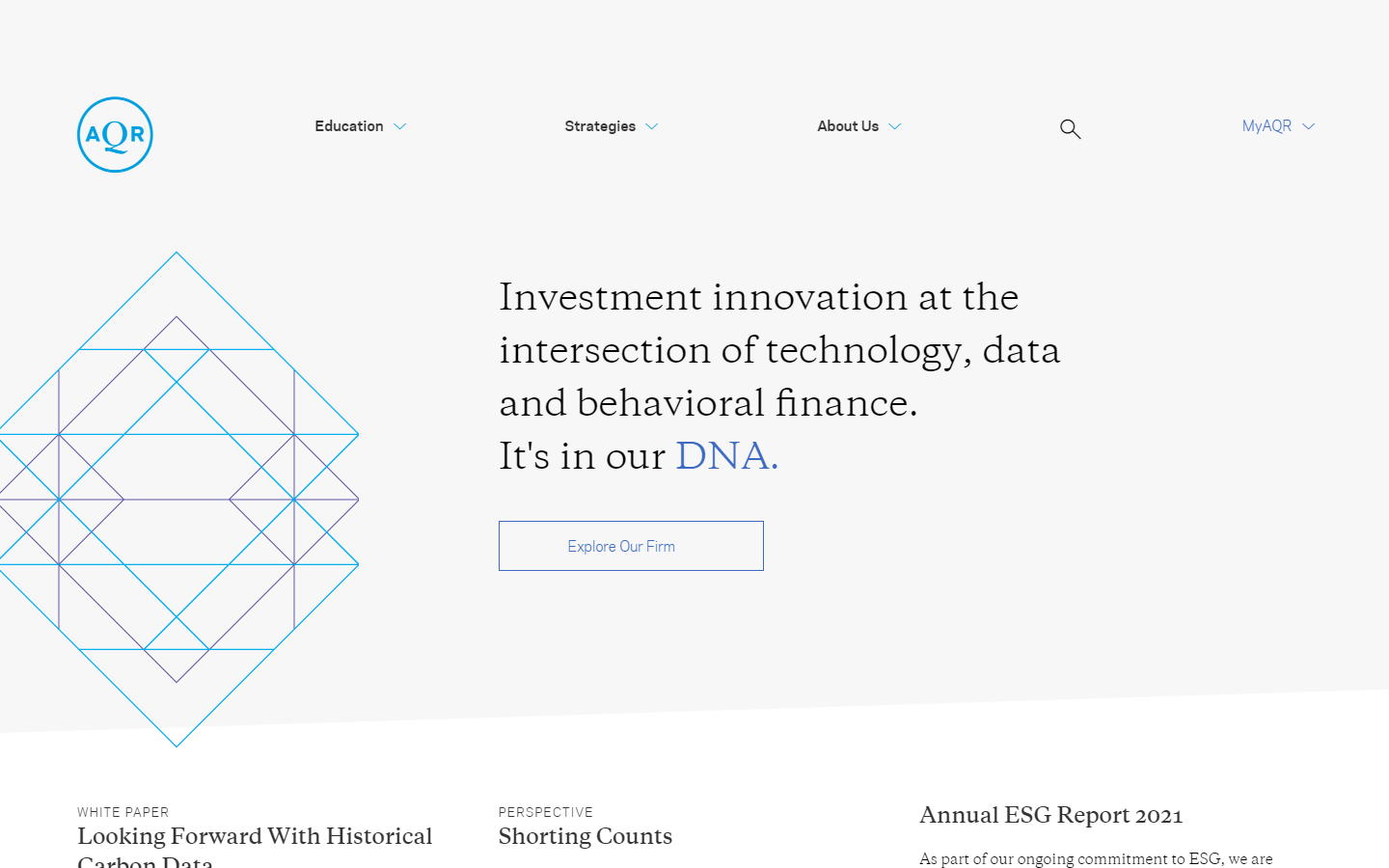
aqr.com
Hedge Fund Website Inspiration
13. UBS Hedge Funds
Why it works: Without any flourishes and pushy graphics, one can immediately tell that this investment management company is a veteran in the industry. Their website speaks and feels a thousand words. Once you see the website, you can immediately know it is a giant.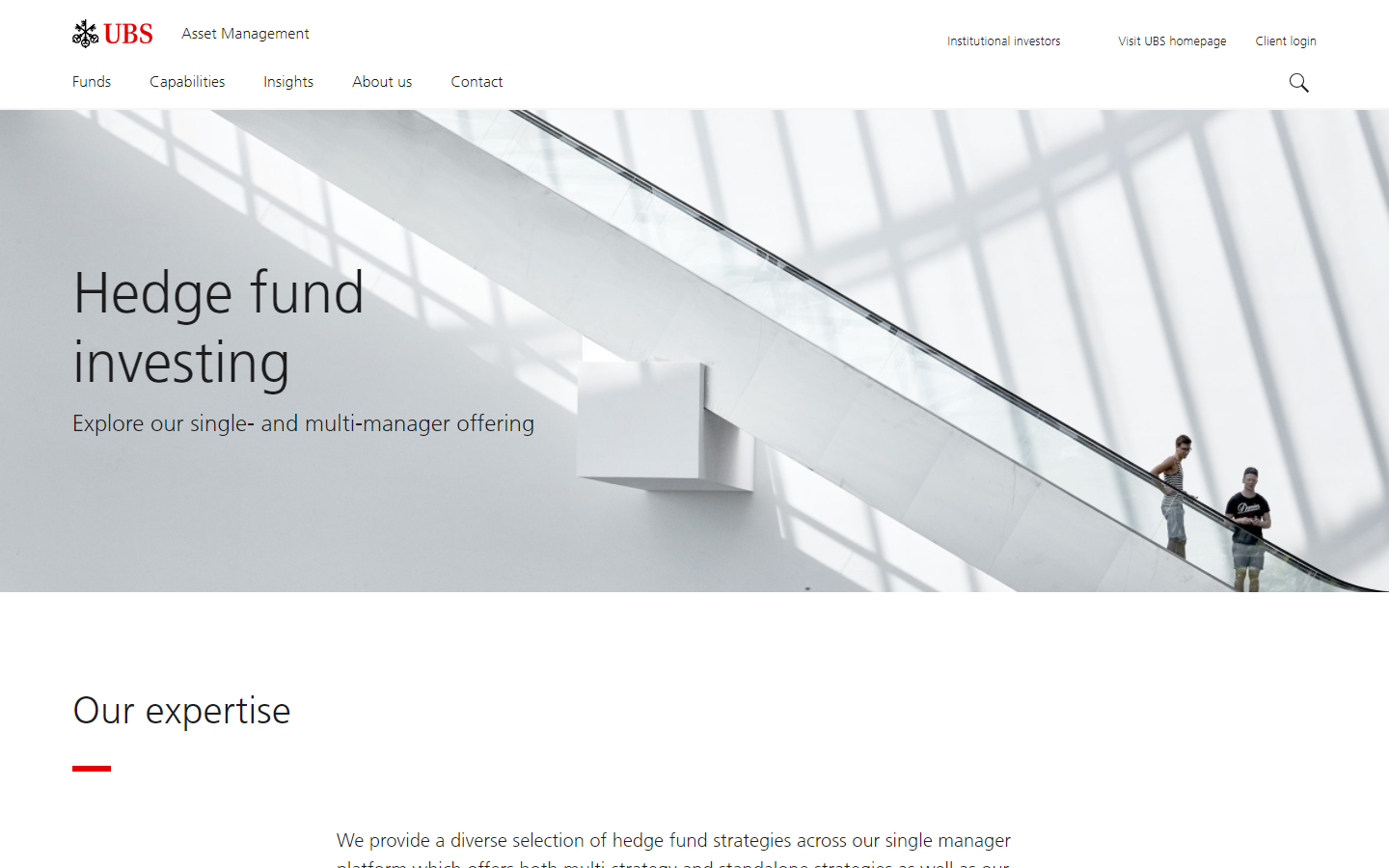
ubs.com
14. Pharo
Why it works: Impactful is the word I’d like to use on their design. Clear navigation, very intuitive layout, and bite-sized content for easy understanding of data. pharo.com
15. Sphera
Why it works: Sphera’s website is straightforward and minimal, but fascinating with blue tones and whitespace across the web pages. They go above and beyond by incorporating good examples of animation and hover effects into their website.
spherafund.com
16. Capstone
Why it works: Rather than the usual stock photos, we love the abstractness of the graphics and images their web designer used. It also has a beautiful and unique menu that adds to the original styling of the design.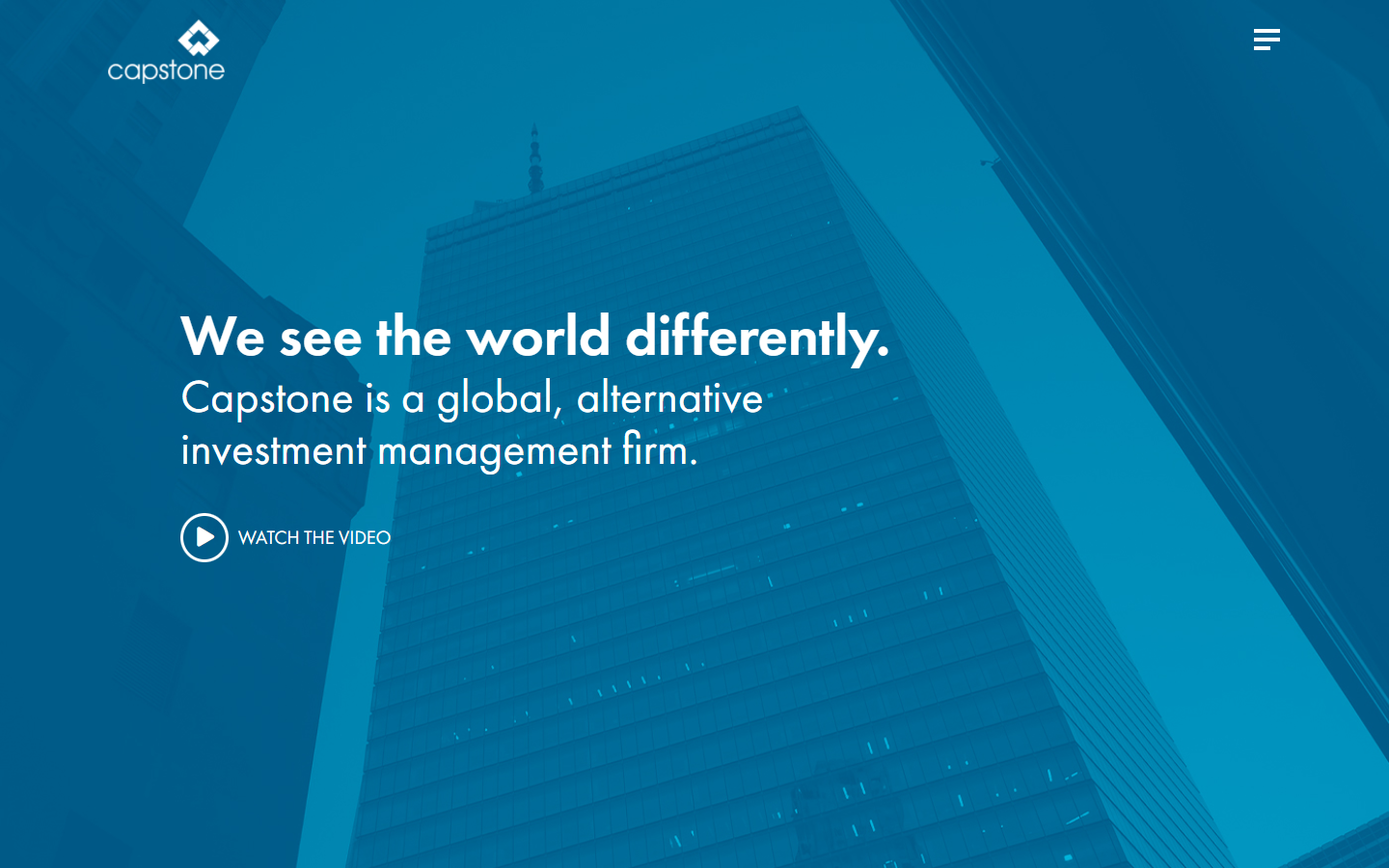
capstoneco.com
Well-Designed Hedge Fund Websites
17. Brevan Howard
Why it works: Modern, sleek, and utterly professional in design and layout! We love the strong emphasis on typography that acts as the bread and butter of the website as a whole.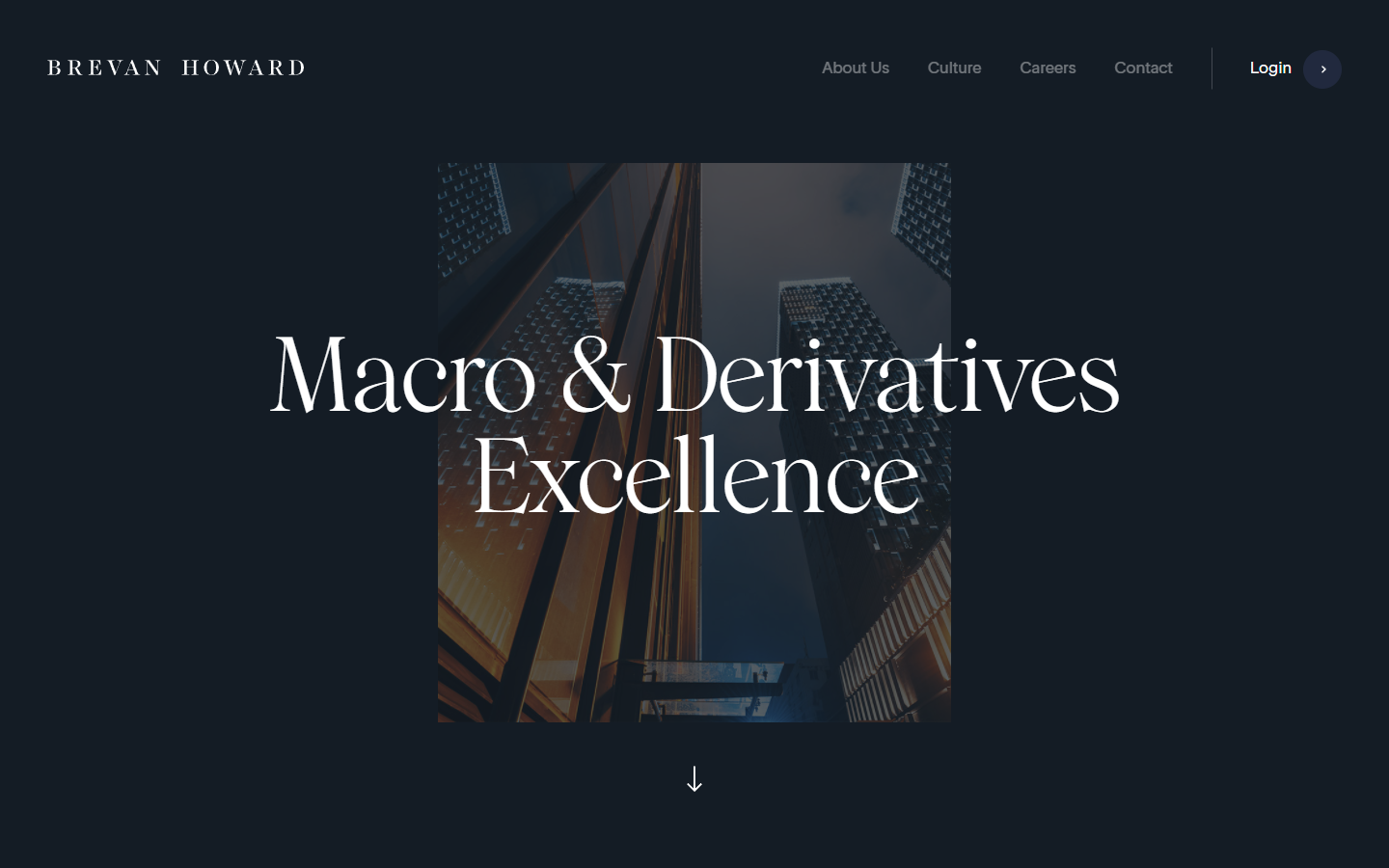
brevanhoward.com
18. Farallon Capital
Why it works: As light as a feather, this website is minimal and easy for visitors and clients of all ages. We love how easy it is for one to know what exactly they offer to potential clients, from page load down to the inner pages.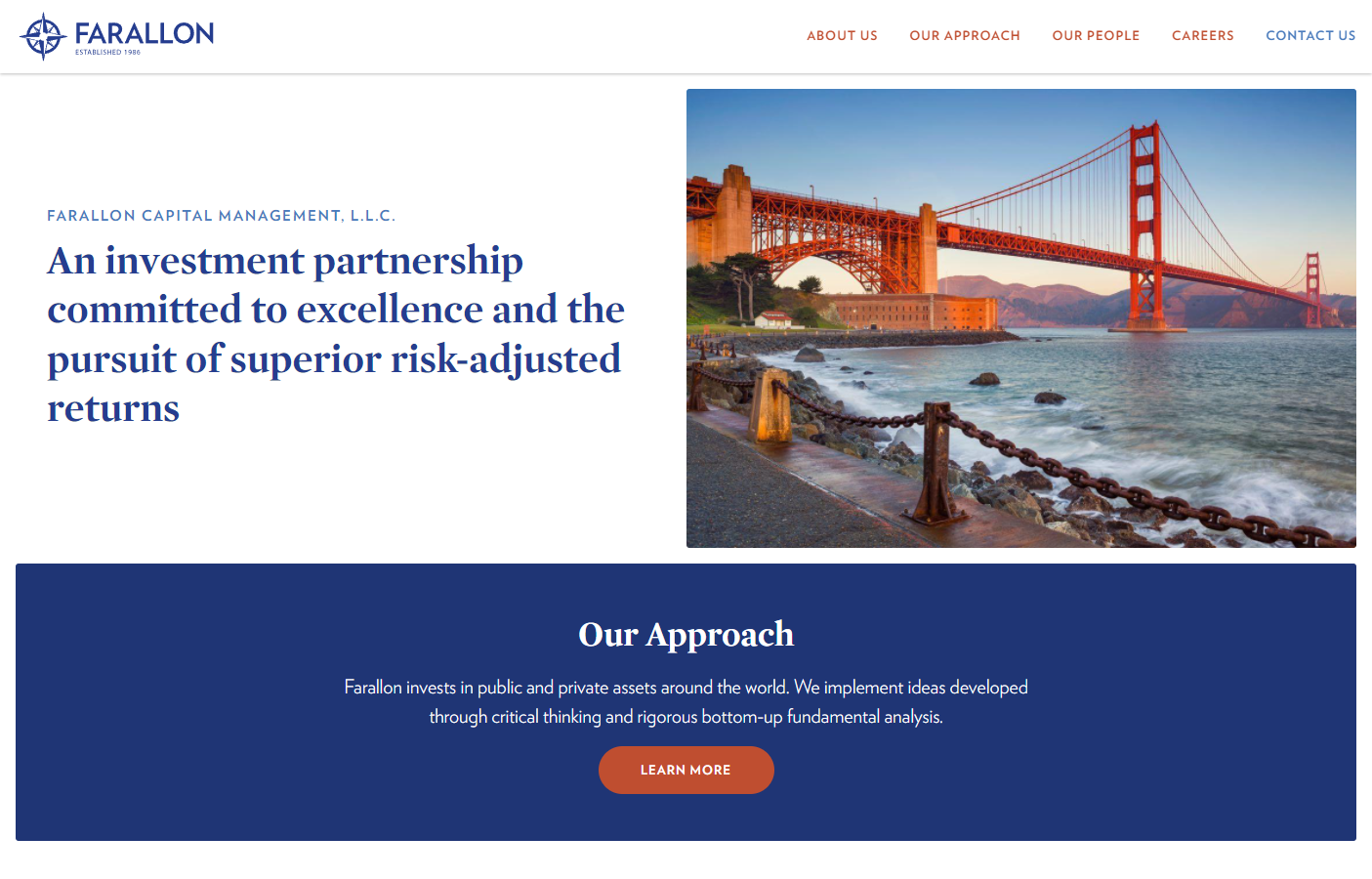
faralloncapital.com
19. Winton
Why it works: Highly informative, crisp, and practical, this is an experience more than just merely an online experience. We also love how the site dims when one hovers over the menu.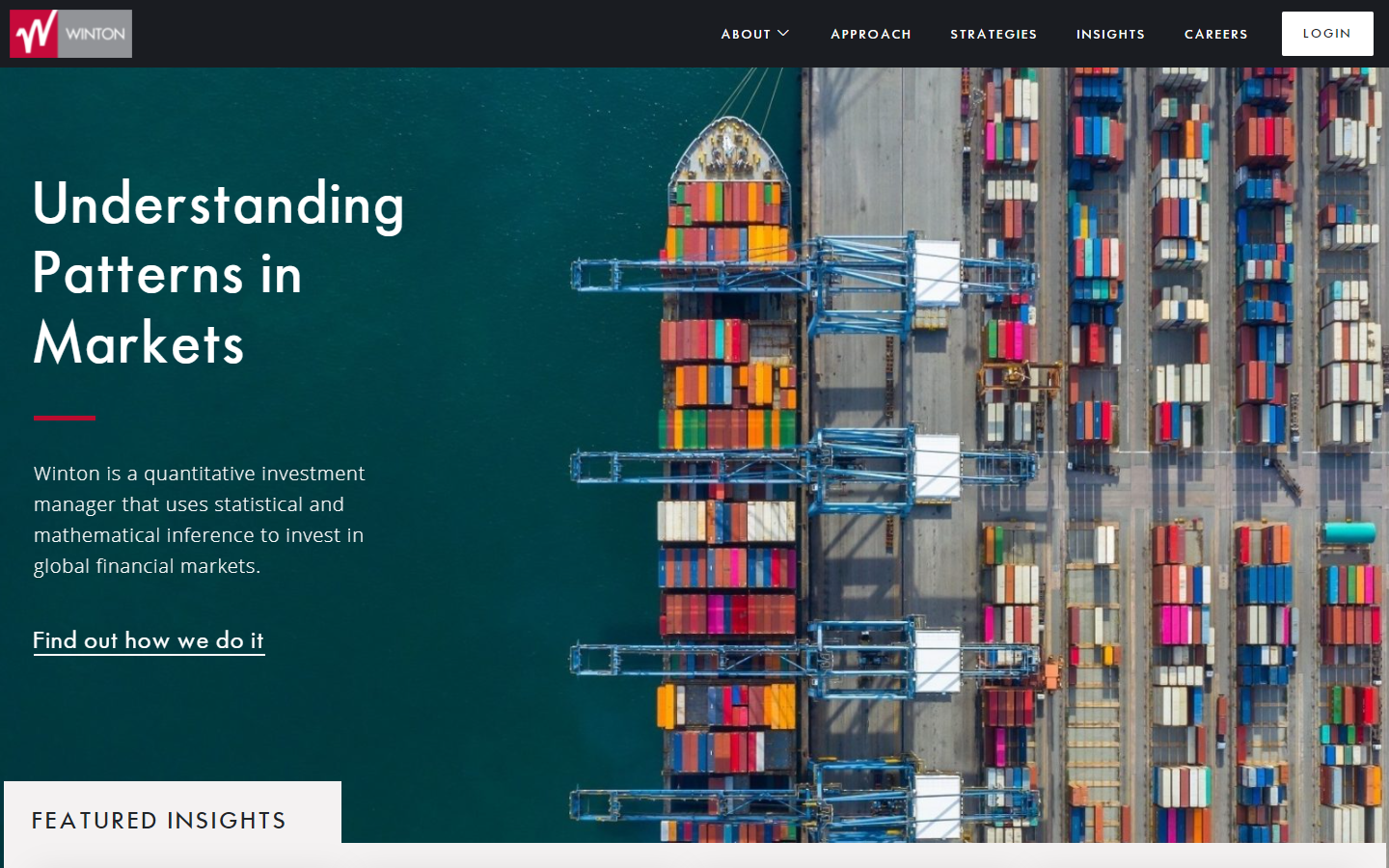
winton.com
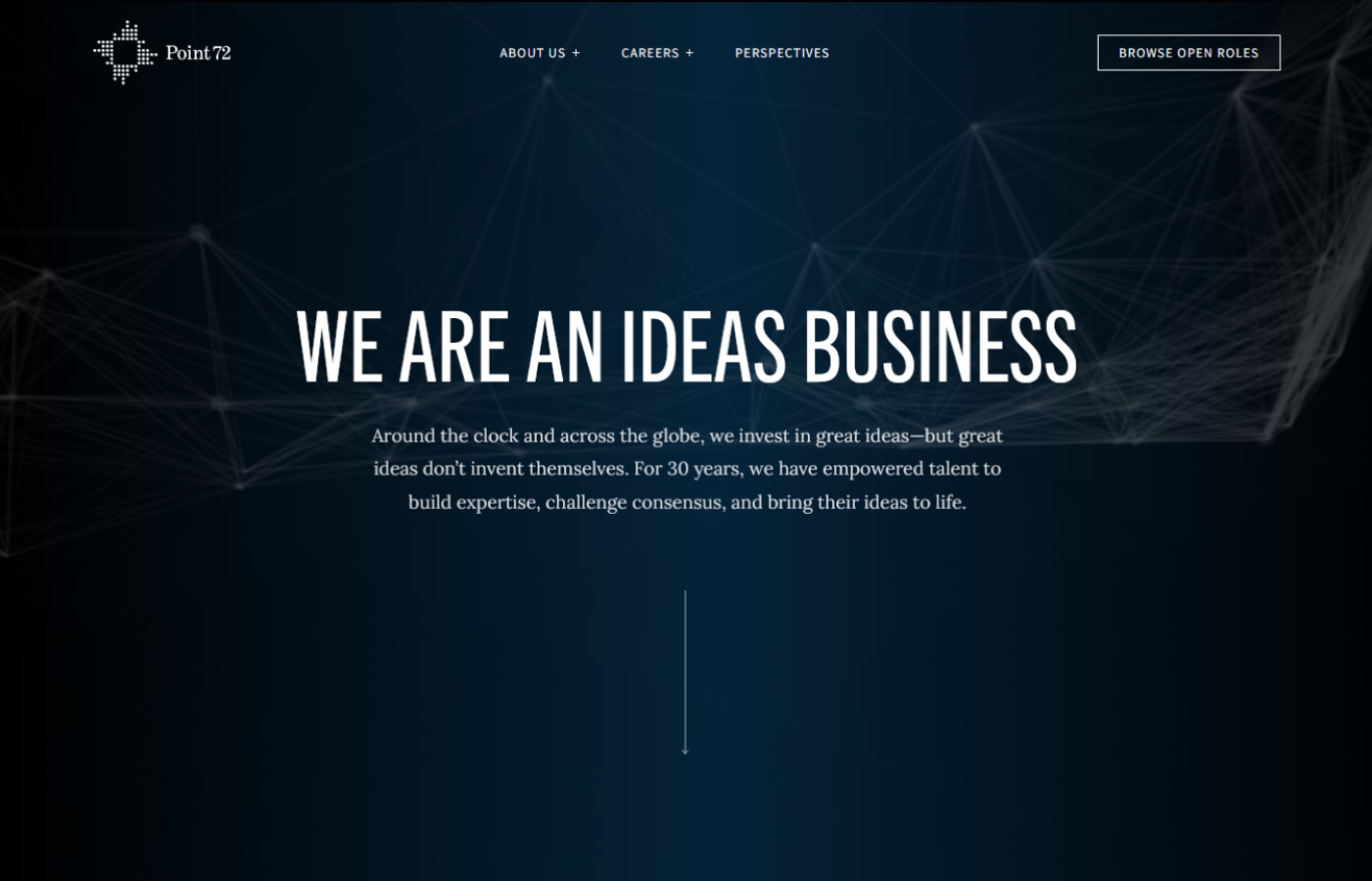
20. Point72
Why it works: Solid executive of the firm’s branding. Other than that, we love the ease of use of the website from one page to another. The texts are also very easy to read.
Top Hedge Fund Websites
21. Schonfeld
Why it works: Schonfeld is also another standout in our list because of its highly unconventional yet modern layout. The subtle animations are also cute but are not distracting.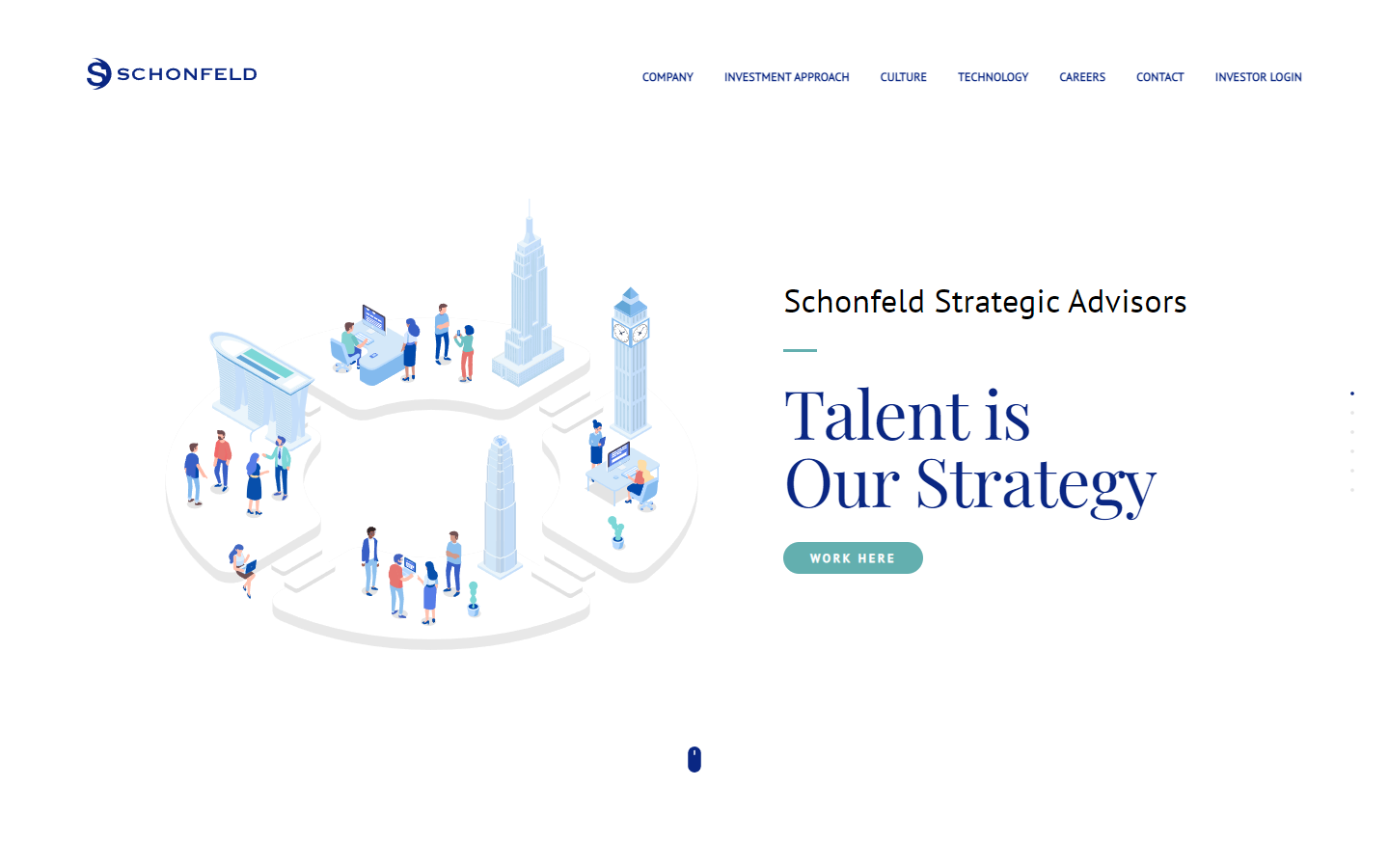
schonfeld.com
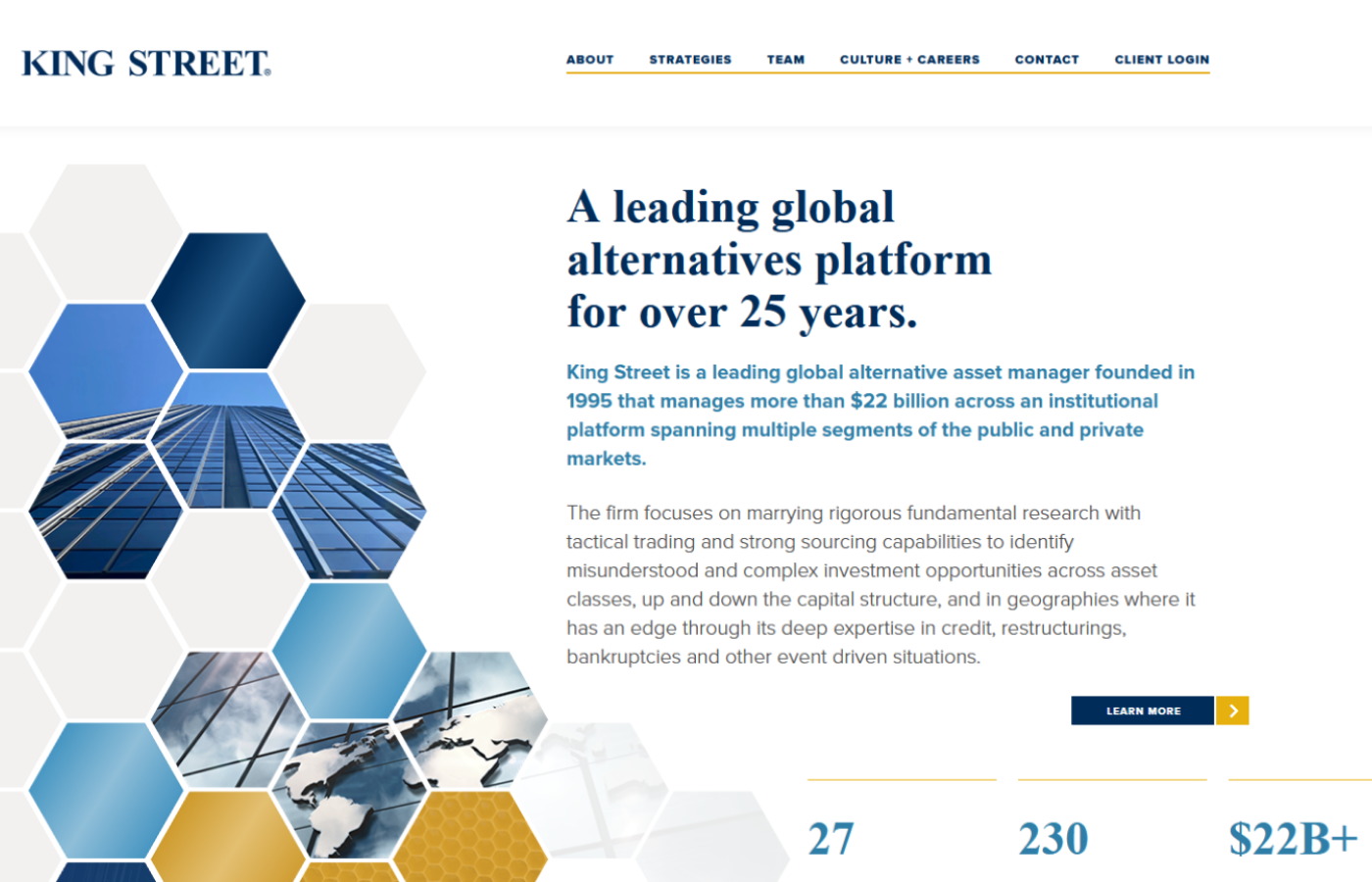
22. King Street
Why it works: This website doesn’t go around the bush; it tells you that they’re capable even at first glance. The graphics are also very original, all while being cohesive to the branding.
kingstreet.com
23. Two Sigma
Why it works: Talking about a real modern website design! Two Sigma’s website features great examples of mouth-watering effects and animations that make the already-great layout outstanding!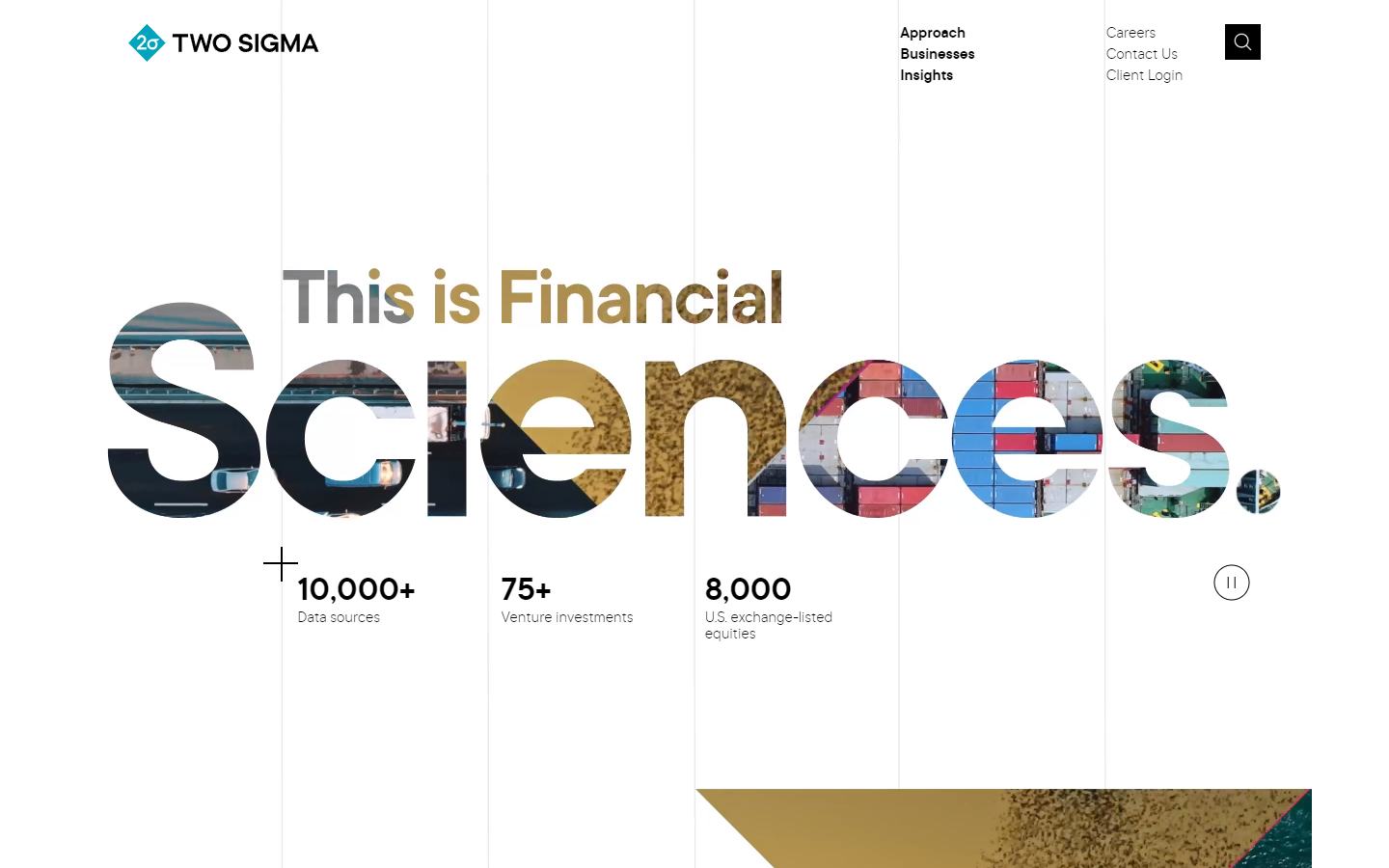
twosigma.com
24. PDT Partners
Why it works: We love the unique navigation menu at the top. The site also has photos that include candid human emotions at play. The layout also even in the inner pages is very distinct.
pdtpartners.com
Beautiful Hedge Fund Websites
25. A.W. Jones
Why it works: Can’t-miss the very first hedge fund investment firm in the world! The navigation links are so clear that one can quickly tell also the services they offer to prospective clients. If you go to the inner pages, you can immediately feel the love they put into the design without any compromises.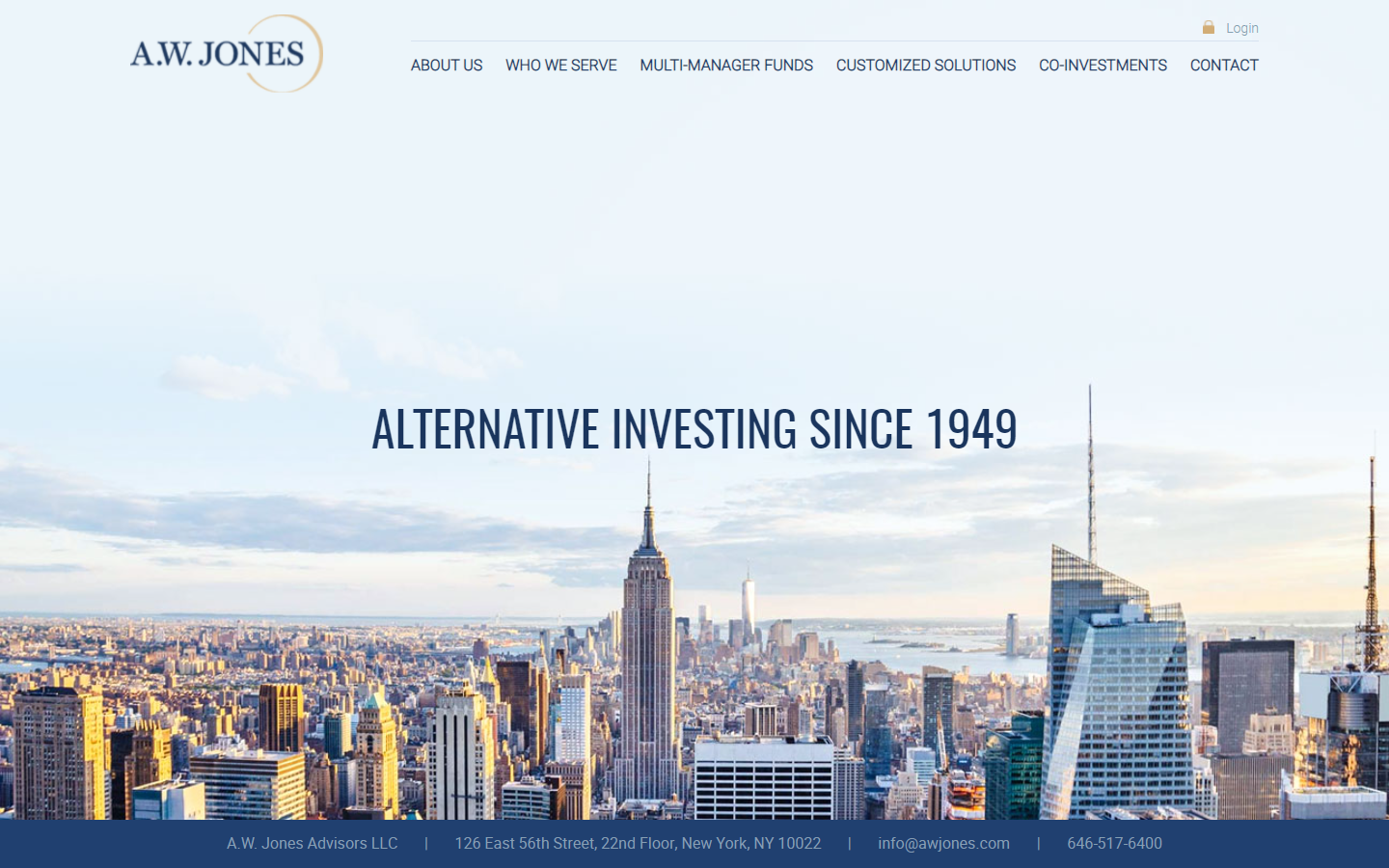
awjones.com
26. Aspect Capital
Why it works: There’re a lot of unique elements that add well to the design of the website, making it custom and original. The amount of graphics speaks well of the effort the firm makes to establish its identity in the industry.
aspectcapital.com
27. Magnetar Capital
Why it works: Despite the ‘boxy’ look, their design focuses more on functionality and experience rather than wasting resources on design elements that may distract visitors. Better not miss that hamburger menu!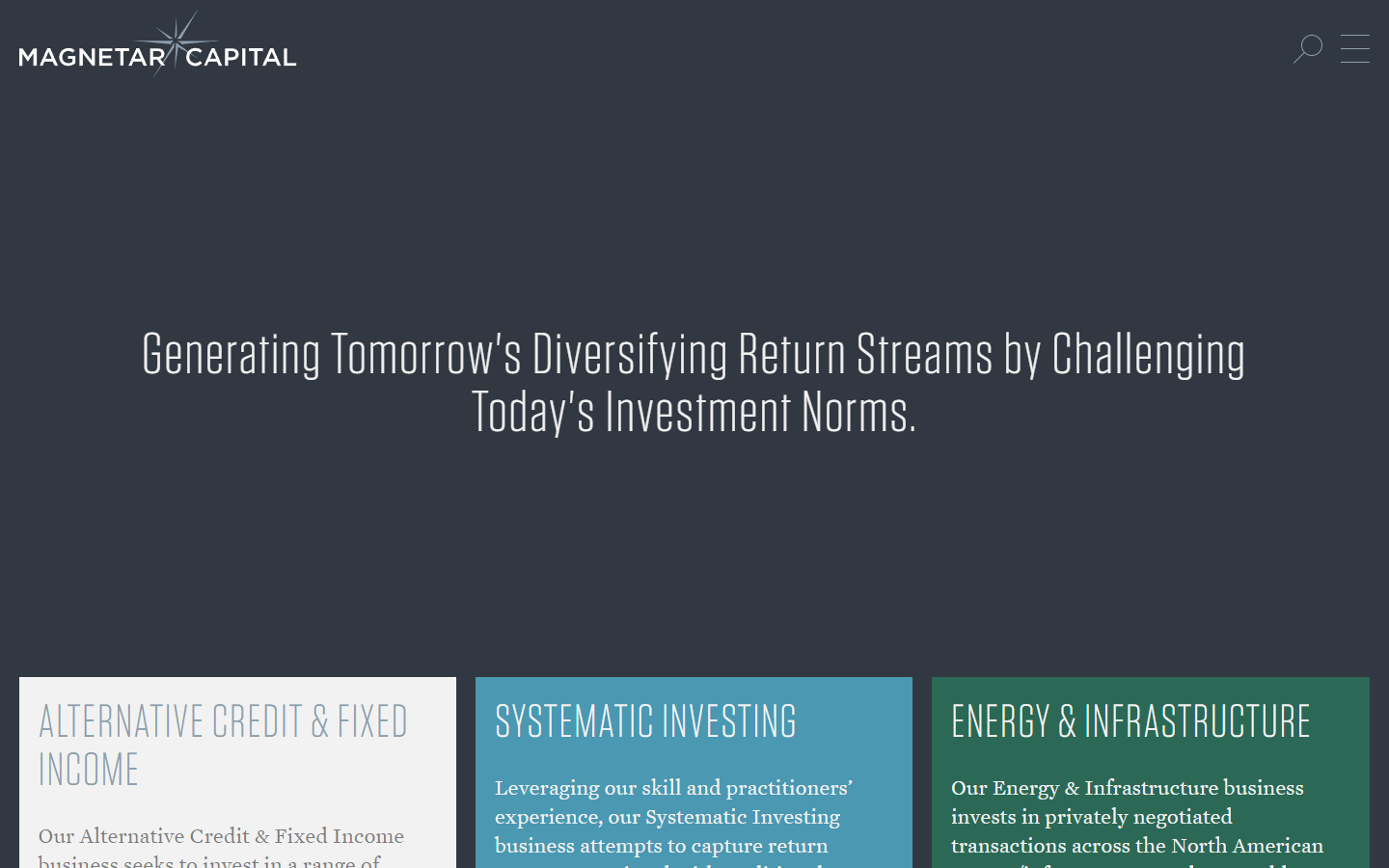
magnetar.com
28. Empyrean Capital Partners
Why it works: The website of Empyrean Capital Partners has a serious appeal, yet it does not sacrifice beauty. Even when using greyscale photographs, their attention to typography stands out.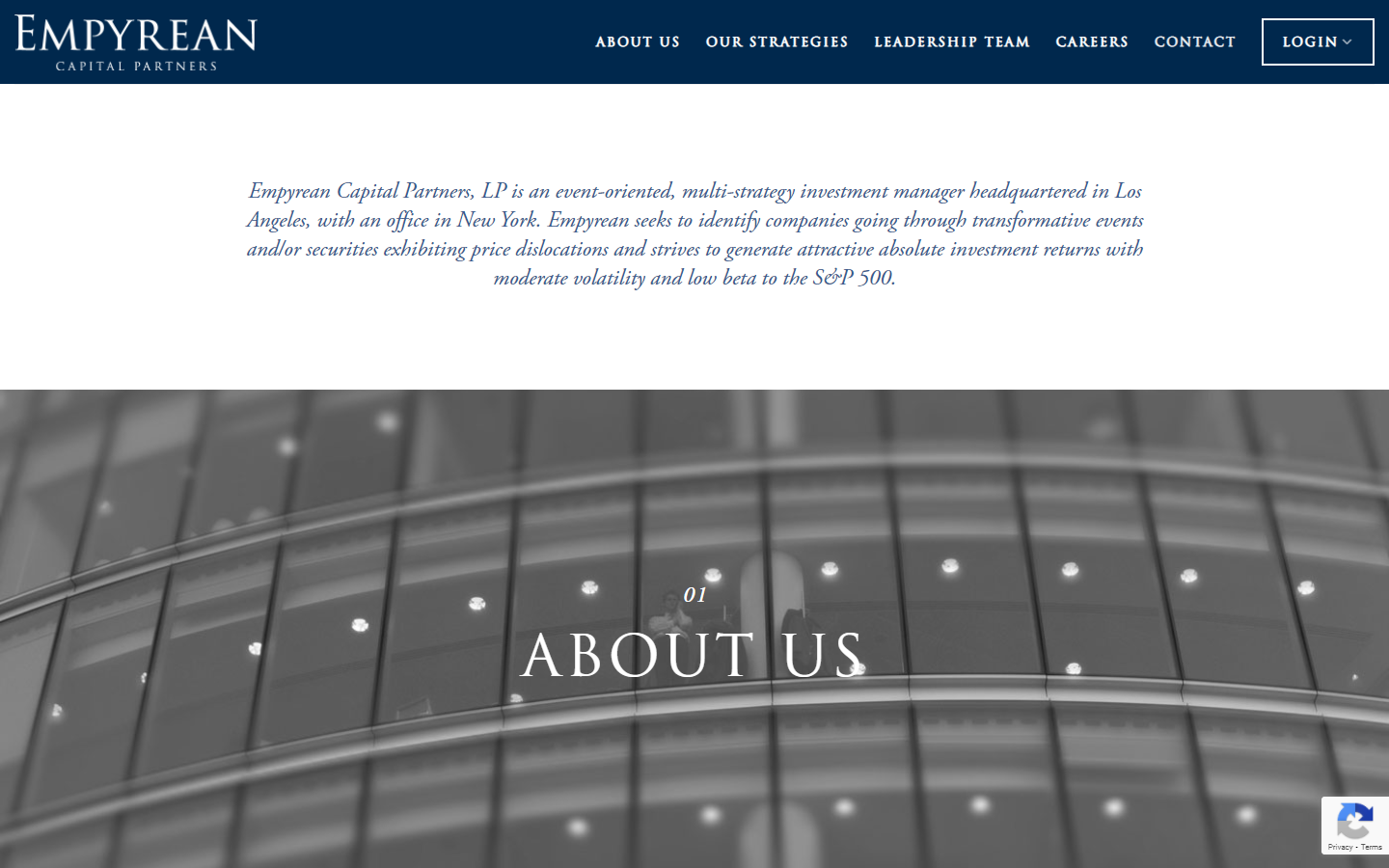
empyrean.com
Award-Winning Hedge Fund Websites
29. J.P. Morgan
Why it works: One big reason for adding this website to our list is because of how interactive and interesting it is. There are lots of activities involved even on the home page alone. Each chunk of content is also carefully organized.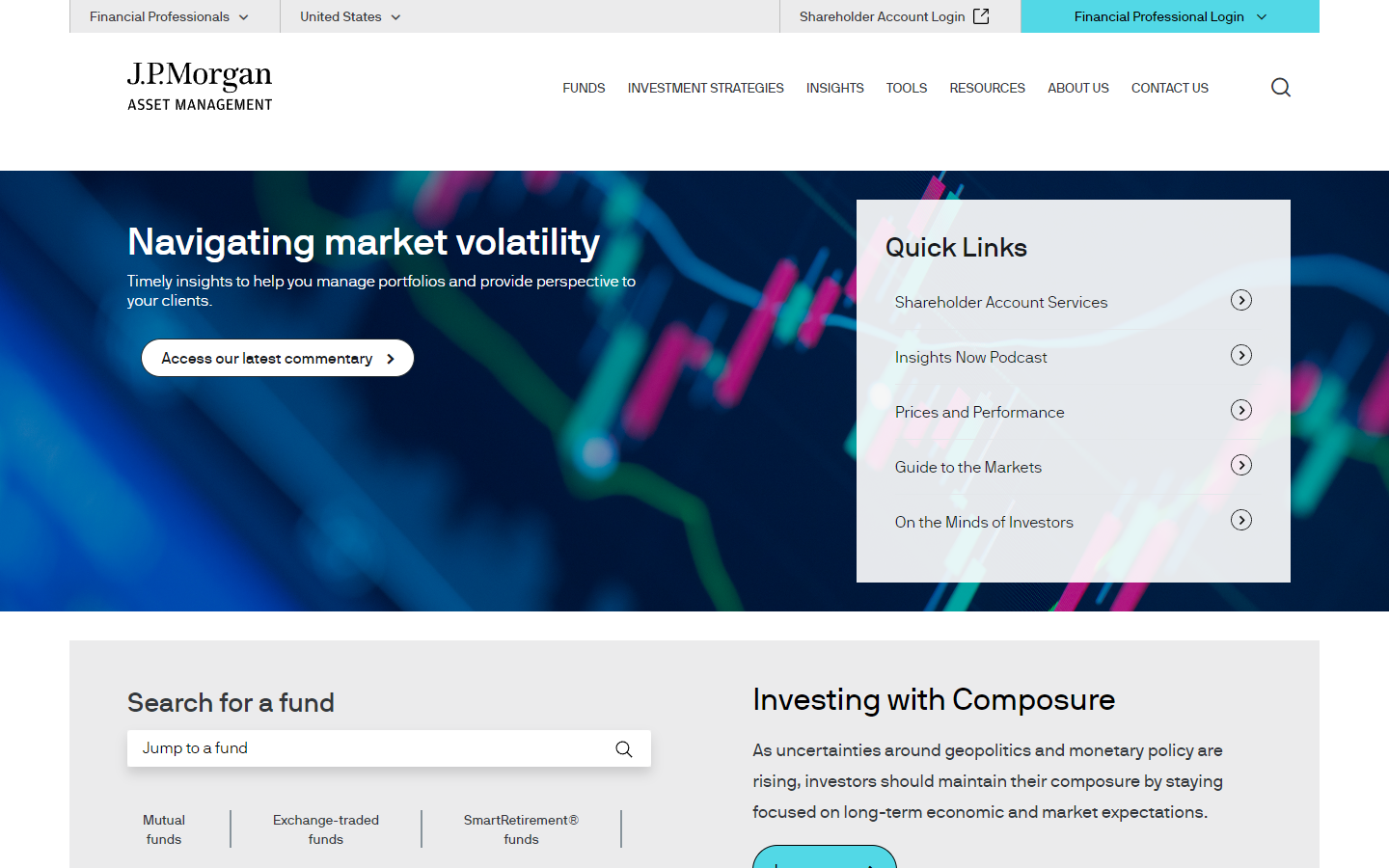
am.jpmorgan.com
30. Napier Park Global Capital
Why it works: There are graphics everywhere but they speak tons of the dedication of the firm in their offerings. This website also has parallax effects everyone would love to take a look at!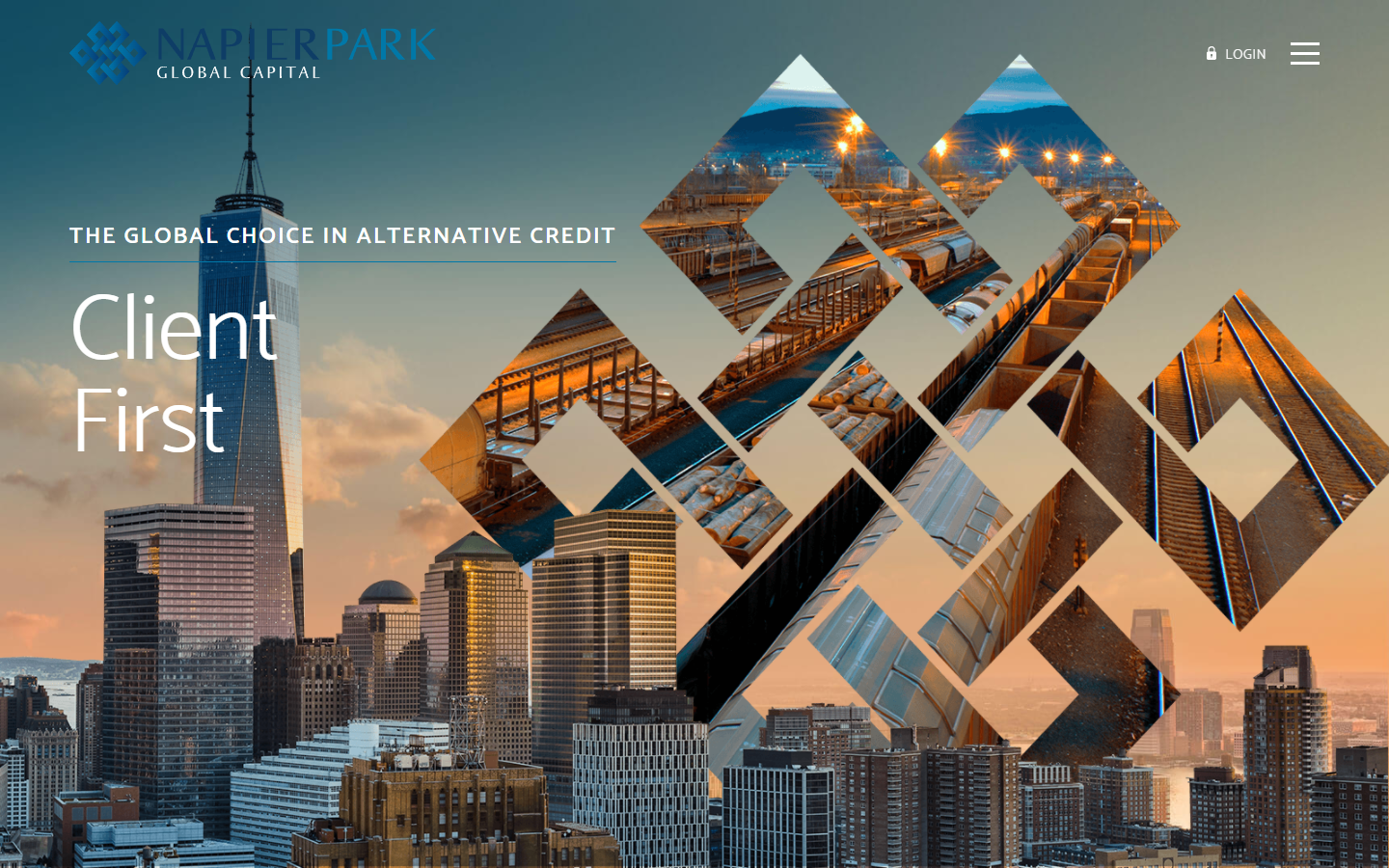
napierparkglobal.com
31. Elliott
Why it works: Another amazing design with a minimalist aesthetic. The unusual layout qualifies it for inclusion in our list. Although it does not have a modern appearance, it operates quite effectively.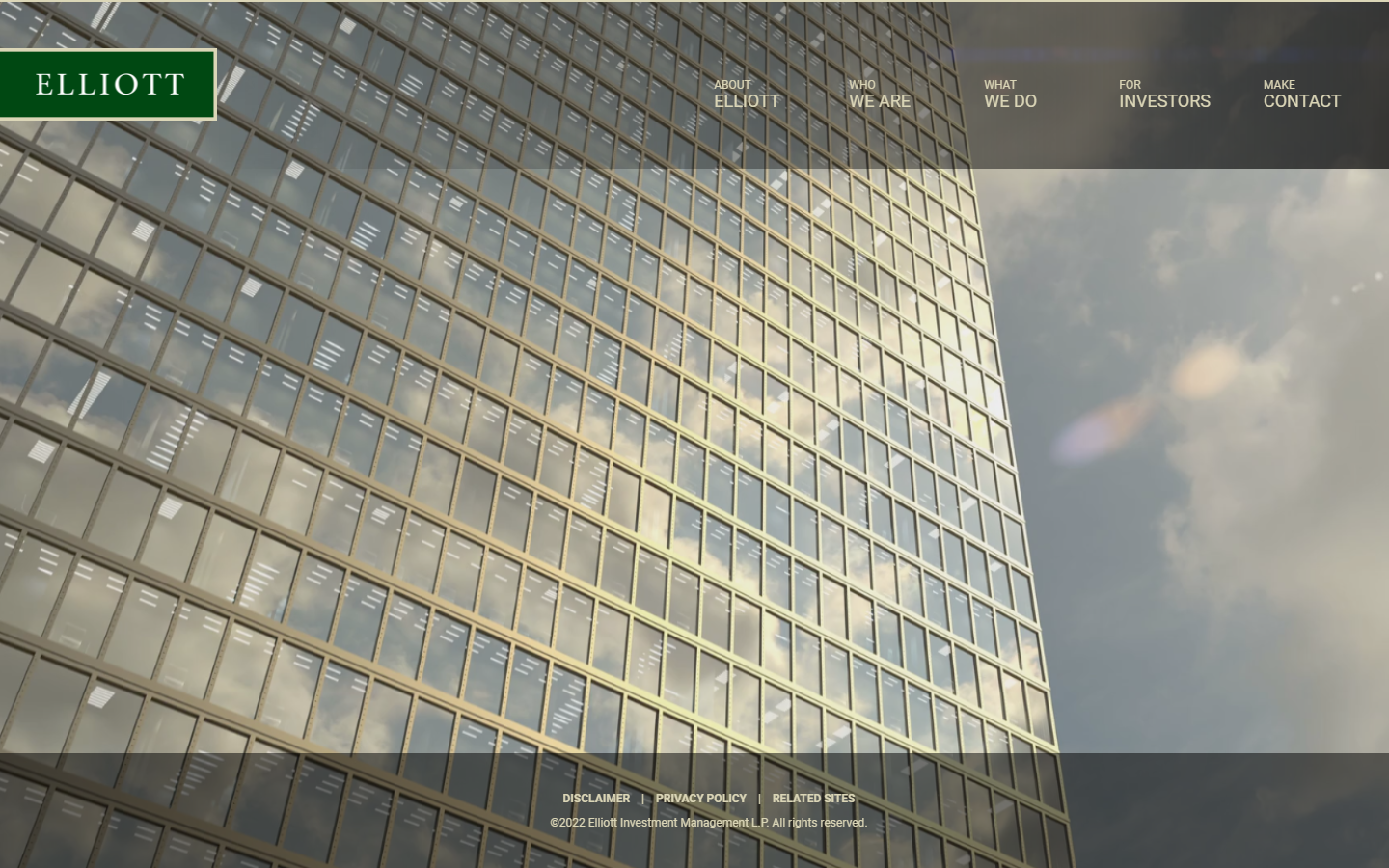
elliottmgmt.com
32. Cheyne Capital
Why it works: Putting the pleasing aesthetics aside, we love how functional and helpful the elements are. The mega-menu is just a great feature one shouldn’t miss when visiting this website!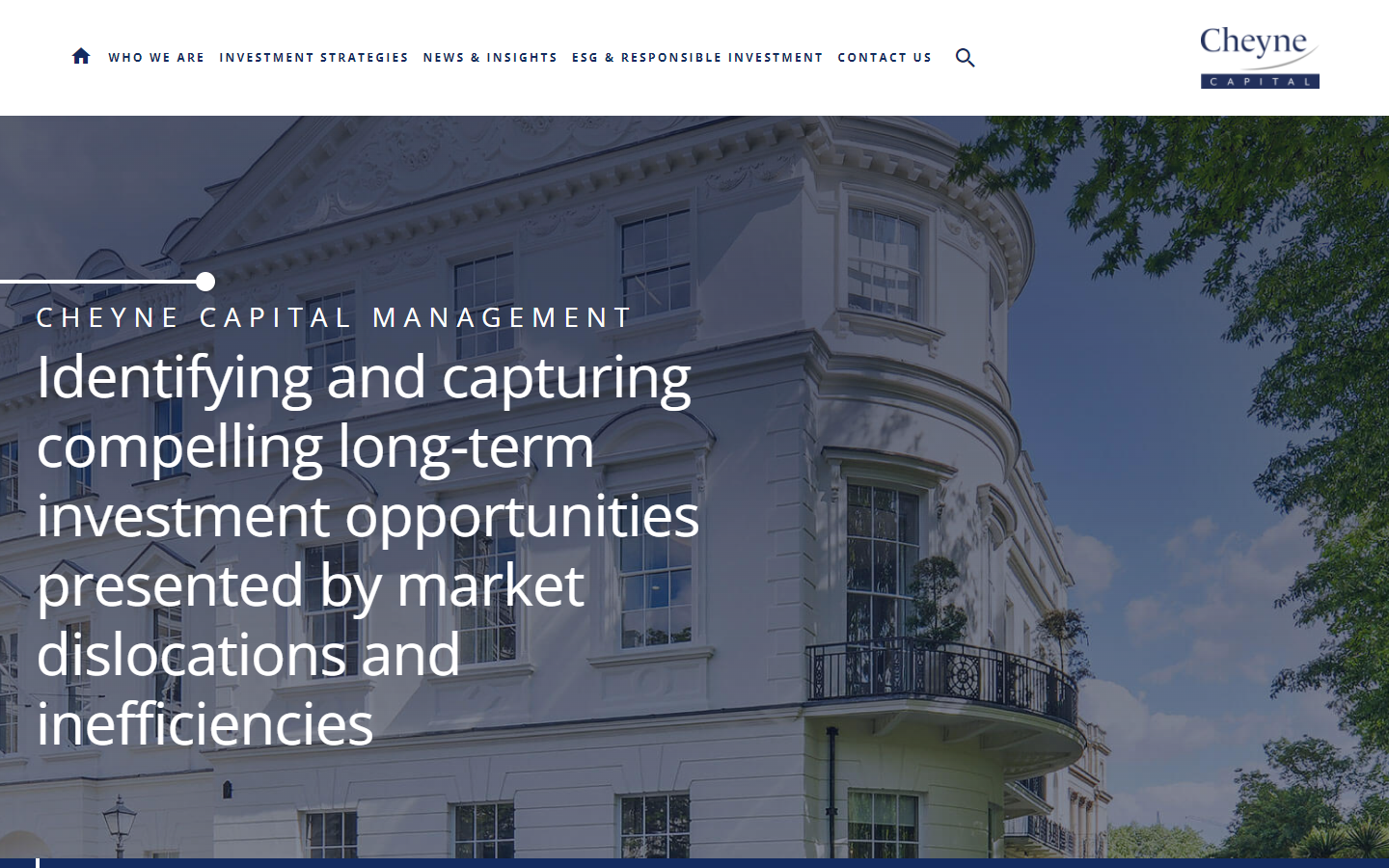
cheynecapital.com
Best Hedge Fund Web Design
33. VR Capital Group
Why it works: VR Capital Groups’ website design introduces a unique scrolling experience to users. Other animations make visitors stay and read content from one page to another.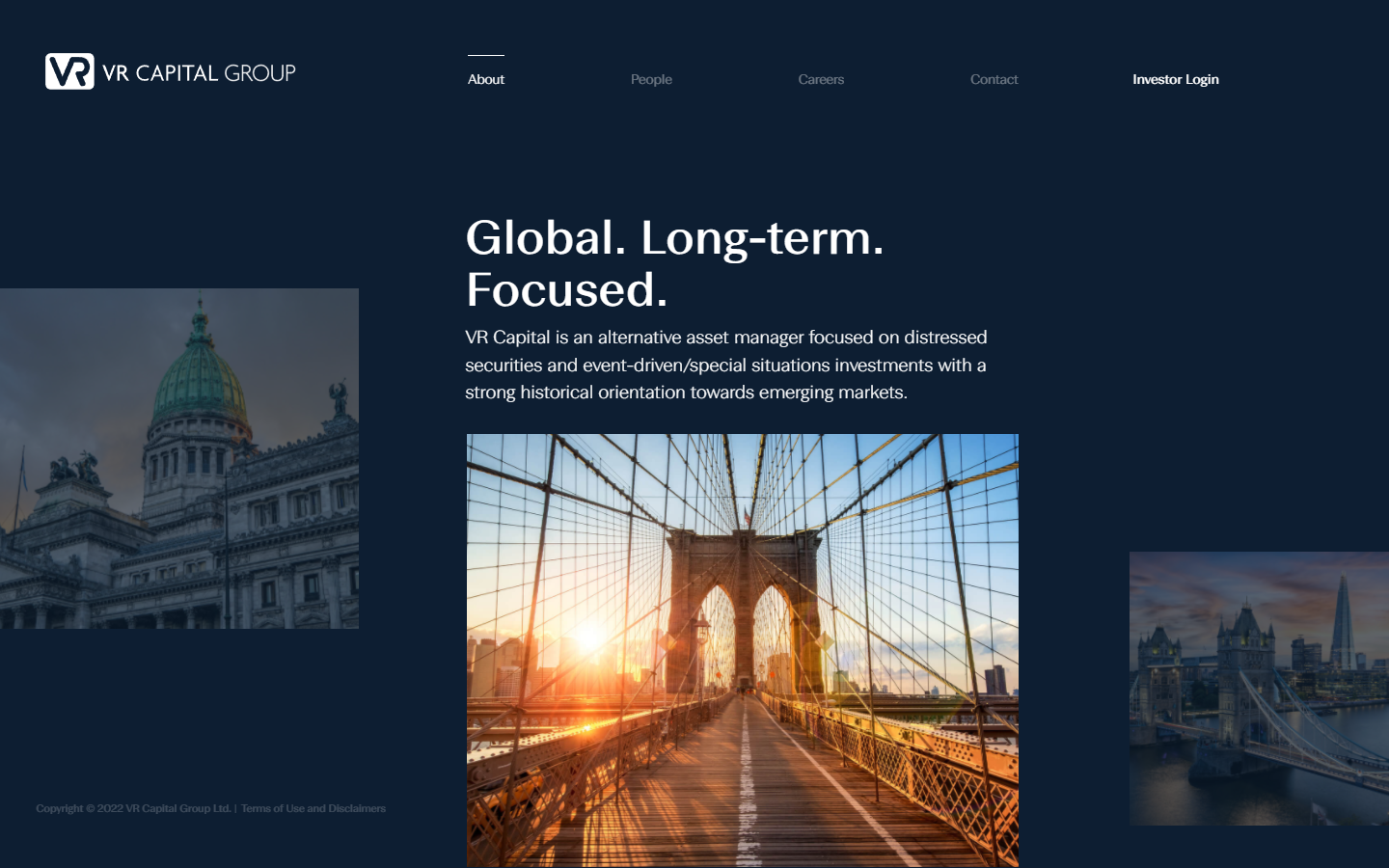
sg.vr-capital.com
34. BlackRock
Why it works: This website from BlackRock has a strong presence, with crisp contrasting colors and a modern style. Better yet, the content and style were meticulously prepared from top to bottom.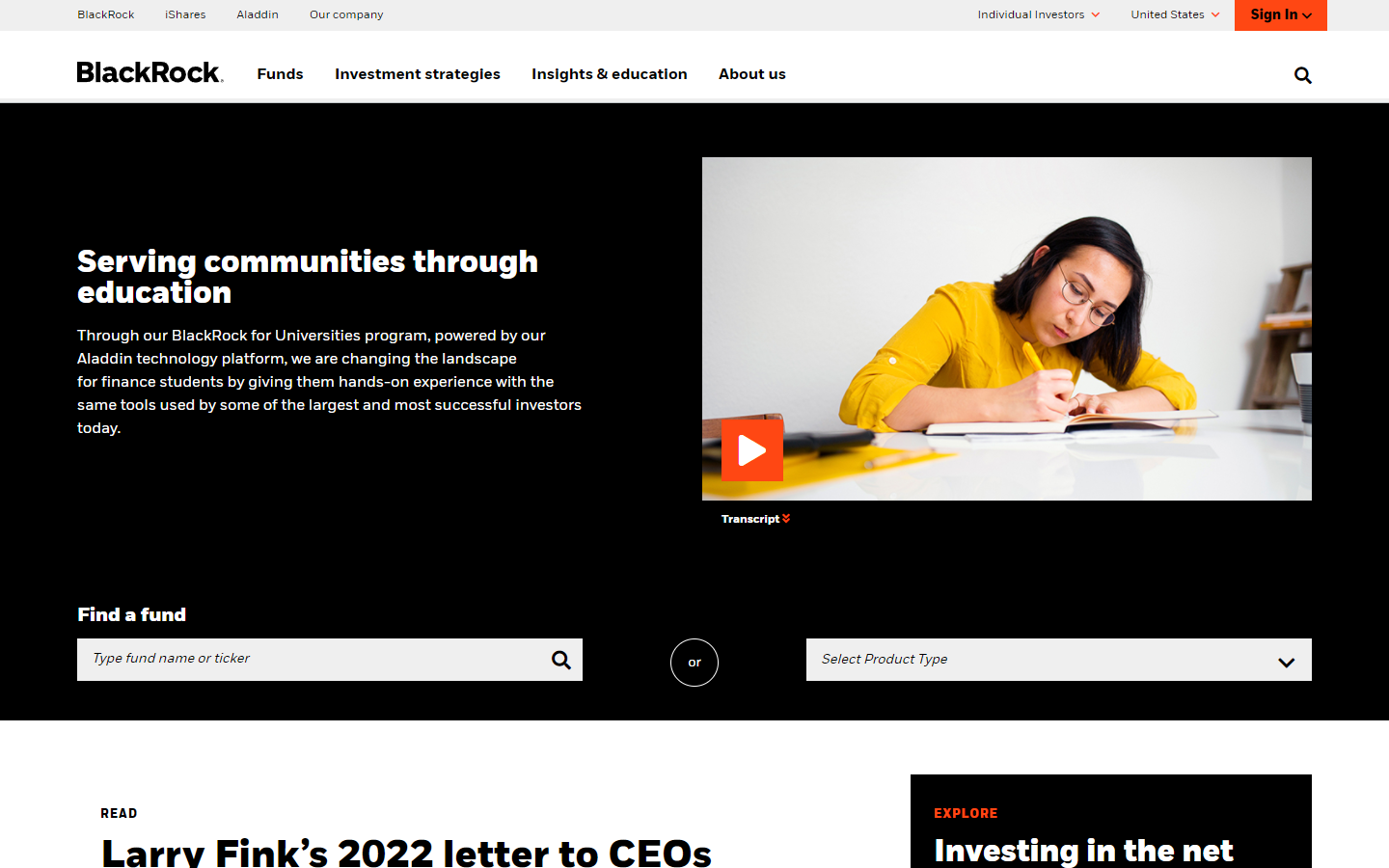
blackrock.com
35. Hudson Bay Capital
Why it works: There are lots of blues here! It’s fresh and appealing, but not too much to conceal the services they offer. We love how those animations were subtle, but push users to scroll further.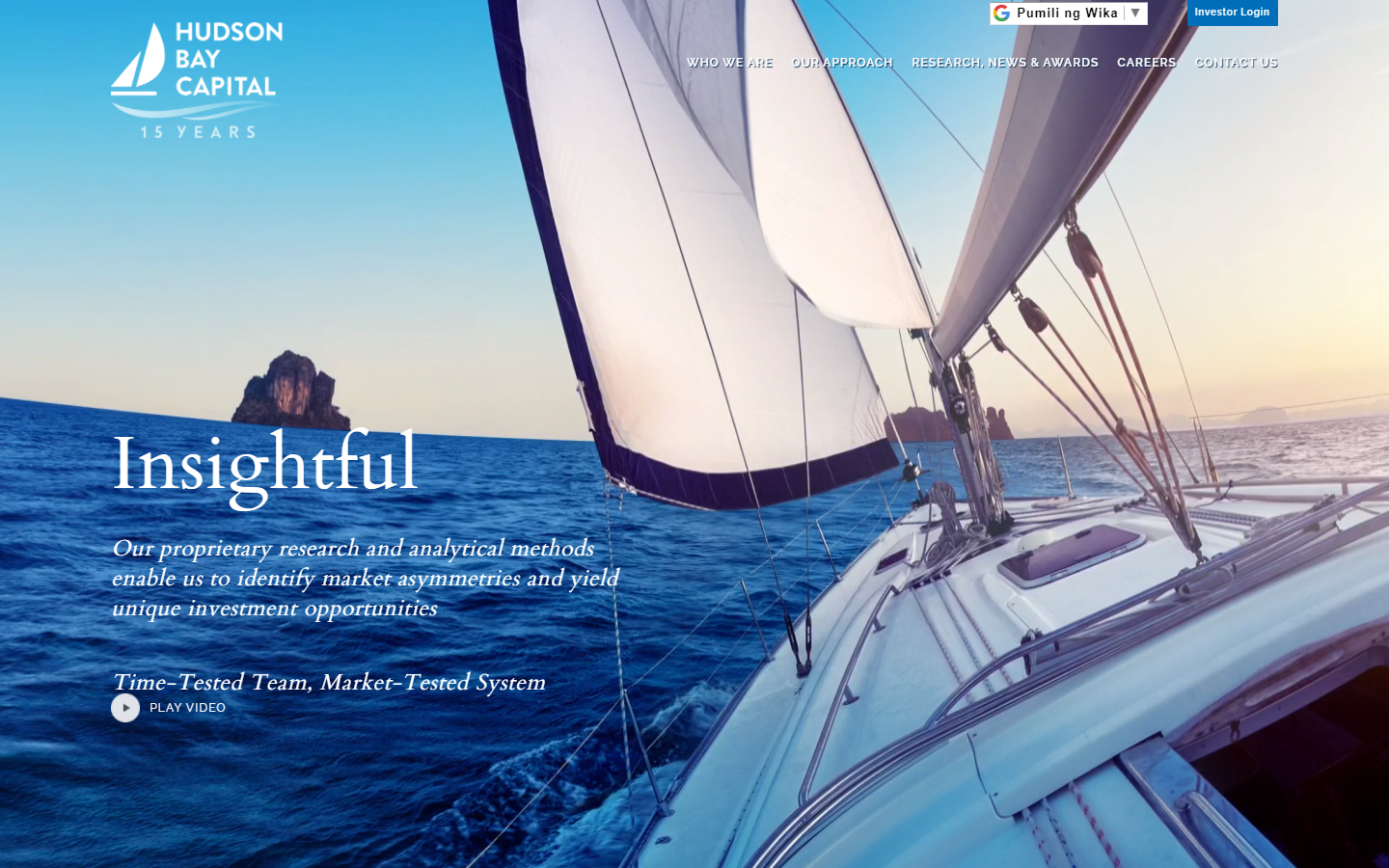
hudsonbaycapital.com
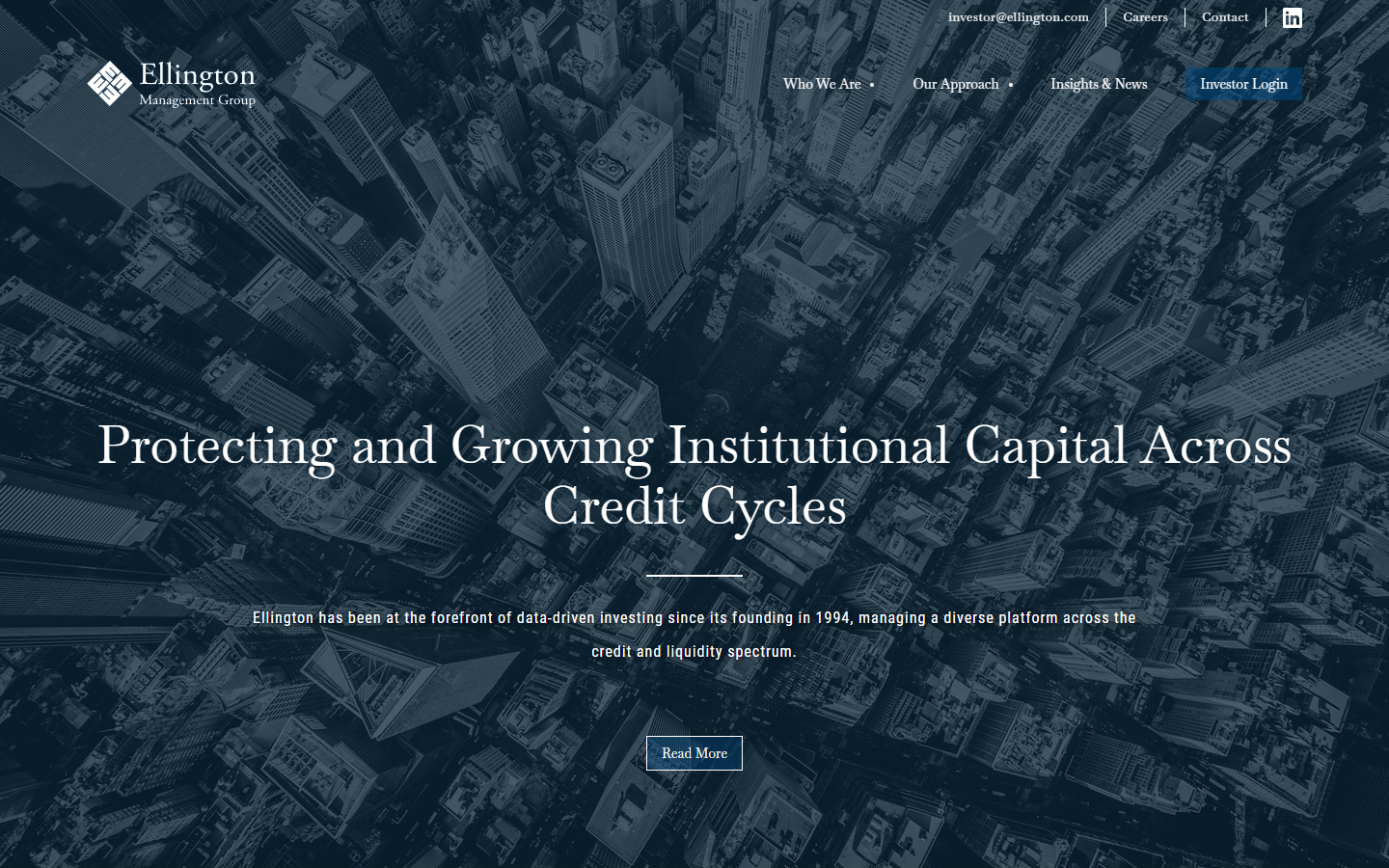
36. Ellington
Why it works: Simple, direct, and aesthetically pleasing to both the eyes and the user experience. The images are also kept to a minimum to avoid unnecessary weight on the already-good website.
ellington.com
Highest Rated Hedge Fund Websites
37. PIMCO
Why it works: The design felt more like it’s intended to educate rather than sell their services, and yes, it’s very effective without losing great looks. We also love the generous white spaces that give a lot of breathing areas in every section of the page.
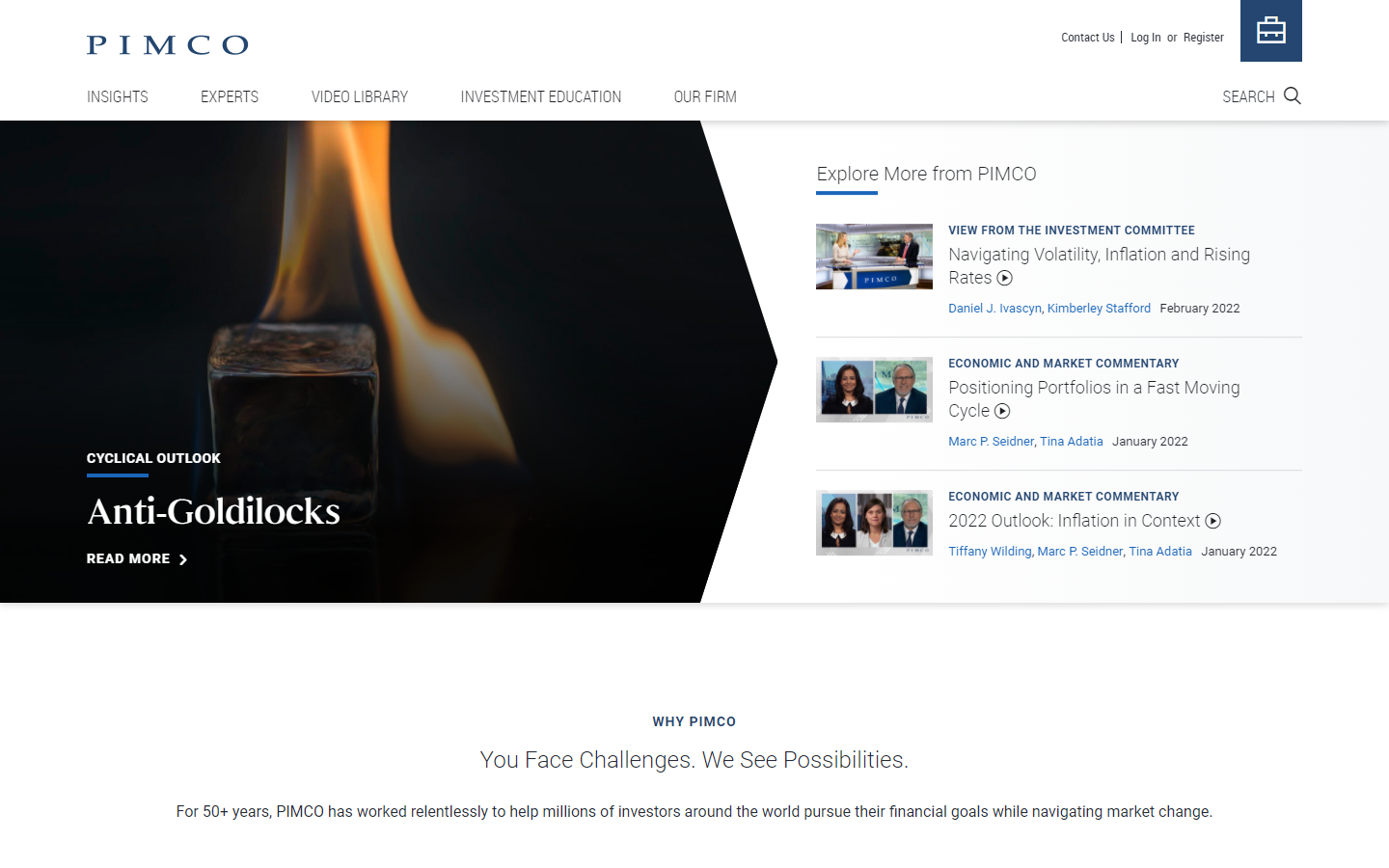
global.pimco.com
38. ExocusPoint
Why it works: Top-notch use of lines as the main design element! Moreover, we love the modern layout with just the right amount of animation for an overall great user experience.
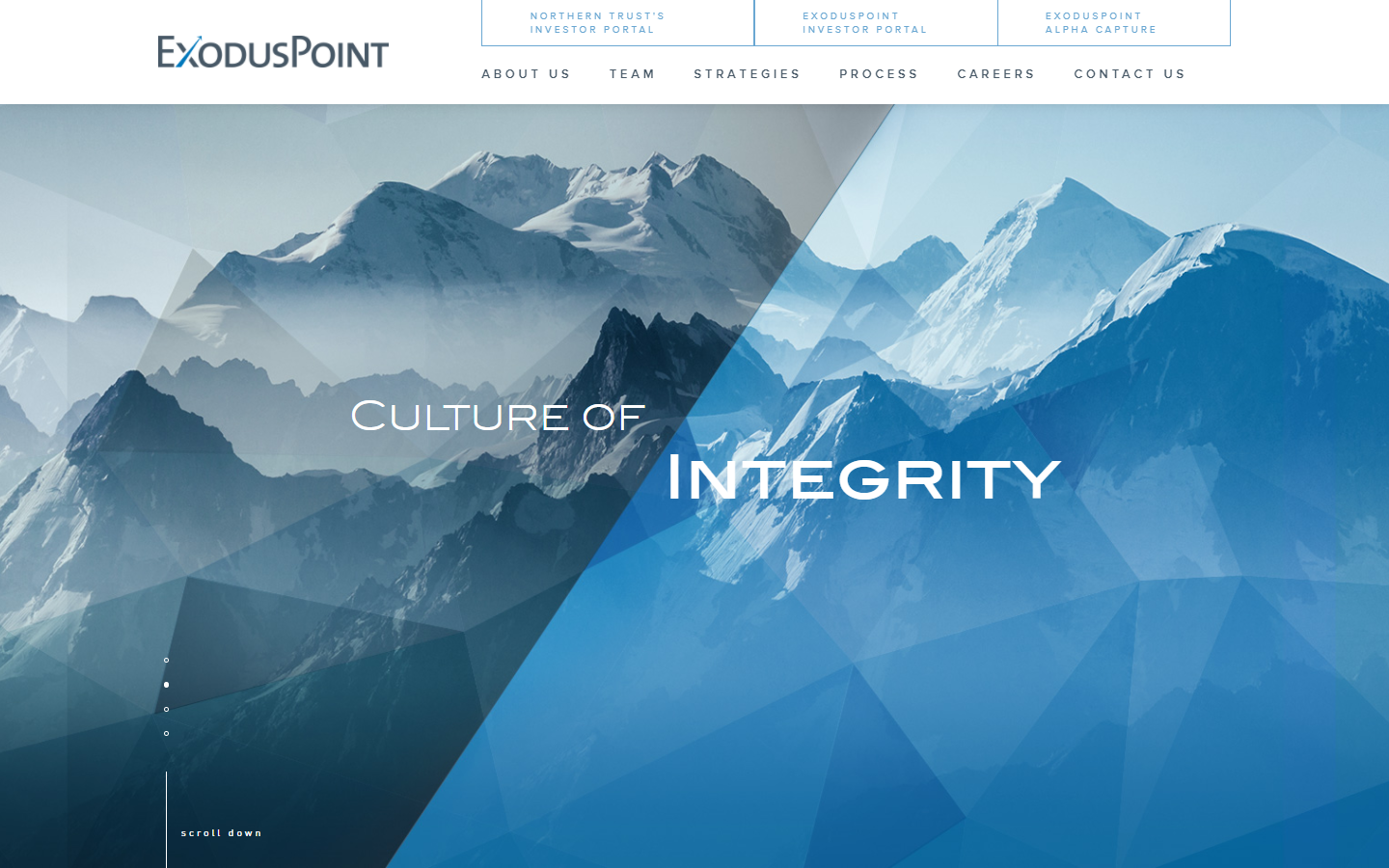
exoduspoint.com
39. Citadel
Why it works: Despite the usual layout and design, what makes this website join our list is their being straightforward to the business they offer. Everything here is predictable in a good way!
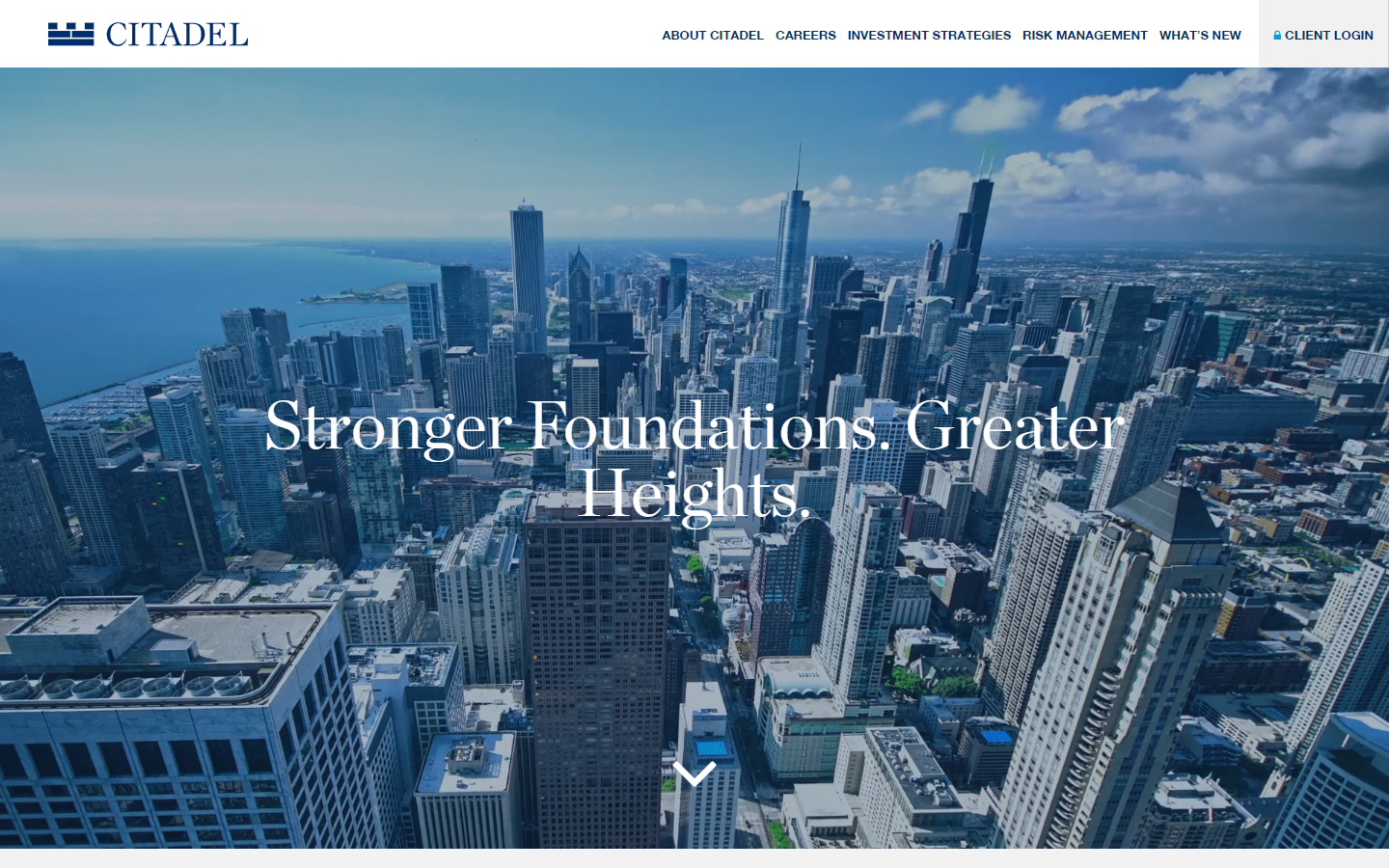
citadel.com
40. Bridgewater
Why it works: On most sites, the white color scheme is boring, but with the appropriate execution and typeface selection, it can make a website stand out. Bridgewater is an excellent illustration of this.
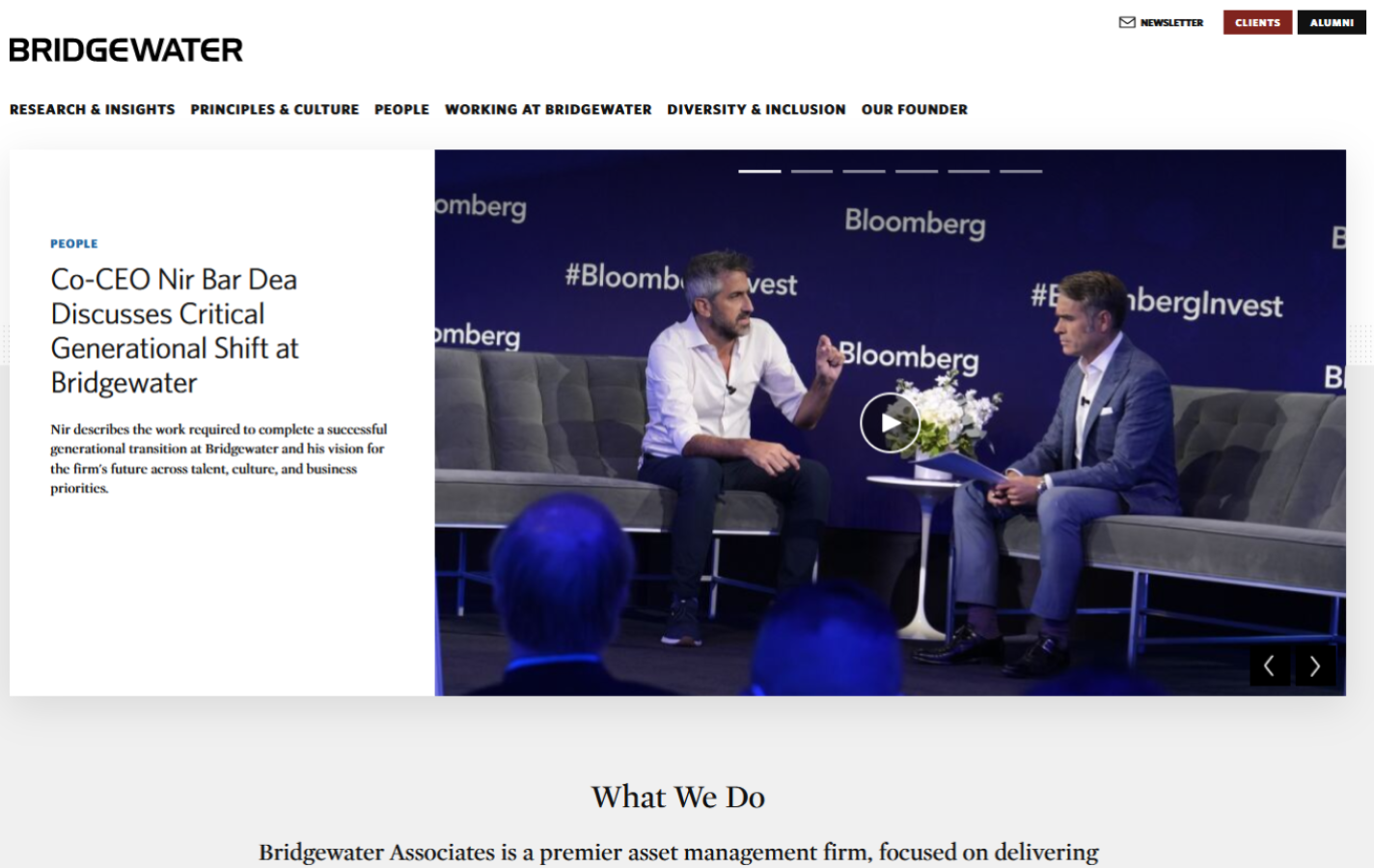
bridgewater.com
Conclusion
Are you needing a website that functions well and looks good? Do you need to project just the right image to your prospective clients? Do you want to publish fund data or make a blog dedicated to hedge funds so people can learn about this type of investment? If so, you should strongly consider investing in a custom website.
Not sure where to start when it comes to hedge fund website design? No problem! Our team can help you get started. We have extensive experience in the hedge fund industry and know what it takes to create a website that will impress your audience.
We will design a custom mockup of your new website before you sign or pay for anything. There is nothing to sign and no payment information will be taken. If you like our design for your business we can move forward working together. If not, there are no hard feelings and no other obligations.
Click here to learn more about our Free Mockup Offer.